The Future of Policy: How Blockchain and AI Are Reshaping Governance
Could applying Blockchain and AI thinking to innovation policy become a global megatrend? Greater supply-chain efficiency could raise GDP, and applying this approach across society could be transformative.
Read the full article on IntelligentHQ:
Industry 4.0, AI And Blockchain And Policy Making
From Design Thinking to Blockchain/AI Thinking
Design Thinking emerged as “a methodology for practical, creative resolution of problems or issues that looks for an improved future result.” The term was first used by Herbert A. Simon in 1969, and later popularized in the Nineties by innovators like David Kelley, founder of IDEO, who positioned it as “a framework for human-centred innovation and as a new management paradigm for sustainable value creation.”
In our era of decentralized networks, our thinking must also become decentralized. This means developing trusted solutions for complex problems in a trustless environment. We need to trust that we’re thinking about the right problems for society.
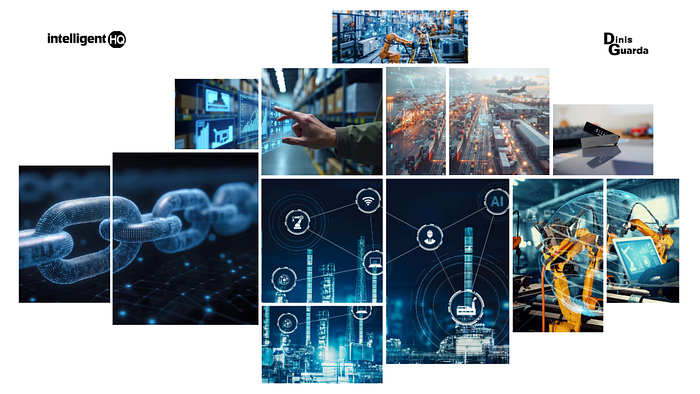
Blockchain/AI thinking is entirely transversal and can be applied across many different sectors. It’s ideal in situations where resources are limited or where boundaries such as ‘public’, ‘private’ or ‘partnership’ need to be regulated and defined.
Real-World Applications Already Making Impact
The potential isn’t theoretical. In 2017, blockchain was successfully used by the World Food Programme for food distribution in refugee camps in Syria. The same technology could revolutionize benefits distribution globally.
In Brazil, discussions have emerged around robot taxes and universal income based on blockchain technology. The Berkeley City Council has already started pilot projects in this space, demonstrating how forward-thinking policymakers are embracing these tools.
The 4th Industrial Revolution’s Impact on Policy
Unless completely unplugged from technology, every policymaker has already been influenced by frontier technologies like Artificial Intelligence and Machine Learning. According to tech company DOMO, over 2.5 quintillion bytes of data are created every single day, and by 2020, an estimated 1.7MB of data was being created every second for every person on earth.
Get Dinis Guarda’s stories in your inbox
Join Medium for free to get updates from this writer.
However, this data-driven world comes with challenges. In the USA, ready-made AI algorithms in the legal system have distorted the treatment of certain ethnic minorities, highlighting the critical importance of purpose-made AI solutions and clear regulation.
The Vision: Technology-Driven Policymaking
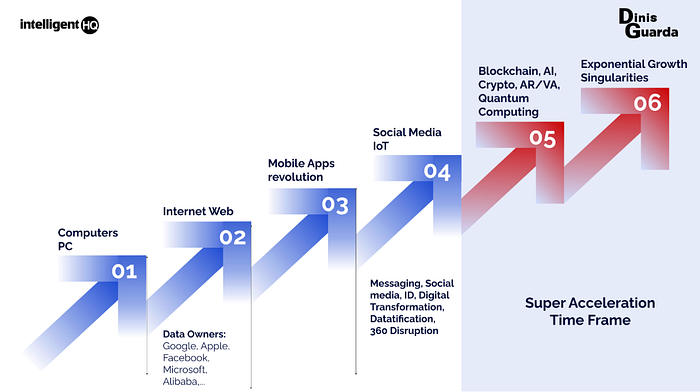
The 4th Industrial Revolution is here now. If the 5th technological revolution is indeed a human one, it’s likely to happen very fast. The challenge? Governance systems that dominate the world order are slow.
This dissonance between progress and humanity means civic life is far from frictionless. But if emerging technologies like blockchain, AI, robotics and IoT are applied by policymakers, mainstream adoption will follow. Imagine a future where every decision-making process is decentralized and based on trusted policy.
From passport applications to planning permissions, from voting to legislation — the entire panorama of policymaking can be made more transparent and efficient. This can only benefit society, especially in times of scarce resources.
The Roadmap to Policy 4.0
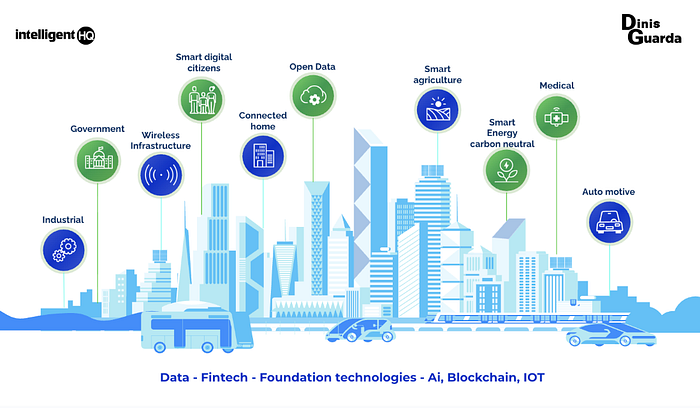
Our ecosystem is interconnected: every day, we interact with academia, commerce, media and policy. To make Policy 4.0 a reality, we need to apply emerging technologies across this entire ecosystem with global standards.
Education: The Foundation
The next generation of academics should be involved to reinforce the integrity and scientific rigour of Policy 4.0. Education is a huge driver for policy innovation and will shape the ethical and moral implications of this transformation.
Media: The Teacher
Whether traditional or social, media plays a crucial role as teacher and opinion former. The inclusion of Industry 4.0 themes in mainstream culture — soap operas, films, TV series — is essential. This is already happening, with major content creators migrating to blockchain-based platforms.
Commerce: The Catalyst
Corporate social responsibility in Industry 4.0 becomes a transversal layer of consistency across society. Brands are applying 4IR technology to entire supply chains for efficiency, transparency, and to meet increasingly curious and demanding partners and customers.
UK-based tech company World Wide Generation has developed a blockchain-based scorecard matched to the UN SDGs, already used by Unilever to distribute dental products in South Africa.
The Choice Ahead
If the rest of the ecosystem is being transformed, policy will have no choice but to flow with change. The question is simple: Will policymakers be at the vanguard of change or later adopters?
In the time of the Fourth Industrial Revolution, the devil is in the data as well as the detail. Whatever happens, our political leaders will have to change their modus operandi.
The revolution has already begun. They can be in the thick of it or watch from the sidelines as the action unfurls.