
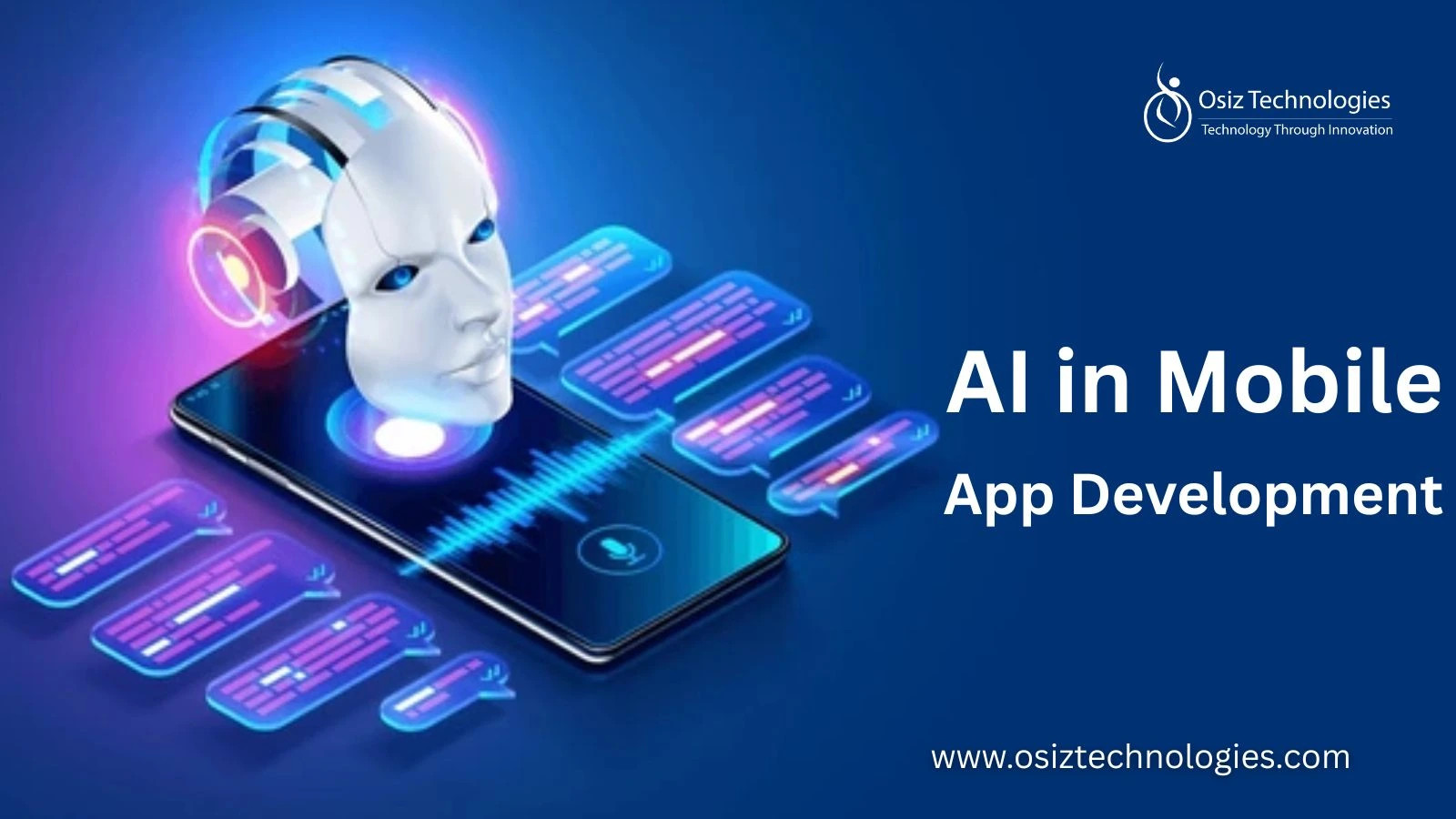
Mobile apps powered by AI are changing how companies connect with their customers. They use current info to create experiences that feel personal. These apps learn user habits, share content that matters, give custom suggestions, and chat in a friendly style.
AI in mobile app development
In order to enable apps to learn, adapt, and provide personalized, predictive, and automated experiences going beyond set rules by genuinely comprehending and anticipating user needs through features like voice assistants, intelligent recommendations, and biometric security AI in mobile app development integrates intelligent capabilities like machine learning, natural language processing, and computer vision.
Why develop AI integrated mobile apps
AI-integrated mobile apps analyze user behavior, preferences, and interaction patterns to provide personalized experiences. This level of personalization boosts engagement, session duration, and user retention dramatically. Apps feel more natural and relevant to consumers because they dynamically adapt content and features.
And automates monotonous tasks like data sorting, testing, and performance monitoring in mobile apps. This eliminates manual work and increases development efficiency while ensuring constant quality. Businesses benefit from faster upgrades and improved app performance across multiple devices.
It enables mobile apps to process massive amounts of data and produce actionable insights instantaneously. This enables applications to adapt intelligently to user activities and environmental changes. Such intelligence serves as the foundation for comprehending the current level of AI in the mobile app development market.
State of AI in Mobile App Development Industry
About 60–63% of mobile apps now integrate some form of AI or machine learning technology, showing widespread adoption in the industry.
65% of top-grossing apps include AI-powered features, underlining AI’s role in driving high-value app experiences.
Around 44–52% of apps use AI-driven personalization to deliver tailored content and improve user engagement.
AI chatbots in mobile apps are predicted to handle up to 80% of customer interactions, significantly reducing the need for human support teams.
The AI in the mobile app market is projected to be worth around $30–35 billion by 2025, indicating strong growth and investment. Source.
How AI Helps In Mobile App Development
Natural Language Processing helps apps grasp what people say and write, making voice commands, text analysis, and chats better. It makes talking to apps feel more real and easy.
Machine Learning lets apps get smarter as you use them. They learn what you like, give better advice, and make smarter choices on their own. The more you use these apps, the better they get.
Emotion Recognition enables apps to detect your emotions by analyzing your facial expressions, voice tone, or interaction patterns. Based on this, the apps can respond appropriately offering value in healthcare, education, and customer service.
AI chatbots give quick answers, handle basic help requests, and show people how to use an app. They keep users happy by offering help right away, at any time. Plus, they cut costs without losing service quality.
Benefits of using AI in mobile app development
Personalized user experience: AI adapts the functionality and content of apps to each user's unique behavior.
Enhanced app security: Artificial intelligence can identify odd patterns and possible threats in mobile apps.
Faster development cycles: AI speeds up development cycles by automating performance optimization, testing, and debugging.
Data-driven insights: AI analyzes user data to provide insightful information that helps businesses succeed.
Scalable performance: AI optimizes app performance according to system requirements and usage trends.
How much does it cost to develop AI mobile apps
Basic
These apps feature basic AI functionalities such as chatbots or simple recommendations powered by pre-built AI models. They focus on fast deployment, making them ideal for startups or initial market exploration.
Budget around $30,000 to $60,000.
Mid-Level
Look for improved personalization, smarter predictions, and enhanced AI tools that integrate with other platforms. The system will support a larger number of users and data points, along with a more refined user interface.
Costs run from $60,000 to $150,000.
Advanced
These applications leverage proprietary AI, enable real-time decision-making, and may incorporate generative AI technologies. They are secure, scalable, and designed to integrate seamlessly into complex business environments.
Expect to pay $150,000+ or more, depending on what you need.
Conclusion
AI is changing mobile app development, usage, and growth in many fields. Businesses can give users custom, safe, and flexible digital experiences by adding smart tech to apps.
From automation to guessing what's next, AI helps mobile apps change as users' needs do. Money is a big deal, so good planning is key from the beginning. Picking the correct way to build apps makes sure they stay valuable and work well for a long time. Osiz, being a reputed AI Development Company, is good at making smart mobile apps that fit what companies want and how people act. Our team has the tech skills and knows the business well, so they make apps that can grow and last.
Listen To The Article

Founder & CEO Osiz Technologies
Mr. Thangapandi, the CEO of Osiz, has a proven track record of conceptualizing and architecting 100+ user-centric and scalable solutions for startups and enterprises. He brings a deep understanding of both technical and user experience aspects. The CEO, being an early adopter of new technology, said, "I believe in the transformative power of AI to revolutionize industries and improve lives. My goal is to integrate AI in ways that not only enhance operational efficiency but also drive sustainable development and innovation." Proving his commitment, Mr. Thangapandi has built a dedicated team of AI experts proficient in coming up with innovative AI solutions and have successfully completed several AI projects across diverse sectors.
Recent Blogs



No 22,Astalakshmi Nagar, Thanakankullam, (Opp Seetha lakshmi Mill gate Bus stop) Thirunagar, Madurai - 625 006.
(Corporate Office)


Canada Office address, 1150, Rue Patrick, Laval, Quebec - H7Y 2C4, Canada.
(Sales Office)


Halloween
Offers

 Artificial Intelligence
- AI Development
- AI Predictive Analytics Services
- AI SaaS Development
- RAG Development
- AI Assistant Development
- ChatGPT Development
- Data Analytics Services
- AI Copilot Development
- Adaptive AI Development
- Machine Learning Development
- NLP
- AI Consulting Services
- AI Software Builder
- AI Token Development
- AI Integration Services
- Enterprise AI Solution
- AI As a Service
- AI Marketing Tools
- AI Video Generator
- Computer Vision Services
- Explore AI
- Dataset
- Machine Learning in Healthcare
- Machine Learning in Retail
- Hire AI Engineers
- Hire Prompt Engineers
- Hire ChatGPT Developers
- Hire Stable Diffusion Developers
- Hire Action Transformer Developers
- Blockchain
- Blockchain Development
- Private Blockchain Development
- Smart Contract Development
- Custom Blockchain Development
- Solana Blockchain Development
- Polygon Blockchain Development
- Public Blockchain Development
- DAO Blockchain Development
- Binance Smart Chain (BSC) Blockchain Development
- DApp Development
- Solana DApp Development
- White Label Blockchain Solutions
- Custom Blockchain On Avalanche
- Custom Blockchain On Polygon
- Blockchain Game Development
- Blockchain Consulting Services
- Blockchain Explorer Development
- Ethereum Blockchain Development
- TRON Blockchain Development
- Prediction Market Platform Development Company
Layer 1 & 2 Solutions- Layer-1 Blockchain Development
- Cross Chain Bridge Development
- Data Availability Layer Development
- Ethereum Layer 2 Scaling Solutions
- Cross-L2 DEX Solution
- Layer 2 Token Development
- Layer 2 Token Marketing
- Layer 2 Cryptocurrency Development
- Layer 2 Solutions For Blockchain Games
- Layer 2 Solutions For Web3 Gaming
- Layer 2 Blockchain Solutions
- Rollups As A Service
- Optimistic Rollups Development
- ZK Tech Development
- Bitcoin Layer 2 Solutions
Crypto Exchange- Cryptocurrency Exchange Development
- White Label Crypto Exchange
- Decentralized Exchange Development
- P2P Exchange Development
- Crypto Derivatives Exchange Development
- Centralized Exchange Development
- Crypto Exchange Clone Script
- Cryptocurrency Exchange App Development
- OTC Exchange Development
- Exchange Listing Services
- Binance Like Exchange Development
- Bitstamp Like Exchange Development
- Crypto Exchange Script
CryptoCrypto WalletToken Standards- Token Development
- AI Token Development
- RWA Tokenization Development
- Coinremitter Clone Script
- Asset Tokenization
- Real Estate Tokenization
- Tokenization Platform Development
- Crypto ETF Development
- Solona Token Development
- Semi-Fungible Token Development
- BEP20 Token Development
- Ethereum Token Development
- ERC1400 Token Development
- ERC998 Token Development
- ERC 721 Token Development
- ERC20 Token Development
- Defi Token Development
- ERC1155 Token Development
- BEP721 Token Development
- Utility Token Development
- ERC 777 Token Development
- ERC 827 Token Development
- Social Token Development
- Metaverse Token Development
- Tron Token Development
- ERC404 Token Development
- Governance Token
- Shibarium Token
- polygon Token
- BRC-20
- TRC20 Token Development
- TRC10 Token Development
- Soulbound Token Development
- NFT Token Development
Trading BotsClone- Crypto Exchange Clone Script
- Binance Clone Script
- Metamask Clone Script
- Coinbase Clone Script
- Kucoin Clone Script
- Paxful Clone Script
- Remitano Clone Script
- Wazirx Clone Script
- ByBit Clone Script
- Bitfinex Clone Script
- MEXC Clone Script
- Bitget Clone Script
- Cointool App Clone Script
- Trust Wallet Clone App
- Coinmarketcap Clone Script
- Changelly Clone Script
- BingX Clone Script
CybersecurityApp SecurityDigital Forensics & Incident ResponseAudit & ConsultingEducation & TrainingSolutionsWeb 3DeFi- Decentralized Finance (DeFi) Development
- DeFi Lending/ Borrowing Platform Development
- DeFi Staking Platform Development
- DeFi Token Development
- DeFi Wallet Development
- DeFi Smart Contract Development
- DeFi DApp Development
- Decentralized Exchange Development
- DeFi Insurance Development
- DeFi Crypto Synthetic Assets Development
Game Development- Game Development
- Android Game Development
- IOS Game Development
- Metaverse Game Development
- VR Game Development
- AI Game Development
- Unity 3D Game Development
- Unreal Engine Game Development
- Mobile Game Development
- Blockchain Game Development
- NFT Game Development
- Play to Earn Game Development
- Move to Earn Game Development
- Casino Game Development
- Slot Game Development
- Poker Game Development
- AAA Game Development
- AR Game Development
- Social Network Game Development
- Gamification Services
- Decentralized Sports Betting Platform
- Sports Betting Dapp Development
- Blockchain Casino Game Development
- Game Asset Creation
- Baccarat Game Development
- Rollbit Clone Script
- Fortnite Clone Script
- Slot Game Development
- Tap to Earn Game Development
- Slot Game Development
Metaverse Platforms- Metaverse Game Development
- Metaverse Event Platform Development
- Metaverse Virtual Mall Development
- Metaverse NFT Marketplace Development
- Metaverse Token Development
- Metaverse Virtual Land Development
- Metaverse Avatar Development
- Metaverse 3d Space Development
- Metaverse Real Estate Development
- Metaverse Social Media Platform Development
- Top 10 Metaverse Development Company
- Metaverse Business Ideas
- Metaverse Launchpad Development
- Metaverse App Development
- Metaverse Casino Game Development
NFT SolutionsNFT Platforms- NFT Minting Development
- NFT Token Development
- NFT Exchange Platform Development
- NFT Launchpad Development
- NFT Fashion Marketplace Development
- NFT Art Marketplace Development
- NFT Music Marketplace Development
- Carbon Credits NFT Marketplace Development
- Binance NFT Marketplace Development
- Polygon NFT Marketplace Development
- Solana NFT Marketplace Development
- Influencers NFT Marketplace Development
- NFT Ticketing Marketplace Development
- DeFi NFT Marketplace Development
- NFT Fantasy Sports Platform Development
- NFT Storage Development
- NFT Lending Platform Development
- Top10 NFT Business Ideas
NFT Game ClonesSustainabilityServiceNow - Blog
- Contact Us
- Works