
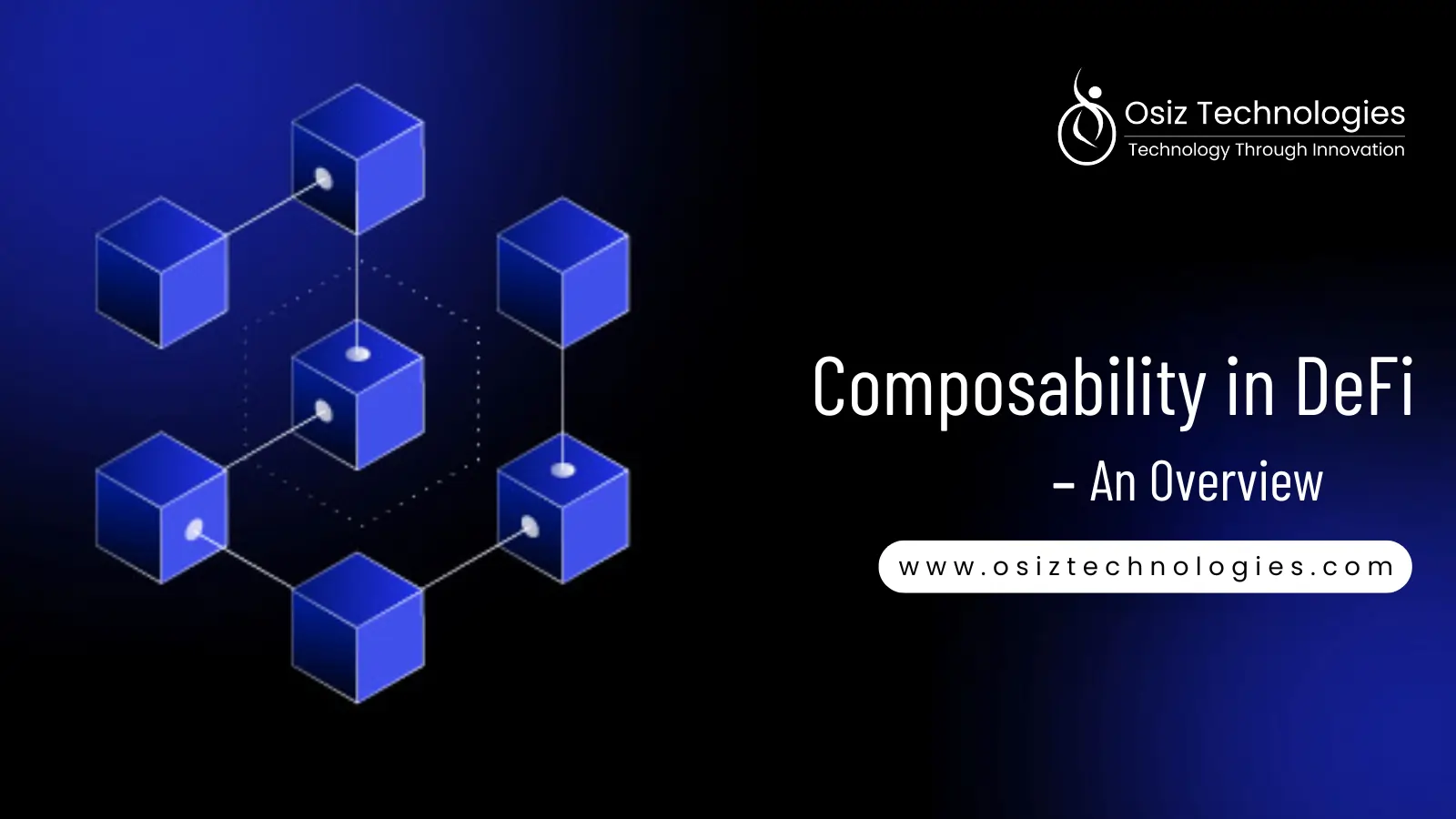
Decentralized Finance (DeFi) is changing how finance works. In DeFi, different parts can connect and work together in ways that aren't possible with old-fashioned systems. This is because of composability. Making things more efficient and creating lots of room for fresh ideas, it is just like how language models understand context and build meaning word by word.
Composability in Decentralized Exchanges
In simple terms, composability in decentralized exchanges (DEXs) means DEX protocols can easily work with other decentralized finance (DeFi) protocols to make new applications. Think of it as using LEGOs, where each protocol is a block that you can put together to build something different.
For example, you could create a yield farming plan or a lending platform that uses a DEX to automatically sell collateral if needed. This idea helps people make new things by mixing the functions of multiple services. A user could borrow a token from a lending platform and then use those borrowed funds to trade on a DEX, all in one automated process.
How a Decentralized Exchange (DEX) Works?
Decentralized Exchanges (DEXs) allow direct cryptocurrency trades through smart contracts, cutting out the middleman. Platforms such as Uniswap, SushiSwap, and Balancer use an Automated Market Maker (AMM) system, using liquidity pools instead of old-fashioned order books. People can trade straight from their wallets, keeping control of their assets, as smart contracts manage pricing and token swaps.
DEXs are strong because they are open and clear. Since everything is on a blockchain, there's no need to trust a middleman. Anyone can provide liquidity, get rewards, or create tools that work with current exchanges. This open access makes innovation easy, as new projects can add, expand, or change features of other platforms without needing approval.
What makes DEXs really strong is how well they combine with other systems. Different DeFi protocols can easily work together. For example, someone could borrow money from one platform, trade it on another, and then stake the profits somewhere else, all in one transaction. This interconnectedness turns DEXs into entrances for a whole financial system that is open, flexible, and always changing, instead of just simple trading platforms.
Composability in DEXs: The Core Idea
1. In DEXs, composability lets developers combine tools such as lending, swapping, or staking to create new DeFi products. Imagine it as building something powerful from simple pieces.
2. Yield optimizer could use a DEX for good trade prices. A liquidity aggregator can connect to many pools for easier swaps. Smart contracts work together on their own.
3. Since any DEX smart contract is open to use, developers can stack, connect, and improve them without end. DEXs become open, flexible ecosystems with shared liquidity.
4. Each protocol brings new potential, much like connecting Lego bricks. The more blocks we have, the more creative we can get. This is how DeFi moves so fast with innovation.
5. Remember, if one protocol fails or changes its code, everything built on it could be affected. This risk shows us that in DeFi, strength and weakness often come together.
What Happens When One Protocol Fails?
Chain Reaction Begins - When a DeFi protocol has a problem, like a bug or hack, connected platforms feel it fast.
Liquidity Disruption - If that protocol was giving liquidity to a DEX or lending pool, those services might not be able to get funds.
Data & Price Feed Breaks - DEX aggregators or apps using the protocol's price feeds might show wrong or missing data.
Trading or Transaction Failures - Some trades, loans, or staking might fail, causing problems or higher costs.
Temporary Ecosystem Instability - The DeFi world might slow down until backup systems get going.
Recovery Through Resilience Tools - Well-designed systems use backup plans to recover fast and keep the DEX running.
DEX Aggregators: Smart Use of Composability
DEX aggregators such as 1inch, Matcha, and Paraswap show how composability works in decentralized exchanges. Instead of using just one source of funds, they link to many DEXs and route trades through the best paths as they happen.
This design lets them gather funds from different pools, which gives traders access to better token prices, lower slippage, and better transaction costs. They bring together scattered funds across platforms, turning a fragmented DeFi space into one that is smoother and more efficient.
This idea shows the real of modular and composable design where one protocol can assist another without changing how it works. These aggregators act as a meta-layer, sitting above single exchanges and improving how they all perform. As composability keeps growing, the next step is in interoperability Liquidity, assets, and data can move freely between blockchain, building a DeFi space without borders.
Cross-Chain Composability
The future of DeFi is in connecting different blockchains. This will allow assets and data to move easily between them. Since DEXs are being built on Ethereum, BNB Chain, Solana, Avalanche, and others, it is more important than ever to link these networks.
Cross-chain integration setup lets assets and smart contracts work on different chains using bridges and other tools. LayerZero, Axelar, and Wormhole are powering DEX operations across multiple chains, bringing separate ecosystems together.
It increases available funds and makes things more scalable by using each chain's best features like Solana's speed, Ethereum's security, and Layer two networks' low costs. As connecting chains improves, it sets the stage for a fully linked DeFi system. Here, parts from different chains can work together accurately and reliably.
Best Practices for Building a Composable DEX
Modular Smart Contract Design
Using a modular design for our smart contracts means each part of the DEX like the trading engine, liquidity pool, and oracle works on its own but still connects well. This lets us do updates or fix things fast without stopping everything. It keeps our system flexible and ready for growth.
Interoperability & Open Standards
We stick to open standards like ERC-20 and ERC-4626, so our DEX works easily with other DeFi tools and wallets. This makes joining platforms simple and supports teamwork, so our DEX stays adaptable as DeFi changes.
Strong Security Framework
Security is key. We use several smart contract checks, insurance, and community input to protect both money and trust. Good security helps users feel safe and keeps things going strong.
Transparent Developer Communication
We keep open developer communication in the DeFi space. We use public documentation and update notes to help other platforms adjust when we make changes. This builds trust and avoids problems across platforms.
Reliability & Collaboration Focus
A successful DEX is all about teamwork, stability, and planning for the future. When projects work together and stay reliable, the whole DeFi space benefits. Together, these ideas make decentralized finance a connected and strong setup.
Conclusion: When DeFi Becomes an Ecosystem, Not an App
Composability transforms DeFi from isolated protocols into a connected and thriving financial ecosystem. Each exchange, lending platform, and yield protocol becomes a crucial part of this integrated network. Through composable decentralized exchanges, innovation accelerates, liquidity flows seamlessly, and users enjoy intelligent, interconnected benefits. Just as AI models learn from shared data, decentralized finance evolves through collaboration and synergy. The future of DeFi will depend on how effectively platforms interact and build together — a vision that every leading DeFi Development Company strives to bring to life, shaping an open and unified financial world.Select 7 more words to run Humanizer.
Listen To The Article

Founder & CEO Osiz Technologies
Mr. Thangapandi, the CEO of Osiz, has a proven track record of conceptualizing and architecting 100+ user-centric and scalable solutions for startups and enterprises. He brings a deep understanding of both technical and user experience aspects. The CEO, being an early adopter of new technology, said, \"I believe in the transformative power of AI to revolutionize industries and improve lives. My goal is to integrate AI in ways that not only enhance operational efficiency but also drive sustainable development and innovation.\" Proving his commitment, Mr. Thangapandi has built a dedicated team of AI experts proficient in coming up with innovative AI solutions and have successfully completed several AI projects across diverse sectors.
Recent Blogs



No 22,Astalakshmi Nagar, Thanakankullam, (Opp Seetha lakshmi Mill gate Bus stop) Thirunagar, Madurai - 625 006.
(Corporate Office)


Canada Office address, 1150, Rue Patrick, Laval, Quebec - H7Y 2C4, Canada.
(Sales Office)


Halloween
Offers

 Artificial Intelligence
- AI Development
- AI Predictive Analytics Services
- AI SaaS Development
- RAG Development
- AI Assistant Development
- ChatGPT Development
- Data Analytics Services
- AI Copilot Development
- Adaptive AI Development
- Machine Learning Development
- NLP
- AI Consulting Services
- AI Software Builder
- AI Token Development
- AI Integration Services
- Enterprise AI Solution
- AI As a Service
- AI Marketing Tools
- AI Video Generator
- Computer Vision Services
- Explore AI
- Dataset
- Machine Learning in Healthcare
- Machine Learning in Retail
- Hire AI Engineers
- Hire Prompt Engineers
- Hire ChatGPT Developers
- Hire Stable Diffusion Developers
- Hire Action Transformer Developers
- Blockchain
- Blockchain Development
- Private Blockchain Development
- Smart Contract Development
- Custom Blockchain Development
- Solana Blockchain Development
- Polygon Blockchain Development
- Public Blockchain Development
- DAO Blockchain Development
- Binance Smart Chain (BSC) Blockchain Development
- DApp Development
- Solana DApp Development
- White Label Blockchain Solutions
- Custom Blockchain On Avalanche
- Custom Blockchain On Polygon
- Blockchain Game Development
- Blockchain Consulting Services
- Blockchain Explorer Development
- Ethereum Blockchain Development
- TRON Blockchain Development
- Prediction Market Platform Development Company
Layer 1 & 2 Solutions- Layer-1 Blockchain Development
- Cross Chain Bridge Development
- Data Availability Layer Development
- Ethereum Layer 2 Scaling Solutions
- Cross-L2 DEX Solution
- Layer 2 Token Development
- Layer 2 Token Marketing
- Layer 2 Cryptocurrency Development
- Layer 2 Solutions For Blockchain Games
- Layer 2 Solutions For Web3 Gaming
- Layer 2 Blockchain Solutions
- Rollups As A Service
- Optimistic Rollups Development
- ZK Tech Development
- Bitcoin Layer 2 Solutions
Crypto Exchange- Cryptocurrency Exchange Development
- White Label Crypto Exchange
- Decentralized Exchange Development
- P2P Exchange Development
- Crypto Derivatives Exchange Development
- Centralized Exchange Development
- Crypto Exchange Clone Script
- Cryptocurrency Exchange App Development
- OTC Exchange Development
- Exchange Listing Services
- Binance Like Exchange Development
- Bitstamp Like Exchange Development
- Crypto Exchange Script
CryptoCrypto WalletToken Standards- Token Development
- AI Token Development
- RWA Tokenization Development
- Coinremitter Clone Script
- Asset Tokenization
- Real Estate Tokenization
- Tokenization Platform Development
- Crypto ETF Development
- Solona Token Development
- Semi-Fungible Token Development
- BEP20 Token Development
- Ethereum Token Development
- ERC1400 Token Development
- ERC998 Token Development
- ERC 721 Token Development
- ERC20 Token Development
- Defi Token Development
- ERC1155 Token Development
- BEP721 Token Development
- Utility Token Development
- ERC 777 Token Development
- ERC 827 Token Development
- Social Token Development
- Metaverse Token Development
- Tron Token Development
- ERC404 Token Development
- Governance Token
- Shibarium Token
- polygon Token
- BRC-20
- TRC20 Token Development
- TRC10 Token Development
- Soulbound Token Development
- NFT Token Development
Trading BotsClone- Crypto Exchange Clone Script
- Binance Clone Script
- Metamask Clone Script
- Coinbase Clone Script
- Kucoin Clone Script
- Paxful Clone Script
- Remitano Clone Script
- Wazirx Clone Script
- ByBit Clone Script
- Bitfinex Clone Script
- MEXC Clone Script
- Bitget Clone Script
- Cointool App Clone Script
- Trust Wallet Clone App
- Coinmarketcap Clone Script
- Changelly Clone Script
- BingX Clone Script
CybersecurityApp SecurityDigital Forensics & Incident ResponseAudit & ConsultingEducation & TrainingSolutionsWeb 3DeFi- Decentralized Finance (DeFi) Development
- DeFi Lending/ Borrowing Platform Development
- DeFi Staking Platform Development
- DeFi Token Development
- DeFi Wallet Development
- DeFi Smart Contract Development
- DeFi DApp Development
- Decentralized Exchange Development
- DeFi Insurance Development
- DeFi Crypto Synthetic Assets Development
Game Development- Game Development
- Android Game Development
- IOS Game Development
- Metaverse Game Development
- VR Game Development
- AI Game Development
- Unity 3D Game Development
- Unreal Engine Game Development
- Mobile Game Development
- Blockchain Game Development
- NFT Game Development
- Play to Earn Game Development
- Move to Earn Game Development
- Casino Game Development
- Slot Game Development
- Poker Game Development
- AAA Game Development
- AR Game Development
- Social Network Game Development
- Gamification Services
- Decentralized Sports Betting Platform
- Sports Betting Dapp Development
- Blockchain Casino Game Development
- Game Asset Creation
- Baccarat Game Development
- Rollbit Clone Script
- Fortnite Clone Script
- Slot Game Development
- Tap to Earn Game Development
- Slot Game Development
Metaverse Platforms- Metaverse Game Development
- Metaverse Event Platform Development
- Metaverse Virtual Mall Development
- Metaverse NFT Marketplace Development
- Metaverse Token Development
- Metaverse Virtual Land Development
- Metaverse Avatar Development
- Metaverse 3d Space Development
- Metaverse Real Estate Development
- Metaverse Social Media Platform Development
- Top 10 Metaverse Development Company
- Metaverse Business Ideas
- Metaverse Launchpad Development
- Metaverse App Development
- Metaverse Casino Game Development
NFT SolutionsNFT Platforms- NFT Minting Development
- NFT Token Development
- NFT Exchange Platform Development
- NFT Launchpad Development
- NFT Fashion Marketplace Development
- NFT Art Marketplace Development
- NFT Music Marketplace Development
- Carbon Credits NFT Marketplace Development
- Binance NFT Marketplace Development
- Polygon NFT Marketplace Development
- Solana NFT Marketplace Development
- Influencers NFT Marketplace Development
- NFT Ticketing Marketplace Development
- DeFi NFT Marketplace Development
- NFT Fantasy Sports Platform Development
- NFT Storage Development
- NFT Lending Platform Development
- Top10 NFT Business Ideas
NFT Game ClonesSustainabilityServiceNow - Blog
- Contact Us
- Works