
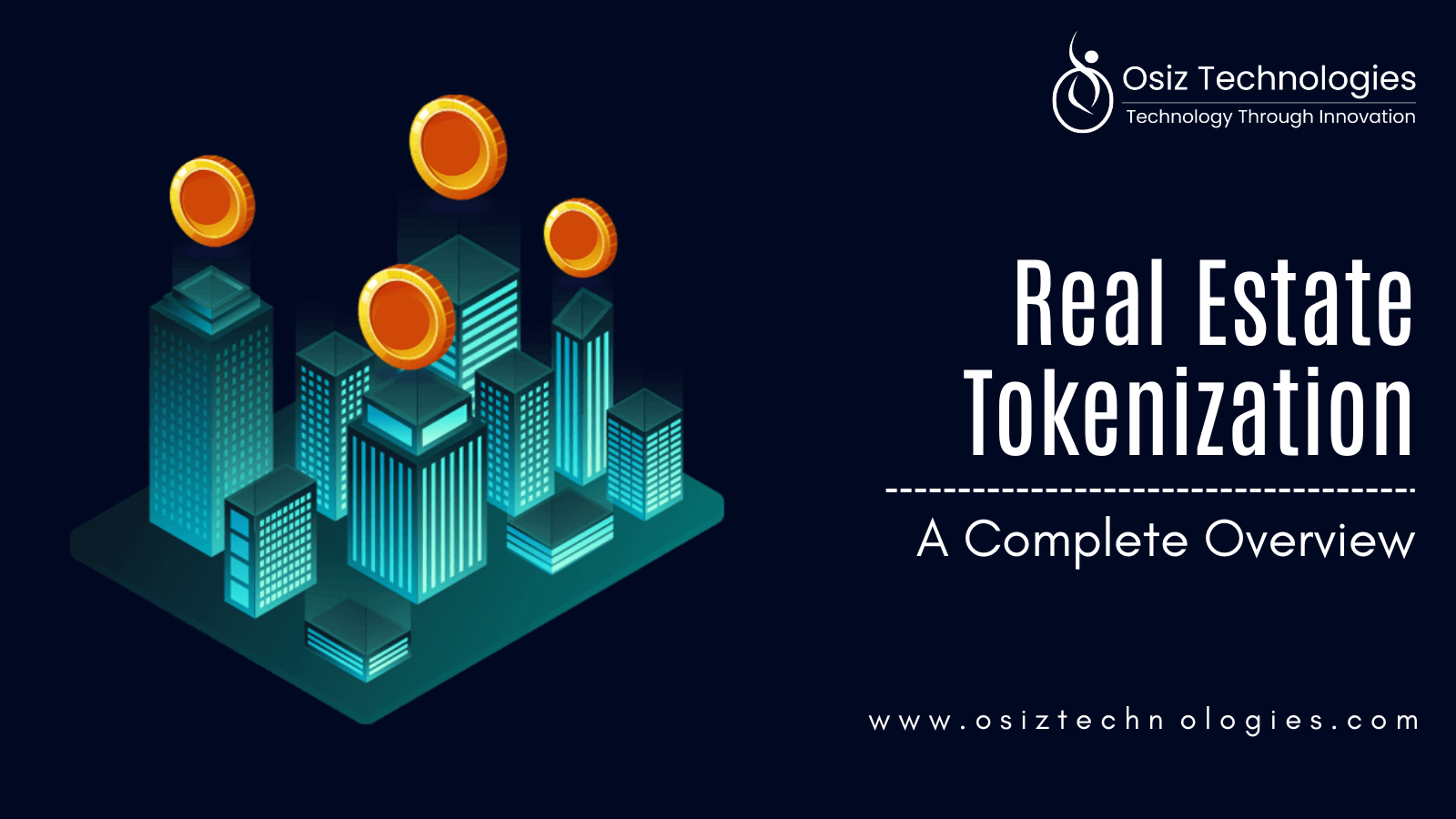
The real estate industry is evolving, with property buying, selling, and management increasingly moving online. With Real Estate Tokenization, blockchain technology represents property value, which means more people can invest, and deals happen quicker. This change affects how investors, builders, and companies handle ownership and growing value over time.
Understanding Real Estate Tokenization
Real estate tokenization involves transforming property ownership into digital tokens on a blockchain, enabling fractional ownership that can be readily purchased, sold, and traded. This increases access to high-value real estate by making it more liquid and available to a broader range of investors. Each token represents ownership, income rights, or other benefits, with smart contracts automatically managing tasks such as rent payments and transfers all securely and transparently recorded on a digital ledger.
How Real Estate Tokenization Works?
Step 1: Property Evaluation and Legal Structuring
We begin by assessing the property's value, verifying all details are accurate, and finalizing the legal aspects ensuring the property is eligible to be tokenized.We clearly lay out who owns what, how money is made, and what rules we need to follow. Getting this right means the property can easily go digital.
Step 2: Token Creation and Smart Contract Deployment
Once the structure is set, we create digital tokens that show who owns what or who gets what money. We use special systems to make these real estate tokens. Smart contracts are set up with the rules for moving tokens, paying out dividends, and managing things on the blockchain. This keeps everything automatic, open, and correct.
Step 3: Blockchain Registration and Asset Linking
Property details and token data are recorded on a blockchain, creating a secure, immutable connection between the physical property and its digital representation. This builds trust for real estate deals on the blockchain. Putting it on the blockchain means records can't be changed and can always be checked.
Step 4: Investor Onboarding and Token Distribution
Investors can access high-end properties at reduced prices through a regulated platform, lowering entry barriers and making real estate ownership more accessible to a broader audience. It makes property investment more affordable and accessible to a wider range of people.
Step 5: Trading, Management, and Ongoing Compliance
Once tokens are distributed, users can hold, transfer, or trade them according to the platform's guidelines. Smart contracts automatically manage income distribution, reporting, and compliance, ensuring seamless operations that keep tokenized assets active and easily tradable in the long term.
Key Advantages of Tokenized Real Estate
Enhanced Transaction Efficiency and Transparency
Blockchain eliminates unnecessary intermediaries and redundant steps, enabling faster transactions. Each agreement is transparently documented, fostering trust and accountability.
Improved Asset Liquidity
This simplifies investing by allowing easier entry and exit compared to traditional property sales, as these tokens can be traded more readily.
Accessible Investment Opportunities for Small Investors
Expensive properties become available through token shares. Smaller investors can join in without needing huge amounts of money.
Open and Inclusive Market Structure
Token platforms are accessible globally, attracting users from worldwide, and investors can explore various property markets online.
Lower Counterparty Risk
Smart contracts execute their terms automatically, minimizing the need for third-party involvement. Computers handle financial transactions, ownership, and payment procedures.
Limitations and Regulatory Constraints of Real Estate Tokenization
Smart Contract Security Vulnerabilities
Automation is great for making things run smoother, but if smart contracts aren't written well, they can cause issues. To avoid problems, it's important to check the code and keep an eye on things. Security is still a big deal in tokenized systems.
Challenging Licensing and Approval Processes
Tokenizing real estate needs to follow local property and security rules. Each area has different licensing needs, which can make things take longer. A lot of places are still figuring out the exact rules.
Evolving Regulatory Compliance Requirements
The rules for Tokenized Real Estate are always changing as regulators get used to blockchain. Platforms need to keep up with reporting and protecting investors. You'll probably need to make updates to stay compliant.
Taxation Complexity and Reporting Challenges
The tax treatment of tokenized assets varies by country and investor; monitoring income, transfers, and profits can be challenging, and global efforts to establish straightforward tax frameworks are ongoing.
Technical Challenges in Real Estate Tokenization
Data Verification and Authentication
A major technological hurdle in real estate tokenization is ensuring that property data is accurate and authentic, as tokenized assets rely on precise legal, ownership, and valuation information. Putting property documents (kept off-chain) together with records on the blockchain needs safe ways to check things, so we can stop mistakes and fraud. If blockchain data and real-world records don't match, it can cause arguments and problems with regulators. Keeping data safe from tampering while allowing updates across different systems makes things even more complicated.
Wallet Recovery and Retrieval
Wallet recovery is an essential challenge in real estate tokenization. If private keys are lost, people could lose access to property tokens worth a lot of money. Unlike regular systems, blockchain wallets don't have central recovery options, which makes it hard to get assets back. Putting safe recovery systems in place without hurting decentralization calls for careful tech planning. Finding the right balance between ease of use and strong safety measures is still a key worry for tokenized real estate platforms.
Final Thoughts on Real Estate Tokenization
Real estate tokenization is reshaping property ownership by combining blockchain technology with physical assets. As adoption accelerates, businesses require secure, compliant, and scalable platforms. Osiz, a trusted Token Development Company, delivers end-to-end solutions to build real estate tokenization platforms that ensure efficiency, transparency, and sustainable long-term growth.
Listen To The Article

Founder & CEO Osiz Technologies
Mr. Thangapandi, the CEO of Osiz, has a proven track record of conceptualizing and architecting 100+ user-centric and scalable solutions for startups and enterprises. He brings a deep understanding of both technical and user experience aspects. The CEO, being an early adopter of new technology, said, \"I believe in the transformative power of AI to revolutionize industries and improve lives. My goal is to integrate AI in ways that not only enhance operational efficiency but also drive sustainable development and innovation.\" Proving his commitment, Mr. Thangapandi has built a dedicated team of AI experts proficient in coming up with innovative AI solutions and have successfully completed several AI projects across diverse sectors.
Recent Blogs





No 22,Astalakshmi Nagar, Thanakankullam, (Opp Seetha lakshmi Mill gate Bus stop) Thirunagar, Madurai - 625 006.
(Corporate Office)


Canada Office address, 1150, Rue Patrick, Laval, Quebec - H7Y 2C4, Canada.
(Sales Office)


Meydan Grandstand, 6th floor, Meydan Road, Nad Al Sheba, Dubai, U.A.E.
(Sales Office)


Halloween
Offers

 Artificial Intelligence
- AI Development
- AI Predictive Analytics Services
- AI SaaS Development
- RAG Development
- AI Assistant Development
- ChatGPT Development
- Data Analytics Services
- AI Copilot Development
- Adaptive AI Development
- Machine Learning Development
- NLP
- AI Consulting Services
- AI Software Builder
- AI Token Development
- AI Integration Services
- Enterprise AI Solution
- AI As a Service
- AI Marketing Tools
- AI Video Generator
- Computer Vision Services
- Explore AI
- Dataset
- Machine Learning in Healthcare
- Machine Learning in Retail
- Hire AI Engineers
- Hire Prompt Engineers
- Hire ChatGPT Developers
- Hire Stable Diffusion Developers
- Hire Action Transformer Developers
- Blockchain
- Blockchain Development
- Private Blockchain Development
- Smart Contract Development
- Custom Blockchain Development
- Solana Blockchain Development
- Polygon Blockchain Development
- Public Blockchain Development
- DAO Blockchain Development
- Binance Smart Chain (BSC) Blockchain Development
- DApp Development
- Solana DApp Development
- White Label Blockchain Solutions
- Custom Blockchain On Avalanche
- Custom Blockchain On Polygon
- Blockchain Game Development
- Blockchain Consulting Services
- Blockchain Explorer Development
- Ethereum Blockchain Development
- TRON Blockchain Development
- Prediction Market Platform Development Company
Layer 1 & 2 Solutions- Layer-1 Blockchain Development
- Cross Chain Bridge Development
- Data Availability Layer Development
- Ethereum Layer 2 Scaling Solutions
- Cross-L2 DEX Solution
- Layer 2 Token Development
- Layer 2 Token Marketing
- Layer 2 Cryptocurrency Development
- Layer 2 Solutions For Blockchain Games
- Layer 2 Solutions For Web3 Gaming
- Layer 2 Blockchain Solutions
- Rollups As A Service
- Optimistic Rollups Development
- ZK Tech Development
- Bitcoin Layer 2 Solutions
Crypto Exchange- Cryptocurrency Exchange Development
- White Label Crypto Exchange
- Decentralized Exchange Development
- P2P Exchange Development
- Crypto Derivatives Exchange Development
- Centralized Exchange Development
- Crypto Exchange Clone Script
- Cryptocurrency Exchange App Development
- OTC Exchange Development
- Exchange Listing Services
- Binance Like Exchange Development
- Bitstamp Like Exchange Development
- Crypto Exchange Script
CryptoCrypto WalletToken Standards- Token Development
- AI Token Development
- RWA Tokenization Development
- Coinremitter Clone Script
- Asset Tokenization
- Real Estate Tokenization
- Tokenization Platform Development
- Crypto ETF Development
- Solona Token Development
- Semi-Fungible Token Development
- BEP20 Token Development
- Ethereum Token Development
- ERC1400 Token Development
- ERC998 Token Development
- ERC 721 Token Development
- ERC20 Token Development
- Defi Token Development
- ERC1155 Token Development
- BEP721 Token Development
- Utility Token Development
- ERC 777 Token Development
- ERC 827 Token Development
- Social Token Development
- Metaverse Token Development
- Tron Token Development
- ERC404 Token Development
- Governance Token
- Shibarium Token
- polygon Token
- BRC-20
- TRC20 Token Development
- TRC10 Token Development
- Soulbound Token Development
- NFT Token Development
Trading BotsClone- Crypto Exchange Clone Script
- Binance Clone Script
- Metamask Clone Script
- Coinbase Clone Script
- Kucoin Clone Script
- Paxful Clone Script
- Remitano Clone Script
- Wazirx Clone Script
- ByBit Clone Script
- Bitfinex Clone Script
- MEXC Clone Script
- Bitget Clone Script
- Cointool App Clone Script
- Trust Wallet Clone App
- Coinmarketcap Clone Script
- Changelly Clone Script
- BingX Clone Script
CybersecurityApp SecurityDigital Forensics & Incident ResponseAudit & ConsultingEducation & TrainingSolutionsWeb 3DeFi- Decentralized Finance (DeFi) Development
- DeFi Lending/ Borrowing Platform Development
- DeFi Staking Platform Development
- DeFi Token Development
- DeFi Wallet Development
- DeFi Smart Contract Development
- DeFi DApp Development
- Decentralized Exchange Development
- DeFi Insurance Development
- DeFi Crypto Synthetic Assets Development
Game Development- Game Development
- Android Game Development
- IOS Game Development
- Metaverse Game Development
- VR Game Development
- AI Game Development
- Unity 3D Game Development
- Unreal Engine Game Development
- Mobile Game Development
- Blockchain Game Development
- NFT Game Development
- Play to Earn Game Development
- Move to Earn Game Development
- Casino Game Development
- Slot Game Development
- Poker Game Development
- AAA Game Development
- AR Game Development
- Social Network Game Development
- Gamification Services
- Decentralized Sports Betting Platform
- Sports Betting Dapp Development
- Blockchain Casino Game Development
- Game Asset Creation
- Baccarat Game Development
- Rollbit Clone Script
- Fortnite Clone Script
- Slot Game Development
- Tap to Earn Game Development
- Slot Game Development
Metaverse Platforms- Metaverse Game Development
- Metaverse Event Platform Development
- Metaverse Virtual Mall Development
- Metaverse NFT Marketplace Development
- Metaverse Token Development
- Metaverse Virtual Land Development
- Metaverse Avatar Development
- Metaverse 3d Space Development
- Metaverse Real Estate Development
- Metaverse Social Media Platform Development
- Top 10 Metaverse Development Company
- Metaverse Business Ideas
- Metaverse Launchpad Development
- Metaverse App Development
- Metaverse Casino Game Development
NFT SolutionsNFT Platforms- NFT Minting Development
- NFT Token Development
- NFT Exchange Platform Development
- NFT Launchpad Development
- NFT Fashion Marketplace Development
- NFT Art Marketplace Development
- NFT Music Marketplace Development
- Carbon Credits NFT Marketplace Development
- Binance NFT Marketplace Development
- Polygon NFT Marketplace Development
- Solana NFT Marketplace Development
- Influencers NFT Marketplace Development
- NFT Ticketing Marketplace Development
- DeFi NFT Marketplace Development
- NFT Fantasy Sports Platform Development
- NFT Storage Development
- NFT Lending Platform Development
- Top10 NFT Business Ideas
NFT Game ClonesSustainabilityServiceNow - Blog
- Contact Us
- Works