How AI-Integrated App Scripts Are Transforming Startup Development

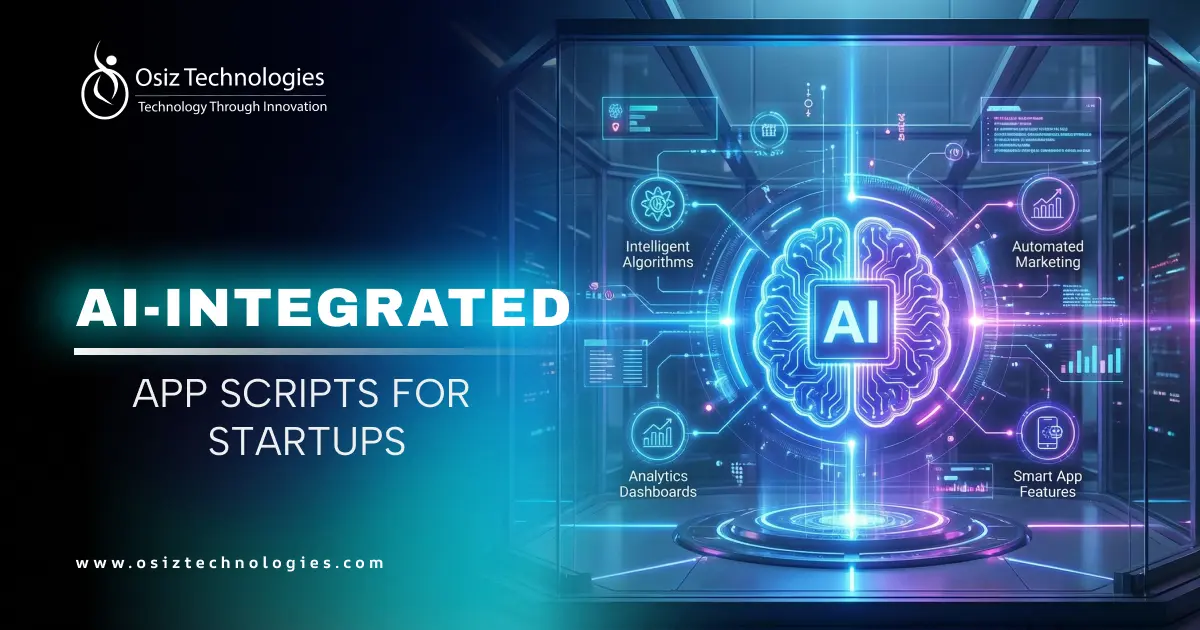
Integrating artificial intelligence into application scripts enables operations to function with little to no human oversight. Software frameworks built on machine learning enable adaptive and dynamic responses. Automation is achieved when development processes incorporate intelligent processing layers. Product delivery times decrease as systems adopt self-modifying code architectures.
What Are AI-Integrated App Scripts?
AI-powered app scripts are cloud-based JavaScript tools that automate, personalize, and enhance Google Workspace apps like Sheets, Docs, and Gmail. By integrating with AI models such as OpenAI’s GPT or Google’s Gemini API, these scripts enable users to add intelligent functionality directly into spreadsheets and documents, streamlining workflows, analyzing data, and creating content automatically.
1. Faster Product Development with AI-Integrated Scripts
Smart code systems help startups build applications faster by using prefabricated components and automated code generation, reducing manual development. These AI-driven scripts simplify development workflows, allowing developers to focus on core application features instead of repetitive coding tasks. This approach speeds up development while reducing system complexity.
AI-driven automation enhances debugging and testing by offering real-time code suggestions and smart error identification, boosting development speed and minimizing errors. Through built-in development tools, startups can develop sophisticated applications more quickly without compromising stability.
When artificial intelligence supports software development, startups can accelerate product launches without increasing costs. Automated coding, testing, and debugging reduce manual effort and shorten development cycles. This improves productivity, lowers development expenses, and allows teams to focus on product design and innovation.
2. Reducing Startup Development Costs Through AI Automation
AI reduces costs across app development by beginning with automated code generation, as routine tests execute without human intervention, saving time on validation tasks. When errors get detected early, fixes require less effort. With smart systems managing debugging steps, human oversight becomes selective. Since frameworks handle standard workflows, smaller teams manage larger workloads. Efficiency rises when repeated actions follow predefined logic patterns.
With smarter software tools, early-stage companies create flexible apps using less time and simpler systems. Because artificial intelligence supports core workflows, large teams become unnecessary without sacrificing output standards. When automated processes handle routine tasks, focus shifts naturally toward refining ideas and expanding capabilities.
With AI driven development methods, new companies cut ongoing costs without sacrificing growth-ready systems. Because smart workflows evolve through machine learning, apps grow more effective over time. When budget control improves survival chances, attention shifts toward faster releases of early stage versions.
3. Accelerating MVP Launch for Startups
Beginning with small teams, some new companies turn to basic versions of products meant for early testing. Instead of waiting months, artificial intelligence inside application code offers tools that work right away. Because smart software helps write parts of apps, making something people can try takes less time. With quicker creation cycles, these businesses observe how actual users respond.
Early in app development, smart structures enable teams to include tools like suggestion engines, self-running processes, and foresight analytics within minimal versions. Such additions boost core functions without slowing launch plans. Once basic apps gain depth and center on users, attention moves guided by embedded intelligence to shaping how people interact with them.
On-Startups move from early models to complete mobile apps using artificial intelligence, shaped by flexible development methods.These systems evolve gradually driven by tools that adjust with new updates. As basic versions evolve into full-fledged products, attention turns to refined experiences powered by smart features. Growth unfolds gradually and quietly, step by step.
4. Enhancing User Experience with Built-In AI Features
Personalized User Recommendations
Beginning with patterns in choices, software shaped by artificial intelligence studies actions to offer fitting recommendations. Because habits guide output, digital tools adjust what appears based on past activity. When responses match expectations, interest tends to grow steadily over time.
Intelligent Chat and Support Systems
One way apps assist users involves built-in conversation tools shaped by artificial intelligence development. Because responses happen fast, typical questions get resolved without delay. When interactions grow smoother, experience tends to improve as well. Following better automation, attention shifts toward guessing what comes next.
Predictive User Behavior Analysis
Within artificial intelligence application development, predictive analysis allows systems to forecast behaviors, offering timely recommendations instead. Such foresight enhances interaction quality along with ease of use throughout online environments. Because these insights refine how people engage with tools.
Automated Workflow Assistance
When apps are built using Smart Mobile App Development with AI, routine actions like setting schedules, sending alerts, or handling content run automatically. Because these systems adjust over time, digital environments become easier to navigate. With smoother processes enhancing daily use, attention shifts toward how software learns from individual behavior patterns.
Adaptive Learning Interfaces
Beginning with subtle shifts in design, AI-driven mobile apps shape interfaces that evolve alongside user habits. Instead of static layouts, these tools respond to choices people make over time. Through ongoing adjustments, interaction becomes more aligned with individual needs.
5. Enabling Data-Driven Decision Making for Startups
Intelligence-driven analysis enables startups to examine large datasets during software development. Machine learning models identify patterns in user behavior and generate real-time insights that support data-driven decisions. Continuous feedback and adaptive systems help teams respond quickly to market changes while reducing reliance on manual analysis.
Predictive analytics integrated into application scripts helps startups detect market trends, understand customer behavior, and identify operational opportunities. These insights support product improvements, audience targeting, and better user experiences.
Using smart algorithms, startups convert raw data into actionable insights through real-time analytics and reporting tools. This enables teams to monitor product performance, refine strategies, and support growth with data-driven decision-making.
Why Startups Are Adopting AI-Integrated App Scripts
Startups are adopting AI integrated app scripts to speed up product development, reduce costs, and build intelligent applications. Startups can develop scalable, user-adaptive applications using cutting-edge AI-powered frameworks and automation. As a leading AI development company, Osiz helps businesses build intelligent, AI-driven solutions that accelerate development and support ongoing product enhancements.
Listen To The Article

Founder & CEO Osiz Technologies
Mr. Thangapandi, the CEO of Osiz, has a proven track record of conceptualizing and architecting 100+ user-centric and scalable solutions for startups and enterprises. He brings a deep understanding of both technical and user experience aspects. The CEO, being an early adopter of new technology, said, "I believe in the transformative power of AI to revolutionize industries and improve lives. My goal is to integrate AI in ways that not only enhance operational efficiency but also drive sustainable development and innovation." Proving his commitment, Mr. Thangapandi has built a dedicated team of AI experts proficient in coming up with innovative AI solutions and have successfully completed several AI projects across diverse sectors.
Recent Blogs




No 22,Astalakshmi Nagar, Thanakankullam, (Opp Seetha lakshmi Mill gate Bus stop) Thirunagar, Madurai - 625 006.
(Corporate Office)


Canada Office address, 1150, Rue Patrick, Laval, Quebec - H7Y 2C4, Canada.
(Sales Office)



Exclusive LaunchPad
30% Off

- Explore AI
 Artificial Intelligence
- AI Development
- AI as a Service
- Data and Analytics Services
- Machine Learning Development
- Enterprise AI Solution
- AI Consutling Services
- AI Integration Services
- AI Agent Development
- Agentic AI Development
- AI Assistant Development
- Hire AI Engineers
- Hire Prompt Engineers
- Hire Chatgpt Developers
- Hire Stable Diffusion Developers
- Hire Action Transformer Developers
- AI Chatbot Development
- Transformer Model Development
- AI Co-Pilot Development
- Adaptive AI Development
- Chatgpt Development
- Large Language Model Development
- NLP
- AI Brainstorming
- AI Consulting and Idealogy Development
Blockchain- Blockchain Development
- Private Blockchain Development
- Smart Contract Development
- Custom Blockchain Development
- Solana Blockchain Development
- Polygon Blockchain Development
- Public Blockchain Development
- DAO Blockchain Development
- Binance Smart Chain (BSC) Blockchain Development
- DApp Development
- Solana DApp Development
- White Label Blockchain Solutions
- Custom Blockchain On Avalanche
- Custom Blockchain On Polygon
- Blockchain Game Development
- Blockchain Consulting Services
- Blockchain Explorer Development
- Ethereum Blockchain Development
- TRON Blockchain Development
- Prediction Market Platform Development Company
Layer 1 & 2 Solutions- Layer-1 Blockchain Development
- Cross Chain Bridge Development
- Data Availability Layer Development
- Ethereum Layer 2 Scaling Solutions
- Cross-L2 DEX Solution
- Layer 2 Token Development
- Layer 2 Token Marketing
- Layer 2 Cryptocurrency Development
- Layer 2 Solutions For Blockchain Games
- Layer 2 Solutions For Web3 Gaming
- Layer 2 Blockchain Solutions
- Rollups As A Service
- Optimistic Rollups Development
- ZK Tech Development
- Bitcoin Layer 2 Solutions
CryptoCrypto Exchange- Cryptocurrency Exchange Development
- White Label Crypto Exchange
- Decentralized Exchange Development
- P2P Exchange Development
- Crypto Derivatives Exchange Development
- Centralized Exchange Development
- Crypto Exchange Clone Script
- Cryptocurrency Exchange App Development
- OTC Exchange Development
- Exchange Listing Services
- Binance Like Exchange Development
- Bitstamp Like Exchange Development
- Crypto Exchange Script
Crypto WalletToken Standards- Token Development
- AI Token Development
- RWA Tokenization Development
- Coinremitter Clone Script
- Asset Tokenization
- Real Estate Tokenization
- Tokenization Platform Development
- Crypto ETF Development
- Solona Token Development
- Semi-Fungible Token Development
- BEP20 Token Development
- Ethereum Token Development
- ERC1400 Token Development
- ERC998 Token Development
- ERC 721 Token Development
- ERC20 Token Development
- Defi Token Development
- ERC1155 Token Development
- BEP721 Token Development
- Utility Token Development
- ERC 777 Token Development
- ERC 827 Token Development
- Social Token Development
- Metaverse Token Development
- Tron Token Development
- ERC404 Token Development
- Governance Token
- Shibarium Token
- polygon Token
- BRC-20
- TRC20 Token Development
- TRC10 Token Development
- Soulbound Token Development
- NFT Token Development
Trading BotsClone- Crypto Exchange Clone Script
- Binance Clone Script
- Metamask Clone Script
- Coinbase Clone Script
- Kucoin Clone Script
- Paxful Clone Script
- Remitano Clone Script
- Wazirx Clone Script
- ByBit Clone Script
- Bitfinex Clone Script
- MEXC Clone Script
- Bitget Clone Script
- Cointool App Clone Script
- Trust Wallet Clone App
- Coinmarketcap Clone Script
- Changelly Clone Script
- BingX Clone Script
CybersecurityApp SecurityDigital Forensics & Incident ResponseAudit & ConsultingEducation & TrainingSolutionsWeb 3DeFi- Decentralized Finance (DeFi) Development
- DeFi Lending/ Borrowing Platform Development
- DeFi Staking Platform Development
- DeFi Token Development
- DeFi Wallet Development
- DeFi Smart Contract Development
- DeFi DApp Development
- Decentralized Exchange Development
- DeFi Insurance Development
- DeFi Crypto Synthetic Assets Development
Game Development- Game Development
- Android Game Development
- IOS Game Development
- Metaverse Game Development
- VR Game Development
- AI Game Development
- Unity 3D Game Development
- Unreal Engine Game Development
- Mobile Game Development
- Blockchain Game Development
- NFT Game Development
- Play to Earn Game Development
- Move to Earn Game Development
- Casino Game Development
- Slot Game Development
- Poker Game Development
- AAA Game Development
- AR Game Development
- Social Network Game Development
- Gamification Services
- Decentralized Sports Betting Platform
- Sports Betting Dapp Development
- Blockchain Casino Game Development
- Game Asset Creation
- Baccarat Game Development
- Rollbit Clone Script
- Fortnite Clone Script
- Slot Game Development
- Tap to Earn Game Development
- Slot Game Development
Metaverse Platforms- Metaverse Game Development
- Metaverse Event Platform Development
- Metaverse Virtual Mall Development
- Metaverse NFT Marketplace Development
- Metaverse Token Development
- Metaverse Virtual Land Development
- Metaverse Avatar Development
- Metaverse 3d Space Development
- Metaverse Real Estate Development
- Metaverse Social Media Platform Development
- Top 10 Metaverse Development Company
- Metaverse Business Ideas
- Metaverse Launchpad Development
- Metaverse App Development
- Metaverse Casino Game Development
NFT SolutionsNFT Platforms- NFT Minting Development
- NFT Token Development
- NFT Exchange Platform Development
- NFT Launchpad Development
- NFT Fashion Marketplace Development
- NFT Art Marketplace Development
- NFT Music Marketplace Development
- Carbon Credits NFT Marketplace Development
- Binance NFT Marketplace Development
- Polygon NFT Marketplace Development
- Solana NFT Marketplace Development
- Influencers NFT Marketplace Development
- NFT Ticketing Marketplace Development
- DeFi NFT Marketplace Development
- NFT Fantasy Sports Platform Development
- NFT Storage Development
- NFT Lending Platform Development
- Top10 NFT Business Ideas
NFT Game ClonesSustainabilityServiceNow- Blog
- Contact Us
- Works
- Dataset