
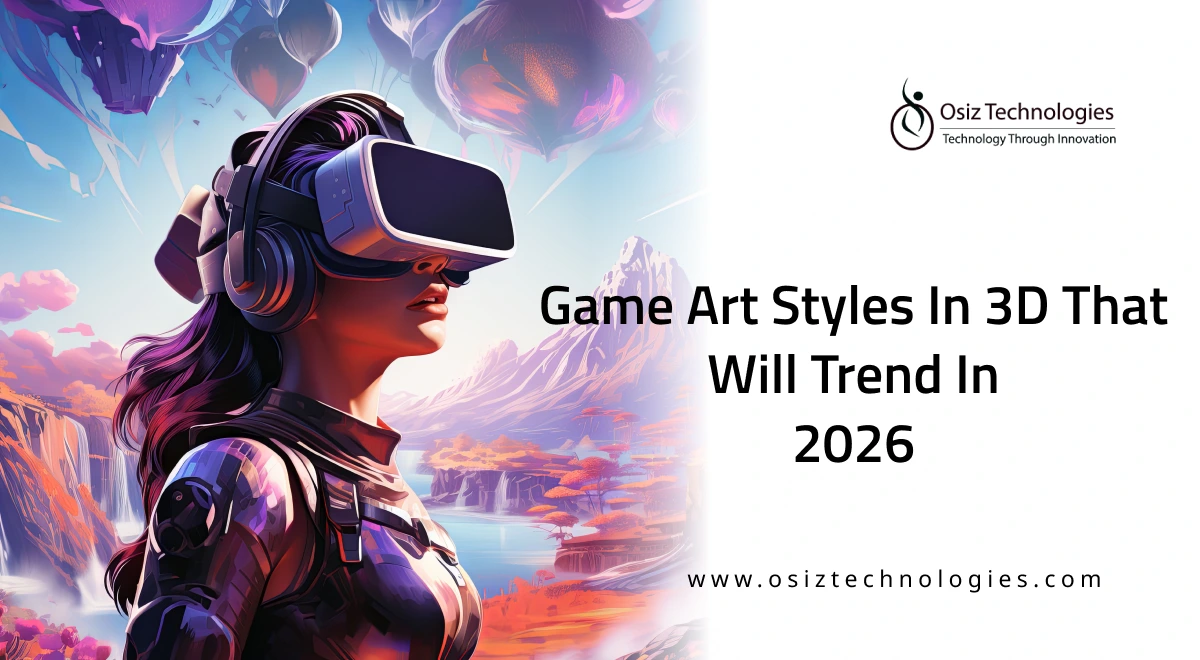
3D game art is evolving quickly, shaping how players experience virtual worlds. From visuals to style choices, the right art can define a game’s identity, appeal, and overall enjoyment, making it a crucial element for developers and studios looking to stay ahead. Newly developing tools and creative techniques are pushing limits faster than ever before. As a result, teams now have endless possibilities to create worlds that feel larger, deeper, and more memorable.
Introduction to 3D Game Art Styles in 2026
The rise of 3D game art has really pulled players into virtual worlds and stories. To keep players interested, game developers are watching the 3D game design trends for 2026.
Game companies mix tech with imagination to make unique games, from fun characters to realistic worlds. To make games faster without losing quality, many teams get help from game art outsourcing studios.
With newer game engines, the difference between what's real and what's not is getting harder to see. Studios are trying things like bright lighting and 3D game animation to give games a better look.
Popular 3D Game Art Styles to Watch
The 3D game art environment is evolving quickly, with unique styles building how players experience digital worlds.
1) Hybrid 3D Art Styles
Combines realistic rendering with artistic or stylized elements to create visually unique worlds and characters. This style provides flexibility, allowing games to stand out while maintaining technical viability.
Where We Can See It: Found in adventure, fantasy, and experimental indie games that mix realism and creative imagination.
Technical Approach: Combines cel-shading, dynamic lighting, and hybrid 3D art styles to balance realism with artistic expression.
2) Cel-Shaded and Comic Book Aesthetics
Uses bold outlines, flat colors, and stylized shading to simulate comics and animated visuals. This style gives games a unique, artistic look that stands out from accurate renderings.
Where We Can See It: Common in indie titles, stylized RPGs, and action-adventure games that aim for a distinctive visual identity.
Technical Approach: Combines cel-shading techniques, texture painting, and stylized 3D game art workflows to achieve bright, comic-inspired visuals.
3) Blender Breaks into Movie-Making
Blender is no longer just for games; it’s being used to produce cinematic-quality visuals and sequences. Its flexibility allows developers to create creative story-based experiences directly from the software.
Where We Can See It: Used in animated shorts, cinematic game cutscenes, and indie productions aiming for high-quality visuals.
Technical Approach: Combines modeling, texturing, and animation within Blender’s integrated workflow for efficient movie-quality output.
4) High-Gloss Hyper-Realism
Highlights ultra-reflective surfaces, realistic materials, and photoreal lighting for accurate visuals. This style aims to push immersion by mimicking how light interacts with real-world objects.
Where We Can See It: Used in AAA games, cinematic sequences, and promotional trailers where realism is crucial.
Technical Approach: Combines hyper-realistic game visuals, PBR materials, and advanced lighting engines to create glossy, realistic renders.
5) Micro-Environments and Diorama Worlds
They put a lot of attention into designing rich, small environments with lots to explore. Hope players can enjoy the detail and care they put into each space.
Where We Can See It: Popular in puzzle games, VR experiences, and collectible diorama-style games for unique storytelling.
Technical Approach: Artists build modular assets, use 3D environment design trends, and optimize lighting to create large, explorable micro-worlds.
6) 3D Mascots and Brand Characters
This style aims to build memorable 3D mascots and brand images that boost identity and audience interest. They're built to connect with people and look good everywhere.
Where We Can See It: Found in mobile games, marketing campaigns, and interactive websites featuring brand storytelling.
Technical Approach: Artists create character models, set up their controls, and animate them while making sure they align with the brand. They use tools like Maya, Blender, and motion capture.
7) Photorealistic VR Environments
We build realistic virtual environments for VR games and experiences. Our aim is to give players total presence through detailed textures, lighting, and spatial audio.
Where We Can See It: Used in VR simulations, open-world exploration games, and training/educational applications.
Technical Approach: To make your game more believable and immersive, think about using realistic 3D environments, physically based rendering (PBR) materials, and real-time ray tracing.
8) AI-Assisted 3D Pipelines
This AI integration simplifies modeling, texturing, and animation, which increases both speed and creative output. Studios can now produce assets quickly without sacrificing artistic vision.
Where We Can See It: Adopted in large studios and indie teams for fast prototyping and asset generation in modern games.
Technical Approach: Using AI, we've streamlined 3D game animation by automating tasks like retopology and texture creation. This helps improve your workflow.
Benefits of Adopting Modern 3D Game Art Styles
Modern art styles give developers a boost in creativity, performance, and player experience.
Higher Visual Impact and Player Engagement
Today's rendering tech makes for clearer details and better-looking sets. Studios are using new game graphics to make visuals that keep players engaged.
Faster and More Flexible Character Production
Improved workflows allow teams to build characters faster without compromising depth or style. Artists develop forms using 3D character modeling styles to produce expressive, game-ready assets.
Scalability Across Platforms
Games can now balance quality and performance from mobile to console effortlessly. Optimized pipelines still support stylized visuals through low-poly 3D art when needed.
Stronger World Building and Storytelling
Modern art makes places feel real with lots of detail. Game makers use cool art tricks to make their games more touching and tell better stories.
Better Suitability for AAA-Level Quality
Streamlined workflows allow for top-notch, movie-like production. Teams making big games work hard to create 3D characters that meet industry standards.
Tools and Technologies Powering 3D Game Art in 2026
Game art creation, tuning, and delivery are changing because of new software and automation.
Unreal Engine / Unity: These give high-end, real-time rendering with great lighting and quick visual changes.
Blender and ZBrush: They have strong sculpting and modeling for detailed 3D assets.
AI Art Pipelines: This automates things like texturing, modeling, and animation to make production faster.
Procedural Generators: They make big environments, landscapes, and structures with less manual work.
Motion Capture Tools: They capture human movements to make character animations real.
Cloud Collaboration Platforms: Platforms support remote team cooperation efficiently.
Conclusion: The Future of 3D Game Art Trends
The world of 3D game art is changing as 2026 gets closer due to improved tools, new designs, and increased expectations for game design. In order to create more visually stunning and immersive game worlds, developers are fusing their ideas with new technology. The goal is to make games faster and more enjoyable for players, as evidenced by the growing number of mixed visual styles and AI helping in production.
The next generation of interactive storytelling will be created by studios that stay ahead of these trends. Osiz, a top game development company, continues to provide innovative approaches that realize modern game art visions for companies seeking professional assistance.
Listen To The Article

Founder & CEO Osiz Technologies
As the CEO of Osiz Technologies, Mr. Thangapandi has exhibited exceptional leadership and innovation in the field of game development. An early adopter of new technology, Mr. Thangapandi asserts, "The world of games has always held a special place in my heart. It's a realm of boundless creativity, where imagination takes form and stories come alive. As CEO of Osiz Technologies, it's been an immense privilege to be a part of the gaming universe" With Osiz on the verge of game development, the future of gaming is bright, brimming with innovative experiences and captivating narratives.
Recent Blogs





No 22,Astalakshmi Nagar, Thanakankullam, (Opp Seetha lakshmi Mill gate Bus stop) Thirunagar, Madurai - 625 006.
(Corporate Office)


Canada Office address, 1150, Rue Patrick, Laval, Quebec - H7Y 2C4, Canada.
(Sales Office)



Explore Our
AI Portfolio

 Artificial Intelligence
- AI Development
- AI Predictive Analytics Services
- AI SaaS Development
- RAG Development
- AI Assistant Development
- ChatGPT Development
- Data Analytics Services
- AI Copilot Development
- Adaptive AI Development
- Machine Learning Development
- NLP
- AI Consulting Services
- AI Software Builder
- AI Token Development
- AI Integration Services
- Enterprise AI Solution
- AI As a Service
- AI Marketing Tools
- AI Video Generator
- Computer Vision Services
- Explore AI
- Dataset
- Machine Learning in Healthcare
- Machine Learning in Retail
- Hire AI Engineers
- Hire Prompt Engineers
- Hire ChatGPT Developers
- Hire Stable Diffusion Developers
- Hire Action Transformer Developers
- Blockchain
- Blockchain Development
- Private Blockchain Development
- Smart Contract Development
- Custom Blockchain Development
- Solana Blockchain Development
- Polygon Blockchain Development
- Public Blockchain Development
- DAO Blockchain Development
- Binance Smart Chain (BSC) Blockchain Development
- DApp Development
- Solana DApp Development
- White Label Blockchain Solutions
- Custom Blockchain On Avalanche
- Custom Blockchain On Polygon
- Blockchain Game Development
- Blockchain Consulting Services
- Blockchain Explorer Development
- Ethereum Blockchain Development
- TRON Blockchain Development
- Prediction Market Platform Development Company
Layer 1 & 2 Solutions- Layer-1 Blockchain Development
- Cross Chain Bridge Development
- Data Availability Layer Development
- Ethereum Layer 2 Scaling Solutions
- Cross-L2 DEX Solution
- Layer 2 Token Development
- Layer 2 Token Marketing
- Layer 2 Cryptocurrency Development
- Layer 2 Solutions For Blockchain Games
- Layer 2 Solutions For Web3 Gaming
- Layer 2 Blockchain Solutions
- Rollups As A Service
- Optimistic Rollups Development
- ZK Tech Development
- Bitcoin Layer 2 Solutions
Crypto Exchange- Cryptocurrency Exchange Development
- White Label Crypto Exchange
- Decentralized Exchange Development
- P2P Exchange Development
- Crypto Derivatives Exchange Development
- Centralized Exchange Development
- Crypto Exchange Clone Script
- Cryptocurrency Exchange App Development
- OTC Exchange Development
- Exchange Listing Services
- Binance Like Exchange Development
- Bitstamp Like Exchange Development
- Crypto Exchange Script
CryptoCrypto WalletToken Standards- Token Development
- AI Token Development
- RWA Tokenization Development
- Coinremitter Clone Script
- Asset Tokenization
- Real Estate Tokenization
- Tokenization Platform Development
- Crypto ETF Development
- Solona Token Development
- Semi-Fungible Token Development
- BEP20 Token Development
- Ethereum Token Development
- ERC1400 Token Development
- ERC998 Token Development
- ERC 721 Token Development
- ERC20 Token Development
- Defi Token Development
- ERC1155 Token Development
- BEP721 Token Development
- Utility Token Development
- ERC 777 Token Development
- ERC 827 Token Development
- Social Token Development
- Metaverse Token Development
- Tron Token Development
- ERC404 Token Development
- Governance Token
- Shibarium Token
- polygon Token
- BRC-20
- TRC20 Token Development
- TRC10 Token Development
- Soulbound Token Development
- NFT Token Development
Trading BotsClone- Crypto Exchange Clone Script
- Binance Clone Script
- Metamask Clone Script
- Coinbase Clone Script
- Kucoin Clone Script
- Paxful Clone Script
- Remitano Clone Script
- Wazirx Clone Script
- ByBit Clone Script
- Bitfinex Clone Script
- MEXC Clone Script
- Bitget Clone Script
- Cointool App Clone Script
- Trust Wallet Clone App
- Coinmarketcap Clone Script
- Changelly Clone Script
- BingX Clone Script
CybersecurityApp SecurityDigital Forensics & Incident ResponseAudit & ConsultingEducation & TrainingSolutionsWeb 3DeFi- Decentralized Finance (DeFi) Development
- DeFi Lending/ Borrowing Platform Development
- DeFi Staking Platform Development
- DeFi Token Development
- DeFi Wallet Development
- DeFi Smart Contract Development
- DeFi DApp Development
- Decentralized Exchange Development
- DeFi Insurance Development
- DeFi Crypto Synthetic Assets Development
Game Development- Game Development
- Android Game Development
- IOS Game Development
- Metaverse Game Development
- VR Game Development
- AI Game Development
- Unity 3D Game Development
- Unreal Engine Game Development
- Mobile Game Development
- Blockchain Game Development
- NFT Game Development
- Play to Earn Game Development
- Move to Earn Game Development
- Casino Game Development
- Slot Game Development
- Poker Game Development
- AAA Game Development
- AR Game Development
- Social Network Game Development
- Gamification Services
- Decentralized Sports Betting Platform
- Sports Betting Dapp Development
- Blockchain Casino Game Development
- Game Asset Creation
- Baccarat Game Development
- Rollbit Clone Script
- Fortnite Clone Script
- Slot Game Development
- Tap to Earn Game Development
- Slot Game Development
Metaverse Platforms- Metaverse Game Development
- Metaverse Event Platform Development
- Metaverse Virtual Mall Development
- Metaverse NFT Marketplace Development
- Metaverse Token Development
- Metaverse Virtual Land Development
- Metaverse Avatar Development
- Metaverse 3d Space Development
- Metaverse Real Estate Development
- Metaverse Social Media Platform Development
- Top 10 Metaverse Development Company
- Metaverse Business Ideas
- Metaverse Launchpad Development
- Metaverse App Development
- Metaverse Casino Game Development
NFT SolutionsNFT Platforms- NFT Minting Development
- NFT Token Development
- NFT Exchange Platform Development
- NFT Launchpad Development
- NFT Fashion Marketplace Development
- NFT Art Marketplace Development
- NFT Music Marketplace Development
- Carbon Credits NFT Marketplace Development
- Binance NFT Marketplace Development
- Polygon NFT Marketplace Development
- Solana NFT Marketplace Development
- Influencers NFT Marketplace Development
- NFT Ticketing Marketplace Development
- DeFi NFT Marketplace Development
- NFT Fantasy Sports Platform Development
- NFT Storage Development
- NFT Lending Platform Development
- Top10 NFT Business Ideas
NFT Game ClonesSustainabilityServiceNow - Blog
- Contact Us
- Works