
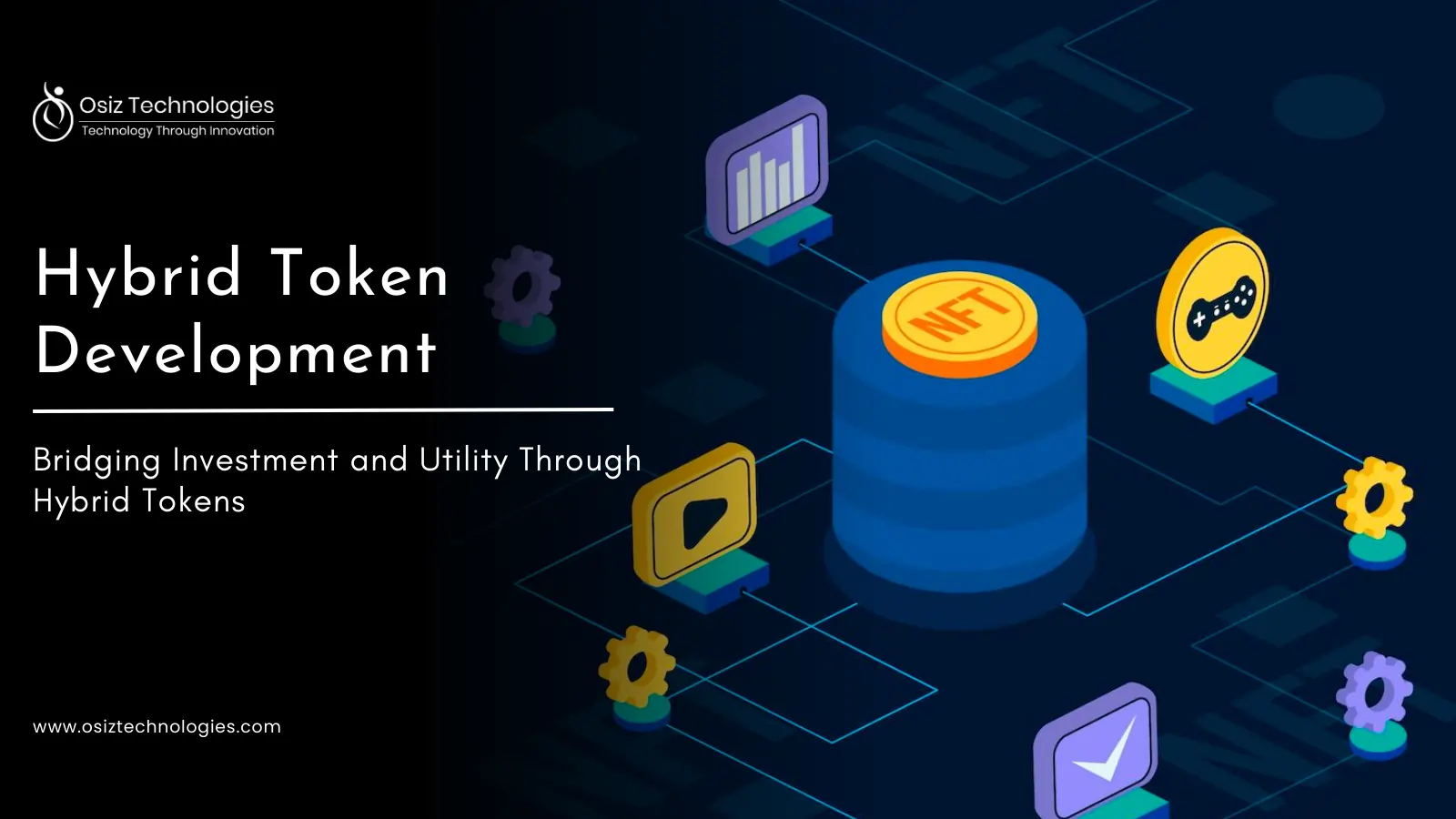
A fresh approach to token development now offers businesses flexibility, legal compliance, and real-world utility within a single solution. Osiz builds these combined tokens by merging features from different standards. Such integration responds to shifting market needs without relying on rigid formats. Our focus stays on long-term readiness rather than fixed uses. Digital assets gain broader utility when structured this way.
What Is a Hybrid Token?
A hybrid token is a digital asset that blends features of various token types, typically combining utility tokens granting access to services with security tokens that offer investment benefits like profit-sharing or dividends, all within one unit. These tokens enable users to participate in a blockchain environment while offering ownership-like privileges, often structured to meet regulatory requirements in Web3.
Key Features of Hybrid Token Development
Dual Utility and Value Representation
A new kind of digital unit operates inside systems yet holds external worth, often tied to real assets or monetary value, which opens more ways it can be used. Because these units serve two roles at once, people who use platforms find them useful while those who invest see stability.
Regulatory-Aligned Architecture
Compliance-ready structures within hybrid tokens are designed to adapt seamlessly to local regulatory environments. This flexibility ensures that tokens remain functional while meeting regional legal requirements. By integrating these structures, issuers can streamline approval processes and expand their market reach efficiently.
Customizable Token Logic
Customization through hybrid tokens adjusts smart contract behavior according to specific business conditions, governance structures, or assigned user functions. Because of this adaptability, various ways of operating become possible. Feature growth happens smoothly as requirements evolve.
Cross-Platform Compatibility
Hybrid tokens function seamlessly across various wallets and connect to exchanges regardless of the blockchain they are on. This cross-chain capability enhances accessibility, allowing users to access value more easily and widely. Their architecture is inherently designed to support multiple blockchain networks, promoting flexibility and scalability.
Scalable Token Economics
In hybrid environments, token design aligns demand with supply to ensure balanced market dynamics and sustainable long-term value. As economic mechanisms mature and adapt, stability within the ecosystem grows, fostering greater trust and resilience. The ability of tokens to scale efficiently and respond to changing needs enables integration into enterprise systems.
Hybrid Token Development Models
Utility-Security Combined Model
From here, asset-backed systems begin to take shape. Access permissions connect directly to controlled investment tools, enabling adherence to regulations during funding activities alongside broader involvement across networks. Suitable settings favor growth in user numbers together with effective use of financial resources through this setup.
Asset-Backed Hybrid Model
Tokens acquire more defined value when supported partially or fully by real or digital assets, fostering greater confidence and transparency in pricing. Industries find ways to turn physical resources into digital representations under this framework. Compliance fits naturally within established financial rules because of its structure.
Cross-Chain Hybrid Model
Hybrid tokens operate across multiple blockchains, enhancing liquidity by enabling seamless asset movement between networks. This cross-chain capability strengthens system resilience by distributing risk and reducing reliance on any one blockchain. Their architecture is designed with scalability and long-term growth in mind, ensuring efficient performance as demand increases.
Security and Compliance in Hybrid Token Development
Smart Contract Auditing
The thoroughness of an audit affects how well a token's design sidesteps security flaws, with in-depth examination uncovering vulnerabilities before launch. Protection extends across creators and users alike.
KYC and AML Combined
Identity verification is often required for hybrid tokens to comply with regulatory requirements, as incorporating KYC and AML procedures helps reduce legal risk. Participation stays within required boundaries.
Role-Based Access Controls
Smart contracts use access permissions to control transfer, usage, and governance privileges, enhancing security through this organized framework. Compliance enforcement becomes possible as a result.
Data Privacy and Encryption
Encryption protects users' sensitive data and transaction details by keeping them secure and inaccessible to unauthorized parties. Trust emerges when data handling remains consistent and discreet.
Regulatory Reporting Support
Hybrid token systems combine digital and traditional elements to create a transparent and traceable record of transactions. This transparency makes it easier for organizations to meet regulatory requirements and ensures accountability across operations.
Why Choose Us for Hybrid Token Development?
Osiz provides hybrid token development services fit for enterprise environments, where innovation meets structured safety and rules. Beginning with blockchain foundations, the process includes smart contracts shaped around legal considerations, forming adaptable digital assets. Tokens emerge not from templates but through deliberate architecture focused on actual operational demands. As an experienced Token Development Company, we combine Blockchain Token Development, Smart Contract Development, and regulatory-aware design to build tokens that adapt to real business needs. Design choices respond to economic models meant to endure, rather than short-lived incentives. Flexibility across sectors comes naturally when technology listens closely to business logic.
Other Token Development Services We Offer
Listen To The Article

Founder & CEO Osiz Technologies
Mr. Thangapandi, the CEO of Osiz, has a proven track record of conceptualizing and architecting 100+ user-centric and scalable solutions for startups and enterprises. He brings a deep understanding of both technical and user experience aspects. The CEO, being an early adopter of new technology, said, \"I believe in the transformative power of AI to revolutionize industries and improve lives. My goal is to integrate AI in ways that not only enhance operational efficiency but also drive sustainable development and innovation.\" Proving his commitment, Mr. Thangapandi has built a dedicated team of AI experts proficient in coming up with innovative AI solutions and have successfully completed several AI projects across diverse sectors.
Recent Blogs



No 22,Astalakshmi Nagar, Thanakankullam, (Opp Seetha lakshmi Mill gate Bus stop) Thirunagar, Madurai - 625 006.
(Corporate Office)


Canada Office address, 1150, Rue Patrick, Laval, Quebec - H7Y 2C4, Canada.
(Sales Office)


Explore
Our AI Portfolio

 Artificial Intelligence
- AI Development
- AI Predictive Analytics Services
- AI SaaS Development
- RAG Development
- AI Assistant Development
- ChatGPT Development
- Data Analytics Services
- AI Copilot Development
- Adaptive AI Development
- Machine Learning Development
- NLP
- AI Consulting Services
- AI Software Builder
- AI Token Development
- AI Integration Services
- Enterprise AI Solution
- AI As a Service
- AI Marketing Tools
- AI Video Generator
- Computer Vision Services
- Explore AI
- Dataset
- Machine Learning in Healthcare
- Machine Learning in Retail
- Hire AI Engineers
- Hire Prompt Engineers
- Hire ChatGPT Developers
- Hire Stable Diffusion Developers
- Hire Action Transformer Developers
- Blockchain
- Blockchain Development
- Private Blockchain Development
- Smart Contract Development
- Custom Blockchain Development
- Solana Blockchain Development
- Polygon Blockchain Development
- Public Blockchain Development
- DAO Blockchain Development
- Binance Smart Chain (BSC) Blockchain Development
- DApp Development
- Solana DApp Development
- White Label Blockchain Solutions
- Custom Blockchain On Avalanche
- Custom Blockchain On Polygon
- Blockchain Game Development
- Blockchain Consulting Services
- Blockchain Explorer Development
- Ethereum Blockchain Development
- TRON Blockchain Development
- Prediction Market Platform Development Company
Layer 1 & 2 Solutions- Layer-1 Blockchain Development
- Cross Chain Bridge Development
- Data Availability Layer Development
- Ethereum Layer 2 Scaling Solutions
- Cross-L2 DEX Solution
- Layer 2 Token Development
- Layer 2 Token Marketing
- Layer 2 Cryptocurrency Development
- Layer 2 Solutions For Blockchain Games
- Layer 2 Solutions For Web3 Gaming
- Layer 2 Blockchain Solutions
- Rollups As A Service
- Optimistic Rollups Development
- ZK Tech Development
- Bitcoin Layer 2 Solutions
Crypto Exchange- Cryptocurrency Exchange Development
- White Label Crypto Exchange
- Decentralized Exchange Development
- P2P Exchange Development
- Crypto Derivatives Exchange Development
- Centralized Exchange Development
- Crypto Exchange Clone Script
- Cryptocurrency Exchange App Development
- OTC Exchange Development
- Exchange Listing Services
- Binance Like Exchange Development
- Bitstamp Like Exchange Development
- Crypto Exchange Script
CryptoCrypto WalletToken Standards- Token Development
- AI Token Development
- RWA Tokenization Development
- Coinremitter Clone Script
- Asset Tokenization
- Real Estate Tokenization
- Tokenization Platform Development
- Crypto ETF Development
- Solona Token Development
- Semi-Fungible Token Development
- BEP20 Token Development
- Ethereum Token Development
- ERC1400 Token Development
- ERC998 Token Development
- ERC 721 Token Development
- ERC20 Token Development
- Defi Token Development
- ERC1155 Token Development
- BEP721 Token Development
- Utility Token Development
- ERC 777 Token Development
- ERC 827 Token Development
- Social Token Development
- Metaverse Token Development
- Tron Token Development
- ERC404 Token Development
- Governance Token
- Shibarium Token
- polygon Token
- BRC-20
- TRC20 Token Development
- TRC10 Token Development
- Soulbound Token Development
- NFT Token Development
Trading BotsClone- Crypto Exchange Clone Script
- Binance Clone Script
- Metamask Clone Script
- Coinbase Clone Script
- Kucoin Clone Script
- Paxful Clone Script
- Remitano Clone Script
- Wazirx Clone Script
- ByBit Clone Script
- Bitfinex Clone Script
- MEXC Clone Script
- Bitget Clone Script
- Cointool App Clone Script
- Trust Wallet Clone App
- Coinmarketcap Clone Script
- Changelly Clone Script
- BingX Clone Script
CybersecurityApp SecurityDigital Forensics & Incident ResponseAudit & ConsultingEducation & TrainingSolutionsWeb 3DeFi- Decentralized Finance (DeFi) Development
- DeFi Lending/ Borrowing Platform Development
- DeFi Staking Platform Development
- DeFi Token Development
- DeFi Wallet Development
- DeFi Smart Contract Development
- DeFi DApp Development
- Decentralized Exchange Development
- DeFi Insurance Development
- DeFi Crypto Synthetic Assets Development
Game Development- Game Development
- Android Game Development
- IOS Game Development
- Metaverse Game Development
- VR Game Development
- AI Game Development
- Unity 3D Game Development
- Unreal Engine Game Development
- Mobile Game Development
- Blockchain Game Development
- NFT Game Development
- Play to Earn Game Development
- Move to Earn Game Development
- Casino Game Development
- Slot Game Development
- Poker Game Development
- AAA Game Development
- AR Game Development
- Social Network Game Development
- Gamification Services
- Decentralized Sports Betting Platform
- Sports Betting Dapp Development
- Blockchain Casino Game Development
- Game Asset Creation
- Baccarat Game Development
- Rollbit Clone Script
- Fortnite Clone Script
- Slot Game Development
- Tap to Earn Game Development
- Slot Game Development
Metaverse Platforms- Metaverse Game Development
- Metaverse Event Platform Development
- Metaverse Virtual Mall Development
- Metaverse NFT Marketplace Development
- Metaverse Token Development
- Metaverse Virtual Land Development
- Metaverse Avatar Development
- Metaverse 3d Space Development
- Metaverse Real Estate Development
- Metaverse Social Media Platform Development
- Top 10 Metaverse Development Company
- Metaverse Business Ideas
- Metaverse Launchpad Development
- Metaverse App Development
- Metaverse Casino Game Development
NFT SolutionsNFT Platforms- NFT Minting Development
- NFT Token Development
- NFT Exchange Platform Development
- NFT Launchpad Development
- NFT Fashion Marketplace Development
- NFT Art Marketplace Development
- NFT Music Marketplace Development
- Carbon Credits NFT Marketplace Development
- Binance NFT Marketplace Development
- Polygon NFT Marketplace Development
- Solana NFT Marketplace Development
- Influencers NFT Marketplace Development
- NFT Ticketing Marketplace Development
- DeFi NFT Marketplace Development
- NFT Fantasy Sports Platform Development
- NFT Storage Development
- NFT Lending Platform Development
- Top10 NFT Business Ideas
NFT Game ClonesSustainabilityServiceNow - Blog
- Contact Us
- Works