
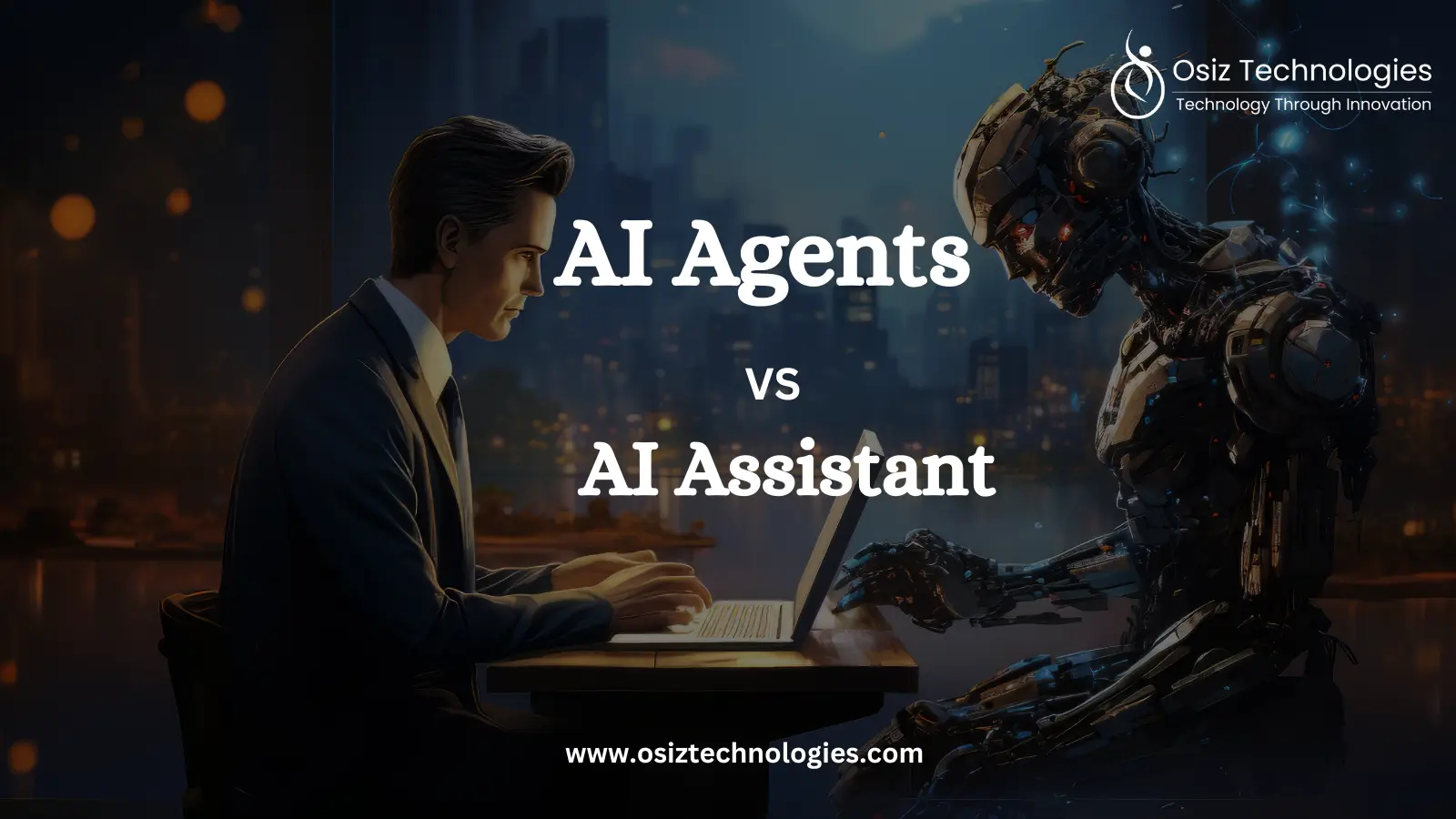
AI assistants: Awaiting your instructions
An AI assistant is an intelligent application that understands natural language commands and uses a conversational AI interface to complete tasks for a user. Many modern virtual assistants, such as Amazon’s Alexa and Apple's Siri, are prime examples of these assistants. Organizations increasingly invest in AI Assistant Development to create intelligent systems that can automate user interactions, improve productivity, and deliver personalized experiences across digital platforms.
AI assistants operate by leveraging a foundation model, which serves as their backbone for understanding language and performing tasks. These models are trained on vast amounts of data to recognize patterns in human speech and text, allowing them to respond appropriately to various queries and commands. However, despite their advanced capabilities, AI assistants still require some level of human intervention or pre-defined rules to handle complex or ambiguous requests effectively.
In essence, an AI assistant is a tool designed to automate routine tasks by understanding the user’s intent through natural language processing (NLP) techniques. They are adept at handling simple and straightforward commands but may struggle with more nuanced or contextually dependent queries that require deeper understanding of human behavior and intentions.
AI Agents: Taking Initiative
AI agents represent a significant evolution in the realm of artificial intelligence. Unlike traditional AI assistants that require human intervention through explicit commands or requests, AI agents operate autonomously, capable of initiating tasks without direct user input. Businesses are increasingly adopting AI Agent Development to build autonomous systems that can analyze data, make decisions, and execute tasks with minimal human involvement.
Foundation models serve as the backbone for both AI agents and AI assistants. These foundational models provide the computational power and knowledge base necessary for understanding complex human interactions and executing a wide range of tasks. For instance, IBM's Granite model can be adapted into an agent that interacts directly with enterprise applications, automating routine administrative tasks such as scheduling meetings or sending emails.
Moreover, these agents leverage foundation models to handle intricate problem-solving scenarios where traditional AI assistants might struggle. By integrating multiple layers of intelligence, AI agents can analyze vast amounts of data and make informed decisions without the need for constant human oversight. This not only enhances efficiency but also reduces the burden on users who would otherwise have to manage numerous tasks manually.
In essence, AI agents represent a proactive approach to leveraging artificial intelligence, enabling systems to take initiative in various domains such as healthcare, finance, and customer service. They are poised to revolutionize how businesses operate by automating repetitive tasks and augmenting human capabilities rather than just supplementing them with additional tools.
Benefits of AI Agents and AI Assistants
AI agents and AI assistants offer numerous benefits that significantly improve efficiency and user experience. AI agents specialize in performing specific or complex tasks autonomously, often integrating seamlessly with databases and external tools. This integration allows them to solve problems more effectively than traditional software solutions alone. For instance, an AI agent could be designed to automate routine data entry processes within a company’s CRM system, ensuring accuracy and reducing manual effort.
On the other hand, AI assistants use foundation models like IBM’s Granite or Meta's Llama to understand natural language commands and provide conversational interfaces for task execution. These assistants are particularly useful in scenarios where users need immediate assistance without having to navigate complex systems. They can handle a wide range of tasks from scheduling appointments to providing recommendations based on user preferences, thereby simplifying workflows.
However, it’s important to recognize that while AI agents and assistants bring significant benefits, they also have limitations. For example, AI assistants might struggle with understanding nuanced or ambiguous requests due to the complexity of human language. Additionally, their effectiveness often depends heavily on the quality and training of the foundation model they are built upon. Despite these challenges, the advantages provided by AI agents and assistants make them invaluable tools in today’s digital landscape.
AI assistants and AI agents use cases
In summary, while AI assistants excel in providing immediate responses based on user commands, AI agents offer a broader spectrum of capabilities by integrating with various systems and databases. This dual approach ensures that both types of AI solutions can meet diverse needs across different industries and applications. Organizations often partner with an AI Development Company to design, develop, and deploy customized AI assistants and AI agents tailored to specific business objectives.
Foundation Models and Assistants Use: Foundation models serve as the backbone for both AI assistants and agents. These large language models (LLMs) provide the intelligence that underpins how these systems operate. For instance, IBM’s Granite model or Meta’s Llama models are foundational to building effective AI assistants.
Key Features of AI Assistants: An AI assistant is an intelligent application that listens for natural language commands and responds with relevant information or actions. They can be trained on a variety of tasks such as scheduling appointments, providing weather updates, or even playing games like chess. The key feature here lies in their ability to understand context and provide personalized responses based on user interactions.
AI Assistant Limitations: Despite their capabilities, AI assistants have limitations that stem from their reliance on pre-programmed instructions and natural language processing (NLP). They may struggle with complex tasks or when the task requires a high degree of understanding and nuance. For example, an assistant might not be able to fully grasp the implications of a medical diagnosis without additional context or human oversight.
What Are AI Agents?: In contrast, AI agents are more versatile and adaptive systems that integrate directly into databases and external tools. They can handle complex tasks by leveraging persistent memory and real-time data access. Unlike AI assistants, which primarily rely on user input for task completion, AI agents operate in the background, continuously monitoring and updating their knowledge base to provide optimal assistance.
Integration with Databases: AI agents are adept at working within existing systems, such as databases or software applications. They can retrieve information from these sources, analyze it, and present insights back to users. This integration allows for more efficient problem-solving and decision-making processes, especially in environments where data is critical.
In summary, while AI assistants excel in providing immediate responses based on user commands, AI agents offer a broader spectrum of capabilities by integrating with various systems and databases. This dual approach ensures that both types of AI solutions can meet diverse needs across different industries and applications.
Risks of AI Agents and AI Assistants
There are risks and limitations associated with AI-powered technologies that users should be aware of. One significant risk is the brittleness of large language models (LLMs), which can lead to unexpected errors when even minor changes in prompts cause invalid structures, incorrect payloads, or other issues. This brittleness can result in unreliable responses from AI assistants and agents, potentially leading to misuse or unintended actions.
Another critical concern is the persistent memory issue where LLMs retain information about previous interactions, including sensitive data that users might not wish to be stored or accessed by external systems. This could compromise user privacy if these models are improperly integrated with databases or other external tools without proper security measures in place.
Moreover, relying solely on AI assistants and agents for tasks can create a dependency issue, making users less adept at performing certain functions independently. Over-reliance on these technologies might hinder the development of critical thinking skills and problem-solving abilities that are essential for many real-world scenarios. Users may also become overly dependent on quick fixes provided by AI, potentially overlooking more nuanced or complex issues.
In summary, while AI assistants and agents offer significant conveniences and efficiencies in various applications, they come with important risks related to their reliability, privacy concerns, and the potential for dependency. It is crucial for users and organizations to carefully consider these factors when integrating such technologies into daily operations or workflows
Listen To The Article

Founder & CEO Osiz Technologies
Mr. Thangapandi, the CEO of Osiz, has a proven track record of conceptualizing and architecting 100+ user-centric and scalable solutions for startups and enterprises. He brings a deep understanding of both technical and user experience aspects. The CEO, being an early adopter of new technology, said, "I believe in the transformative power of AI to revolutionize industries and improve lives. My goal is to integrate AI in ways that not only enhance operational efficiency but also drive sustainable development and innovation." Proving his commitment, Mr. Thangapandi has built a dedicated team of AI experts proficient in coming up with innovative AI solutions and have successfully completed several AI projects across diverse sectors.
Recent Blogs




No 22,Astalakshmi Nagar, Thanakankullam, (Opp Seetha lakshmi Mill gate Bus stop) Thirunagar, Madurai - 625 006.
(Corporate Office)


Canada Office address, 1150, Rue Patrick, Laval, Quebec - H7Y 2C4, Canada.
(Sales Office)


Meydan Grandstand, 6th floor, Meydan Road, Nad Al Sheba, Dubai, U.A.E.
(Sales Office)


Halloween
Offers

 Artificial Intelligence
- AI Development
- AI Predictive Analytics Services
- AI SaaS Development
- RAG Development
- AI Assistant Development
- ChatGPT Development
- Data Analytics Services
- AI Copilot Development
- Adaptive AI Development
- Machine Learning Development
- NLP
- AI Consulting Services
- AI Software Builder
- AI Token Development
- AI Integration Services
- AI Agent Bots
- Enterprise AI Solution
- AI As a Service
- AI Marketing Tools
- AI Video Generator
- Computer Vision Services
- Explore AI
- Dataset
- Machine Learning in Healthcare
- Machine Learning in Retail
- Hire AI Engineers
- Hire Prompt Engineers
- Hire ChatGPT Developers
- Hire Stable Diffusion Developers
- Hire Action Transformer Developers
- Blockchain
- Blockchain Development
- Private Blockchain Development
- Smart Contract Development
- Custom Blockchain Development
- Solana Blockchain Development
- Polygon Blockchain Development
- Public Blockchain Development
- DAO Blockchain Development
- Binance Smart Chain (BSC) Blockchain Development
- DApp Development
- Solana DApp Development
- White Label Blockchain Solutions
- Custom Blockchain On Avalanche
- Custom Blockchain On Polygon
- Blockchain Game Development
- Blockchain Consulting Services
- Blockchain Explorer Development
- Ethereum Blockchain Development
- TRON Blockchain Development
- Prediction Market Platform Development Company
Layer 1 & 2 Solutions- Layer-1 Blockchain Development
- Cross Chain Bridge Development
- Data Availability Layer Development
- Ethereum Layer 2 Scaling Solutions
- Cross-L2 DEX Solution
- Layer 2 Token Development
- Layer 2 Token Marketing
- Layer 2 Cryptocurrency Development
- Layer 2 Solutions For Blockchain Games
- Layer 2 Solutions For Web3 Gaming
- Layer 2 Blockchain Solutions
- Rollups As A Service
- Optimistic Rollups Development
- ZK Tech Development
- Bitcoin Layer 2 Solutions
Crypto Exchange- Cryptocurrency Exchange Development
- White Label Crypto Exchange
- Decentralized Exchange Development
- P2P Exchange Development
- Crypto Derivatives Exchange Development
- Centralized Exchange Development
- Crypto Exchange Clone Script
- Cryptocurrency Exchange App Development
- OTC Exchange Development
- Exchange Listing Services
- Binance Like Exchange Development
- Bitstamp Like Exchange Development
- Crypto Exchange Script
CryptoCrypto WalletToken Standards- Token Development
- AI Token Development
- RWA Tokenization Development
- Coinremitter Clone Script
- Asset Tokenization
- Real Estate Tokenization
- Tokenization Platform Development
- Crypto ETF Development
- Solona Token Development
- Semi-Fungible Token Development
- BEP20 Token Development
- Ethereum Token Development
- ERC1400 Token Development
- ERC998 Token Development
- ERC 721 Token Development
- ERC20 Token Development
- Defi Token Development
- ERC1155 Token Development
- BEP721 Token Development
- Utility Token Development
- ERC 777 Token Development
- ERC 827 Token Development
- Social Token Development
- Metaverse Token Development
- Tron Token Development
- ERC404 Token Development
- Governance Token
- Shibarium Token
- polygon Token
- BRC-20
- TRC20 Token Development
- TRC10 Token Development
- Soulbound Token Development
- NFT Token Development
Trading BotsClone- Crypto Exchange Clone Script
- Binance Clone Script
- Metamask Clone Script
- Coinbase Clone Script
- Kucoin Clone Script
- Paxful Clone Script
- Remitano Clone Script
- Wazirx Clone Script
- ByBit Clone Script
- Bitfinex Clone Script
- MEXC Clone Script
- Bitget Clone Script
- Cointool App Clone Script
- Trust Wallet Clone App
- Coinmarketcap Clone Script
- Changelly Clone Script
- BingX Clone Script
CybersecurityApp SecurityDigital Forensics & Incident ResponseAudit & ConsultingEducation & TrainingSolutionsWeb 3DeFi- Decentralized Finance (DeFi) Development
- DeFi Lending/ Borrowing Platform Development
- DeFi Staking Platform Development
- DeFi Token Development
- DeFi Wallet Development
- DeFi Smart Contract Development
- DeFi DApp Development
- Decentralized Exchange Development
- DeFi Insurance Development
- DeFi Crypto Synthetic Assets Development
Game Development- Game Development
- Android Game Development
- IOS Game Development
- Metaverse Game Development
- VR Game Development
- AI Game Development
- Unity 3D Game Development
- Unreal Engine Game Development
- Mobile Game Development
- Blockchain Game Development
- NFT Game Development
- Play to Earn Game Development
- Move to Earn Game Development
- Casino Game Development
- Slot Game Development
- Poker Game Development
- AAA Game Development
- AR Game Development
- Social Network Game Development
- Gamification Services
- Decentralized Sports Betting Platform
- Sports Betting Dapp Development
- Blockchain Casino Game Development
- Game Asset Creation
- Baccarat Game Development
- Rollbit Clone Script
- Fortnite Clone Script
- Slot Game Development
- Tap to Earn Game Development
- Slot Game Development
Metaverse Platforms- Metaverse Game Development
- Metaverse Event Platform Development
- Metaverse Virtual Mall Development
- Metaverse NFT Marketplace Development
- Metaverse Token Development
- Metaverse Virtual Land Development
- Metaverse Avatar Development
- Metaverse 3d Space Development
- Metaverse Real Estate Development
- Metaverse Social Media Platform Development
- Top 10 Metaverse Development Company
- Metaverse Business Ideas
- Metaverse Launchpad Development
- Metaverse App Development
- Metaverse Casino Game Development
NFT SolutionsNFT Platforms- NFT Minting Development
- NFT Token Development
- NFT Exchange Platform Development
- NFT Launchpad Development
- NFT Fashion Marketplace Development
- NFT Art Marketplace Development
- NFT Music Marketplace Development
- Carbon Credits NFT Marketplace Development
- Binance NFT Marketplace Development
- Polygon NFT Marketplace Development
- Solana NFT Marketplace Development
- Influencers NFT Marketplace Development
- NFT Ticketing Marketplace Development
- DeFi NFT Marketplace Development
- NFT Fantasy Sports Platform Development
- NFT Storage Development
- NFT Lending Platform Development
- Top10 NFT Business Ideas
NFT Game ClonesSustainabilityServiceNow - Blog
- Contact Us
- Works