
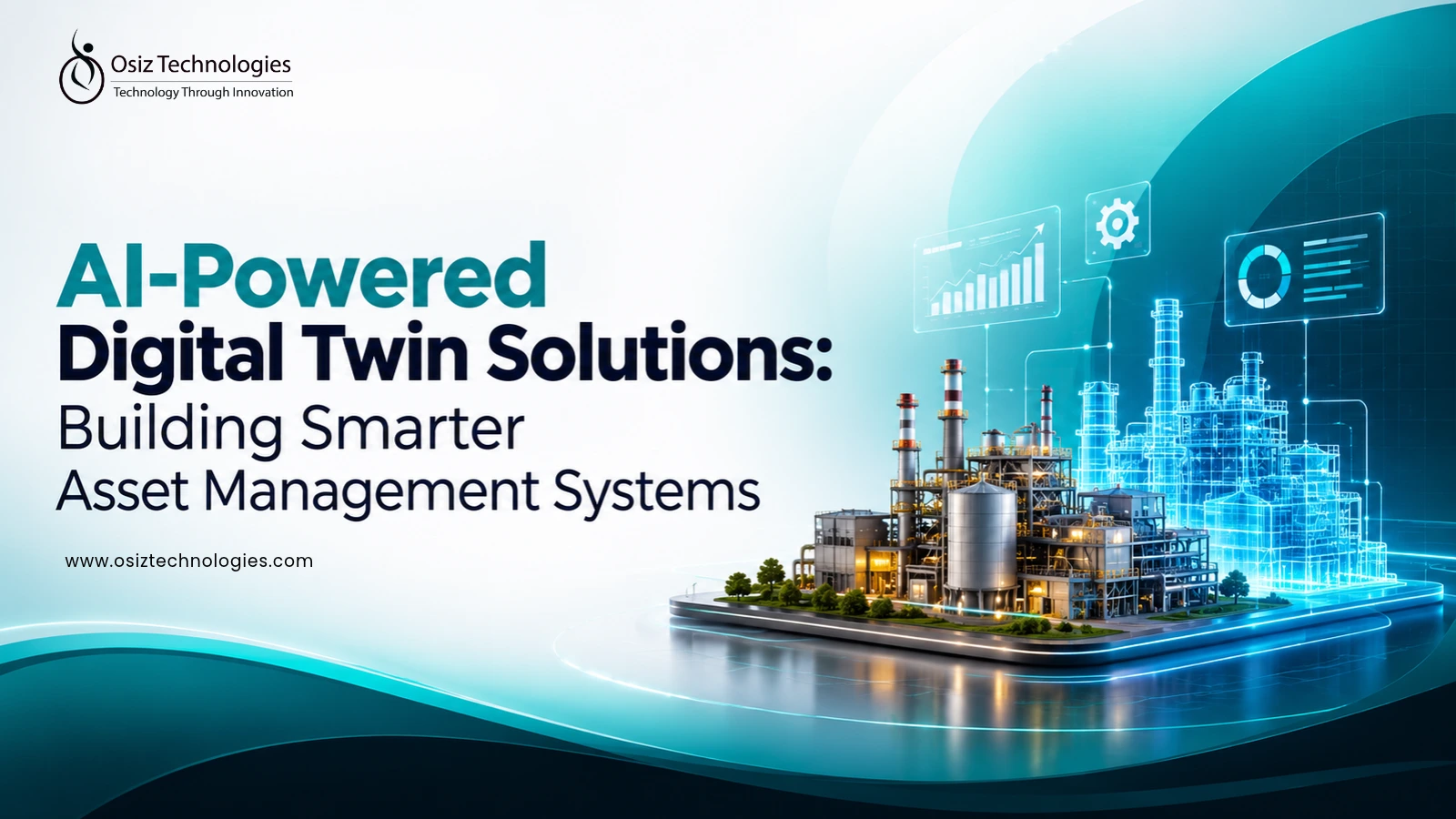
The asset management industry is heading towards a new era, in which companies will no longer depend only on regular inspection and maintenance practices. As industries grow increasingly interconnected and sophisticated, the knowledge of the true condition of physical assets has become critical. Machine efficiency, energy usage, its environment, and the maintenance process itself may affect the whole manufacturing process.
Here comes the role of AI-enabled digital twin technology. With the help of digital twins of physical assets that get integrated with real-world operational data, businesses can understand better how assets work. AI integration makes things even more advanced, as it enables pattern identification and predictive failure.
Digital Twin Technology: Architecture, Components, and Working Principles
Imagine a manufacturing plant, where every significant machine has its own digital version. If there are changes in temperature, vibrations, and operation of the physical machine, the digital machine also gets information on those changes.
It is the main idea of digital twin technology!
Digital twin technology is not limited to a 3D image. It is a combination of physical asset information, IoT sensors, data processing system, and a virtual model, which enables a connection between real-world processes and their digital counterparts.
The architecture of a typical digital twin includes five key elements:
Physical Assets: Machinery, equipment, buildings, vehicles, and other infrastructure in a digital environment.
IoT Sensors: Devices that gather information about operations, such as temperature, pressure, vibration, and power usage.
Data Processing Systems: Technologies used for collecting and synchronizing data from connected assets.
Virtual Models: Digital versions that duplicate the physical asset structure and its operations.
Analytics and Visualization: Tools that allow an organization to get information about the condition and performance of assets.
If all of those elements cooperate, a business can monitor physical assets via its digital counterpart.
How AI Enhances Digital Twin Capabilities?
Real-time visibility is critical, but being able to interpret the significance of the collected data is equally important. This is when AI makes the difference with regards to the possibilities of digital twin technology.
The conventional approach to digital twins is mainly concentrated on physical asset modeling. AI brings analytical intelligence to these technologies, enabling them to work with big data, detect certain patterns, and make forecasts.
So, for instance, there may be some gradual vibrations of a machine throughout a few operating cycles. They may not be an indication of an impending breakdown, but AI may find out whether they are similar to patterns related to earlier malfunctions of other equipment.
Several AI capabilities contribute to this transformation:
- Anomaly Detection: Identifies unusual asset behavior and deviations from normal operating conditions.
- Predictive Analytics: Analyzes historical and real-time information to estimate potential equipment failures.
- Computer Vision: Examines visual information to identify defects, structural damage, and equipment irregularities.
- Intelligent Simulation: Evaluates different operating scenarios to understand their potential outcomes.
- Automated Insights: Converts complex operational data into useful information for maintenance and business decisions.
The combination of these capabilities allows digital twins to move beyond visualization and become intelligent environments for operational analysis.
Core Capabilities of AI-Powered Digital Twin Systems
The integration of AI allows for some key capabilities to be created and used for various asset management phases.
Real-Time Asset Monitoring: The constant collection of data allows one to understand the state of assets, their operating parameters, and performance.
Predictive and Prescriptive Maintenance: AI allows one to discover possible weaknesses of the equipment and determine possible maintenance measures according to the current state of assets.
Performance Simulation: Using virtual simulation models, it is possible to test any change in the operating process before implementing it.
Asset Lifecycle Management: Digital twins make it possible to track assets throughout their lifecycle.
Anomaly and Risk Detection: AI helps to detect some deviations in equipment operation that might signal about its malfunction or risk.
Thus, using such capabilities, it becomes possible to move from reactive to proactive approaches in asset management.
Industry Applications of AI-Powered Digital Twins
Digital twin applications are industry-specific and include those cases when reliable performance of equipment, efficient infrastructure operation, and uninterrupted operations are required. The business application of digital twin technology varies depending on business needs.
Manufacturing: Digital twins simulate production equipment and production processes. Business can perform equipment analysis, detect bottlenecks, and analyze impact of operational changes.
Energy & Utilities: Energy plants and utilities companies can analyze infrastructure operation, analyze energy usage, and evaluate equipment operating conditions.
Oil & Gas: Pipeline, drilling equipment, and facilities virtual models can be used by businesses to control equipment conditions and detect equipment maintenance needs.
Healthcare: Digital twins can provide support for equipment monitoring, facility management, and infrastructure analysis.
Construction and Real Estate: Building digital twins unite structural information, environmental data, and operational systems information to facilitate facility management.
Transportation and Logistics: Digital twins of the fleet or vehicles allow businesses to evaluate equipment conditions, analyze its performance, and schedule maintenance operations.
The list of applications shows that digital twins are not limited to the manufacturing industry only. They can be effectively used for asset management in different business environments.
Business Impact: Improving Asset Performance and Operational Efficiency
Not only is the utility of digital twins with AI not limited to technical diagnostics. The insights provided can affect resource allocation, maintenance planning, and risk management.
Take, for example, a company that has hundreds of industrial machines operating at different plants. In the absence of any centralized asset intelligence, it might be difficult to determine what assets need fixing. Digital twins can provide information about the operation of assets, while AI allows analyzing the condition of the assets.
Among other important business impacts are:
- Reduced Asset Downtime: The possibility of early identification of possible problems with the equipment will help companies arrange maintenance to prevent any disruptions.
- Increased Asset Efficiency: Performance insights will help companies understand how efficiently machines and infrastructure are working.
- Effective Maintenance Scheduling: It is possible to arrange maintenance based on the actual conditions of the asset rather than only according to set intervals.
- Effective Resource Allocation: Operational insights will allow managing workforce, equipment, and maintenance resources better.
- Informed Decision Making: Information and simulation results will give visibility of operational conditions and possible outcomes.
The exact business impacts will vary based on data quality and the level of implementation maturity.
Technical Considerations for Implementing Digital Twin Solutions
While digital twins provide great potential, there is still a lot to be considered regarding the technology and its infrastructure to use it effectively.
The following issues are among those that companies should account for before implementing their digital twins.
Data Integration and Interoperability: Digital twins typically get their data from multiple sources like sensors, applications, and legacy systems. Adequate connection is key to having reliable digital representations.
Data Quality: Incomplete, inaccurate, or outdated data may impact the outcomes of simulations and predictions generated by AI models.
Security: Access control, encryption, and security monitoring are necessary due to the involvement of interconnected assets and a centralized data environment.
Infrastructure Scalability: Scalability is important when using cloud and edge computing environments to cope with growing data volume and connected devices.
Model Evaluation: AI models should undergo continuous evaluation to ensure prediction reliability.
Taking into account these issues during development will help companies create robust digital twin environments.
What's Next for AI-Powered Digital Twin Technology?
However, the further development of the digital twin concept is likely not to stop here. Advancements in various AI technologies and computing infrastructures create new possibilities of developing even smarter systems.
Generative AI Integration: Generative AI may help make digital twin environments more interactive through the use of natural language processing, report generation, and operational insights based on the context.
Automated Digital Twins: The development of the digital twin system may lead to the creation of a system that will be able to provide automated analysis of the situation, make decisions, and generate predefined responses to specific operational events.
Edge AI & Real-Time Processing: Edge AI can help minimize the lag in processing information about an asset by doing this directly at the level of connected devices.
Connected Digital Twin Ecosystems: The connection between individual digital twins of an asset can help to represent the whole facility, supply chain, and industrial environment in one system.
Sustainability via Digital Twins: Enterprises can leverage the digital twin simulation to evaluate their energy consumption and resource efficiency.
These advancements show the possible future of digital twins beyond just virtual monitoring systems.
Conclusion: Moving Towards Smarter Asset Management
A move towards intelligent asset management is revolutionizing the way companies approach and manage their physical assets. Using AI-driven digital twins, companies can bridge the gap between the physical state of assets and their virtual intelligence to make operational data more actionable.
However, what truly makes this innovation valuable is using the technological solution as a tool to solve a particular problem. From connecting systems to creating predictive intelligence, the proper technological solution plays an important part in implementing it effectively.
As an AI development company, Osiz - A leading AI Development Company provides assistance to companies in searching for custom AI-based solutions fitting the digital transformation strategies. Combining AI capabilities and connected technologies opens up new perspectives.
Build the Next Generation of Intelligent Asset Management with Osiz.
Listen To The Article

Founder & CEO Osiz Technologies
Mr. Thangapandi, the CEO of Osiz, has a proven track record of conceptualizing and architecting 100+ user-centric and scalable solutions for startups and enterprises. He brings a deep understanding of both technical and user experience aspects. The CEO, being an early adopter of new technology, said, "I believe in the transformative power of AI to revolutionize industries and improve lives. My goal is to integrate AI in ways that not only enhance operational efficiency but also drive sustainable development and innovation." Proving his commitment, Mr. Thangapandi has built a dedicated team of AI experts proficient in coming up with innovative AI solutions and have successfully completed several AI projects across diverse sectors.
Recent Blogs



No 22,Astalakshmi Nagar, Thanakankullam, (Opp Seetha lakshmi Mill gate Bus stop) Thirunagar, Madurai - 625 006.
(Corporate Office)


Canada Office address, 1150, Rue Patrick, Laval, Quebec - H7Y 2C4, Canada.
(Sales Office)


Meydan Grandstand, 6th floor, Meydan Road, Nad Al Sheba, Dubai, U.A.E.
(Sales Office)


 Artificial Intelligence
- AI Development
- AI Predictive Analytics Services
- AI SaaS Development
- RAG Development
- AI Assistant Development
- ChatGPT Development
- Data Analytics Services
- AI Copilot Development
- Adaptive AI Development
- Machine Learning Development
- NLP
- AI Consulting Services
- AI Software Builder
- AI Token Development
- AI Integration Services
- AI Agent Bots
- Enterprise AI Solution
- AI As a Service
- AI Marketing Tools
- AI Video Generator
- Computer Vision Services
- Explore AI
- Dataset
- Machine Learning in Healthcare
- Machine Learning in Retail
- Hire AI Engineers
- Hire Prompt Engineers
- Hire ChatGPT Developers
- Hire Stable Diffusion Developers
- Hire Action Transformer Developers
Portfolio- AI Agriculture
- AI Healthcare
- NLP Services
- AI Brainstorming Tool
- Academic AI
- AI Dermatologist Software
- Best AI Tools
- Artificial Influencer Generator
- AI E-Learning Software
- AI Agriculture Software
- Generative AI Tool
- AI Assistant
- AI Sales Agent
- Intelligence OS For Medical Imaging
- Intelligence OS For Diagnosis Systems
- Intelligence OS For Control Systems
- Intelligence OS For Dialog Systems
- Intelligence OS For Health Management Systems
- Intelligence OS For Chat-Bots
- Intelligence OS For Crypto API
- Intelligence OS For Autocomplete In Search Engines
- Intelligence OS For CCTV To AI Camera
- Intelligence OS For Object Detection
- Intelligence OS For Voice Assistants
- Intelligence OS For Language
- Intelligence OS For Autonomous Vehicles
- Intelligence OS For Educational Assistant
- Intelligence OS For KYT
- Intelligence OS For Recommendation System
- Intelligence OS For Prediction System
- Intelligence OS For Finance
- Intelligence Fourier Transform Analysis
- AI Arbitrage Bot
- Intelligence OS For Multi-Lingual Assistant
- Blockchain
- Blockchain Development
- Private Blockchain Development
- Smart Contract Development
- Custom Blockchain Development
- Solana Blockchain Development
- Polygon Blockchain Development
- Public Blockchain Development
- DAO Blockchain Development
- Binance Smart Chain (BSC) Blockchain Development
- DApp Development
- Solana DApp Development
- White Label Blockchain Solutions
- Custom Blockchain On Avalanche
- Custom Blockchain On Polygon
- Blockchain Game Development
- Blockchain Consulting Services
- Blockchain Explorer Development
- Ethereum Blockchain Development
- TRON Blockchain Development
- Prediction Market Platform Development Company
Layer 1 & 2 Solutions- Layer-1 Blockchain Development
- Cross Chain Bridge Development
- Data Availability Layer Development
- Ethereum Layer 2 Scaling Solutions
- Cross-L2 DEX Solution
- Layer 2 Token Development
- Layer 2 Token Marketing
- Layer 2 Cryptocurrency Development
- Layer 2 Solutions For Blockchain Games
- Layer 2 Solutions For Web3 Gaming
- Layer 2 Blockchain Solutions
- Rollups As A Service
- Optimistic Rollups Development
- ZK Tech Development
- Bitcoin Layer 2 Solutions
Crypto Exchange- Cryptocurrency Exchange Development
- White Label Crypto Exchange
- Decentralized Exchange Development
- P2P Exchange Development
- Crypto Derivatives Exchange Development
- Centralized Exchange Development
- Crypto Exchange Clone Script
- Cryptocurrency Exchange App Development
- OTC Exchange Development
- Exchange Listing Services
- Binance Like Exchange Development
- Bitstamp Like Exchange Development
- Crypto Exchange Script
CryptoCrypto WalletToken Standards- Token Development
- AI Token Development
- RWA Tokenization Development
- Coinremitter Clone Script
- Asset Tokenization
- Real Estate Tokenization
- Tokenization Platform Development
- Crypto ETF Development
- Solona Token Development
- Semi-Fungible Token Development
- BEP20 Token Development
- Ethereum Token Development
- ERC1400 Token Development
- ERC998 Token Development
- ERC 721 Token Development
- ERC20 Token Development
- Defi Token Development
- ERC1155 Token Development
- BEP721 Token Development
- Utility Token Development
- ERC 777 Token Development
- ERC 827 Token Development
- Social Token Development
- Metaverse Token Development
- Tron Token Development
- ERC404 Token Development
- Governance Token
- Shibarium Token
- polygon Token
- BRC-20
- TRC20 Token Development
- TRC10 Token Development
- Soulbound Token Development
- NFT Token Development
Trading BotsClone- Crypto Exchange Clone Script
- Binance Clone Script
- Metamask Clone Script
- Coinbase Clone Script
- Kucoin Clone Script
- Paxful Clone Script
- Remitano Clone Script
- Wazirx Clone Script
- ByBit Clone Script
- Bitfinex Clone Script
- MEXC Clone Script
- Bitget Clone Script
- Cointool App Clone Script
- Trust Wallet Clone App
- Coinmarketcap Clone Script
- Changelly Clone Script
- BingX Clone Script
CybersecurityApp SecurityDigital Forensics & Incident ResponseAudit & ConsultingEducation & TrainingSolutionsWeb 3DeFi- Decentralized Finance (DeFi) Development
- DeFi Lending/ Borrowing Platform Development
- DeFi Staking Platform Development
- DeFi Token Development
- DeFi Wallet Development
- DeFi Smart Contract Development
- DeFi DApp Development
- Decentralized Exchange Development
- DeFi Insurance Development
- DeFi Crypto Synthetic Assets Development
Game Development- Game Development
- Android Game Development
- IOS Game Development
- Metaverse Game Development
- VR Game Development
- AI Game Development
- Unity 3D Game Development
- Unreal Engine Game Development
- Mobile Game Development
- Blockchain Game Development
- NFT Game Development
- Play to Earn Game Development
- Move to Earn Game Development
- Casino Game Development
- Slot Game Development
- Poker Game Development
- AAA Game Development
- AR Game Development
- Social Network Game Development
- Gamification Services
- Decentralized Sports Betting Platform
- Sports Betting Dapp Development
- Blockchain Casino Game Development
- Game Asset Creation
- Baccarat Game Development
- Rollbit Clone Script
- Fortnite Clone Script
- Slot Game Development
- Tap to Earn Game Development
- Slot Game Development
Metaverse Platforms- Metaverse Game Development
- Metaverse Event Platform Development
- Metaverse Virtual Mall Development
- Metaverse NFT Marketplace Development
- Metaverse Token Development
- Metaverse Virtual Land Development
- Metaverse Avatar Development
- Metaverse 3d Space Development
- Metaverse Real Estate Development
- Metaverse Social Media Platform Development
- Top 10 Metaverse Development Company
- Metaverse Business Ideas
- Metaverse Launchpad Development
- Metaverse App Development
- Metaverse Casino Game Development
NFT SolutionsNFT Platforms- NFT Minting Development
- NFT Token Development
- NFT Exchange Platform Development
- NFT Launchpad Development
- NFT Fashion Marketplace Development
- NFT Art Marketplace Development
- NFT Music Marketplace Development
- Carbon Credits NFT Marketplace Development
- Binance NFT Marketplace Development
- Polygon NFT Marketplace Development
- Solana NFT Marketplace Development
- Influencers NFT Marketplace Development
- NFT Ticketing Marketplace Development
- DeFi NFT Marketplace Development
- NFT Fantasy Sports Platform Development
- NFT Storage Development
- NFT Lending Platform Development
- Top10 NFT Business Ideas
NFT Game ClonesSustainabilityServiceNow - Blog
- Contact Us
- Works