
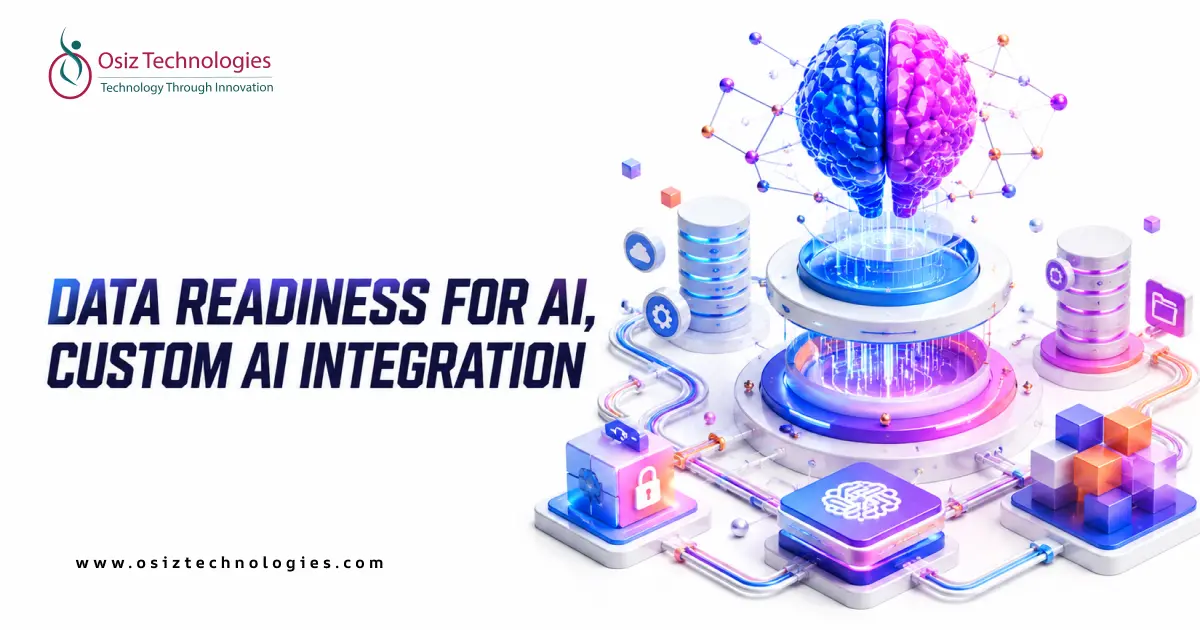
In today's rapidly evolving technological landscape, businesses are increasingly recognizing the importance of artificial intelligence (AI) in driving efficiency and innovation. However, the success of AI implementation hinges significantly on data readiness. This article delves into the critical aspects of preparing your business data for AI integration, providing a comprehensive AI data integration checklist, and highlighting best practices for ensuring data quality.
Understanding Data Readiness for AI
Data readiness refers to the state of your data being suitable for AI applications. It encompasses various factors, including data quality, accessibility, and governance. Without a solid foundation of quality data, AI solutions can falter, leading to inaccurate predictions and suboptimal outcomes. According to The Importance of Data Readiness for AI, understanding how data readiness impacts AI implementation is fundamental for businesses aiming to leverage AI effectively.
Assessing Your Business Data
Before diving into AI integration, it’s essential to conduct a thorough business data assessment. This involves evaluating the current state of your data, identifying data silos, and understanding how these silos can hinder AI effectiveness. A well-structured assessment will help in pinpointing areas that require improvement and will serve as a roadmap for your AI data strategy.
Identifying Data Silos
Data silos occur when data is isolated within different departments or systems, making it challenging to access and analyze. This fragmentation can significantly impede AI efforts. To tackle this, businesses should aim to centralize their data repositories, ensuring that all relevant data is accessible for AI algorithms.
Creating an AI Data Integration Checklist
An AI data integration checklist is a valuable tool that helps streamline the preparation process. Here are key components to include:
-
Data Quality Assessment: Evaluate the accuracy, completeness, and consistency of your data.
-
Data Governance Framework: Establish policies and procedures for data management.
-
Data Accessibility: Ensure that data is easily retrievable and usable by AI systems.
-
Compliance and Security: Address any legal and ethical considerations regarding data usage.
How to Prepare Data for AI
Preparing data for AI involves several crucial steps:
1. Data Cleaning
Data cleaning is the process of identifying and correcting errors or inconsistencies in your data. This step is vital for ensuring that your AI models are trained on high-quality data. Techniques such as removing duplicates, filling in missing values, and standardizing formats can significantly enhance data quality.
2. Data Transformation
Data transformation involves converting data into a suitable format for analysis. This may include normalization, encoding categorical variables, and aggregating data. Proper transformation ensures that AI algorithms can interpret the data effectively.
3. Data Annotation
For supervised learning models, data annotation is essential. This process involves labeling data so that the AI can learn from it. Investing in quality annotation can improve model accuracy and performance.
Implementing AI Integration Best Practices
To maximize the effectiveness of your AI solutions, consider the following best practices:
1. Continuous Data Monitoring
Data quality is not a one-time effort. Continuous monitoring and updating of data are crucial for maintaining accuracy over time. Implementing automated data quality checks can help in identifying issues promptly.
2. Collaboration Across Departments
Fostering collaboration between IT and business units can ensure that data requirements are met and that AI solutions align with business objectives. This collaborative approach can also help in breaking down data silos.
3. Training and Development
Investing in training for employees on data management and AI technologies can enhance your organization’s overall data readiness. A knowledgeable workforce is essential for effective AI integration.
Measuring Data Readiness for AI
Measuring data readiness involves evaluating various metrics, such as data quality scores, accessibility ratings, and compliance levels. Regular assessments can provide insights into your data readiness status and help identify areas for improvement.
Challenges in AI Implementation
Despite the potential benefits, businesses often face challenges during AI implementation. Common hurdles include:
-
Data Quality Issues: Poor quality data can lead to inaccurate AI predictions.
-
Resistance to Change: Employees may be hesitant to adopt new technologies.
-
Integration Complexity: Merging AI solutions with existing systems can be technically challenging.
Data Management Solutions for AI
To overcome these challenges, businesses can leverage various data management solutions tailored for AI. These may include:
-
Data Warehousing: Centralizes data storage for easier access and analysis.
-
Data Lakes: Allows for the storage of large volumes of unstructured data.
-
AI-Powered Data Tools: Automates data cleaning and preparation processes.
The Importance of Data Quality in AI
Data quality is paramount in AI. High-quality data leads to better model performance, while poor data can result in costly mistakes. According to Preparing Your Business Data for AI Integration, ensuring data quality should be a priority for any organization looking to implement AI successfully.
Conclusion: Preparing for AI Success
Building a strong data foundation is one of the most important steps toward successful AI adoption. When data is accurate, well-organized, and ready for AI, businesses can develop smarter applications, improve operational efficiency, and make more informed decisions. Investing in data readiness today creates the foundation for reliable AI performance and sustainable business growth in the future.
Osiz Technologies, a leading AI development company, helps organizations prepare, optimize, and transform their data for successful AI implementation. With expertise in modern AI technologies and data-driven solutions, Osiz Technologies enables businesses to build intelligent systems that deliver measurable value and long-term success.
Listen To The Article

Founder & CEO Osiz Technologies
Mr. Thangapandi, the CEO of Osiz, has a proven track record of conceptualizing and architecting 100+ user-centric and scalable solutions for startups and enterprises. He brings a deep understanding of both technical and user experience aspects. The CEO, being an early adopter of new technology, said, "I believe in the transformative power of AI to revolutionize industries and improve lives. My goal is to integrate AI in ways that not only enhance operational efficiency but also drive sustainable development and innovation." Proving his commitment, Mr. Thangapandi has built a dedicated team of AI experts proficient in coming up with innovative AI solutions and have successfully completed several AI projects across diverse sectors.
Recent Blogs



No 22,Astalakshmi Nagar, Thanakankullam, (Opp Seetha lakshmi Mill gate Bus stop) Thirunagar, Madurai - 625 006.
(Corporate Office)


Canada Office address, 1150, Rue Patrick, Laval, Quebec - H7Y 2C4, Canada.
(Sales Office)


Explore Our
AI Portfolio

 Artificial Intelligence
- AI Development
- AI Predictive Analytics Services
- AI SaaS Development
- RAG Development
- AI Assistant Development
- ChatGPT Development
- Data Analytics Services
- AI Copilot Development
- Adaptive AI Development
- Machine Learning Development
- NLP
- AI Consulting Services
- AI Software Builder
- AI Token Development
- AI Integration Services
- Enterprise AI Solution
- AI As a Service
- AI Marketing Tools
- AI Video Generator
- Computer Vision Services
- Explore AI
- Dataset
- Machine Learning in Healthcare
- Machine Learning in Retail
- Hire AI Engineers
- Hire Prompt Engineers
- Hire ChatGPT Developers
- Hire Stable Diffusion Developers
- Hire Action Transformer Developers
- Blockchain
- Blockchain Development
- Private Blockchain Development
- Smart Contract Development
- Custom Blockchain Development
- Solana Blockchain Development
- Polygon Blockchain Development
- Public Blockchain Development
- DAO Blockchain Development
- Binance Smart Chain (BSC) Blockchain Development
- DApp Development
- Solana DApp Development
- White Label Blockchain Solutions
- Custom Blockchain On Avalanche
- Custom Blockchain On Polygon
- Blockchain Game Development
- Blockchain Consulting Services
- Blockchain Explorer Development
- Ethereum Blockchain Development
- TRON Blockchain Development
- Prediction Market Platform Development Company
Layer 1 & 2 Solutions- Layer-1 Blockchain Development
- Cross Chain Bridge Development
- Data Availability Layer Development
- Ethereum Layer 2 Scaling Solutions
- Cross-L2 DEX Solution
- Layer 2 Token Development
- Layer 2 Token Marketing
- Layer 2 Cryptocurrency Development
- Layer 2 Solutions For Blockchain Games
- Layer 2 Solutions For Web3 Gaming
- Layer 2 Blockchain Solutions
- Rollups As A Service
- Optimistic Rollups Development
- ZK Tech Development
- Bitcoin Layer 2 Solutions
Crypto Exchange- Cryptocurrency Exchange Development
- White Label Crypto Exchange
- Decentralized Exchange Development
- P2P Exchange Development
- Crypto Derivatives Exchange Development
- Centralized Exchange Development
- Crypto Exchange Clone Script
- Cryptocurrency Exchange App Development
- OTC Exchange Development
- Exchange Listing Services
- Binance Like Exchange Development
- Bitstamp Like Exchange Development
- Crypto Exchange Script
CryptoCrypto WalletToken Standards- Token Development
- AI Token Development
- RWA Tokenization Development
- Coinremitter Clone Script
- Asset Tokenization
- Real Estate Tokenization
- Tokenization Platform Development
- Crypto ETF Development
- Solona Token Development
- Semi-Fungible Token Development
- BEP20 Token Development
- Ethereum Token Development
- ERC1400 Token Development
- ERC998 Token Development
- ERC 721 Token Development
- ERC20 Token Development
- Defi Token Development
- ERC1155 Token Development
- BEP721 Token Development
- Utility Token Development
- ERC 777 Token Development
- ERC 827 Token Development
- Social Token Development
- Metaverse Token Development
- Tron Token Development
- ERC404 Token Development
- Governance Token
- Shibarium Token
- polygon Token
- BRC-20
- TRC20 Token Development
- TRC10 Token Development
- Soulbound Token Development
- NFT Token Development
Trading BotsClone- Crypto Exchange Clone Script
- Binance Clone Script
- Metamask Clone Script
- Coinbase Clone Script
- Kucoin Clone Script
- Paxful Clone Script
- Remitano Clone Script
- Wazirx Clone Script
- ByBit Clone Script
- Bitfinex Clone Script
- MEXC Clone Script
- Bitget Clone Script
- Cointool App Clone Script
- Trust Wallet Clone App
- Coinmarketcap Clone Script
- Changelly Clone Script
- BingX Clone Script
CybersecurityApp SecurityDigital Forensics & Incident ResponseAudit & ConsultingEducation & TrainingSolutionsWeb 3DeFi- Decentralized Finance (DeFi) Development
- DeFi Lending/ Borrowing Platform Development
- DeFi Staking Platform Development
- DeFi Token Development
- DeFi Wallet Development
- DeFi Smart Contract Development
- DeFi DApp Development
- Decentralized Exchange Development
- DeFi Insurance Development
- DeFi Crypto Synthetic Assets Development
Game Development- Game Development
- Android Game Development
- IOS Game Development
- Metaverse Game Development
- VR Game Development
- AI Game Development
- Unity 3D Game Development
- Unreal Engine Game Development
- Mobile Game Development
- Blockchain Game Development
- NFT Game Development
- Play to Earn Game Development
- Move to Earn Game Development
- Casino Game Development
- Slot Game Development
- Poker Game Development
- AAA Game Development
- AR Game Development
- Social Network Game Development
- Gamification Services
- Decentralized Sports Betting Platform
- Sports Betting Dapp Development
- Blockchain Casino Game Development
- Game Asset Creation
- Baccarat Game Development
- Rollbit Clone Script
- Fortnite Clone Script
- Slot Game Development
- Tap to Earn Game Development
- Slot Game Development
Metaverse Platforms- Metaverse Game Development
- Metaverse Event Platform Development
- Metaverse Virtual Mall Development
- Metaverse NFT Marketplace Development
- Metaverse Token Development
- Metaverse Virtual Land Development
- Metaverse Avatar Development
- Metaverse 3d Space Development
- Metaverse Real Estate Development
- Metaverse Social Media Platform Development
- Top 10 Metaverse Development Company
- Metaverse Business Ideas
- Metaverse Launchpad Development
- Metaverse App Development
- Metaverse Casino Game Development
NFT SolutionsNFT Platforms- NFT Minting Development
- NFT Token Development
- NFT Exchange Platform Development
- NFT Launchpad Development
- NFT Fashion Marketplace Development
- NFT Art Marketplace Development
- NFT Music Marketplace Development
- Carbon Credits NFT Marketplace Development
- Binance NFT Marketplace Development
- Polygon NFT Marketplace Development
- Solana NFT Marketplace Development
- Influencers NFT Marketplace Development
- NFT Ticketing Marketplace Development
- DeFi NFT Marketplace Development
- NFT Fantasy Sports Platform Development
- NFT Storage Development
- NFT Lending Platform Development
- Top10 NFT Business Ideas
NFT Game ClonesSustainabilityServiceNow - Blog
- Contact Us
- Works