
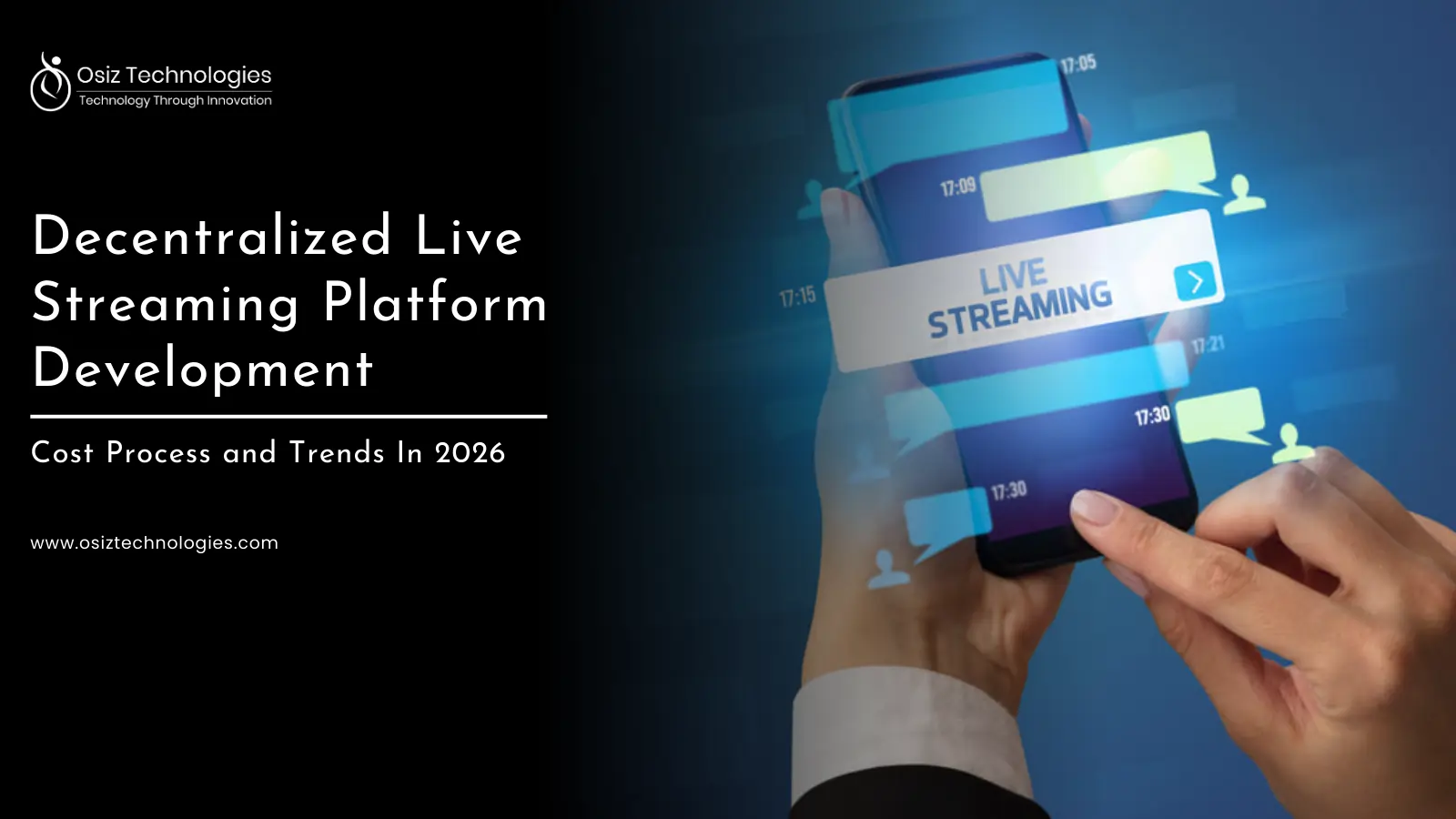
Ownership shifts begin when older systems stop functioning not through force, but through a gradual, incremental redefinition of each protocol. Where broadcast once relied on central control, it now leans into openness shaped by users. Engagement with tokens should be seen not as superficial tricks, but as practical components. Pinpointing where costs come from allows you to distinguish a sound strategy from unnecessary spending. A solid foundation remains essential, even as development moves at a slow pace.
Overview of Decentralized Live Streaming Platforms
Decentralized live streaming platforms are peer-to-peer networks built on blockchain technology, allowing video content to be shared directly from creators to viewers without relying on central servers or third-party intermediaries. Unlike traditional platforms such as YouTube or Twitch, they distribute content across a network of nodes for both delivery and storage, enhancing privacy, lowering latency, and supporting censorship-resistant, community-controlled broadcasting.
Why Development Cost is Higher Than Traditional Streaming?
Unexpected complexity drives cost, since decentralized storage must work alongside blockchain nodes using peer-to-peer frameworks. Engineering talent becomes essential when standard servers no longer suffice. Infrastructure demands shift notably under such distributed models. Specialized skills follow naturally from these requirements. Management overhead grows where traditional setups once stood alone.
A shift occurs when tokenomics, smart contracts, and cryptocurrency payment integration come into play. Compliance demands grow because of these components. Testing procedures become more involved due to structural complexity. Audit expectations rise alongside transparency needs. Centralized models lack such layers, making comparisons revealing. Cost estimates for streaming apps adjust under this weight. Influence spreads across financial forecasting and system design equally.
Through cryptographic checks, alongside independent reviews of automated agreements, confidence in the system grows. Such measures affect costs directly. When total production costs are compared to traditional broadcasting methods, a shift becomes evident, with additional elements unexpectedly increasing funding requirements.
Core Factors Influencing Development Cost
Blockchain Network Selection
Choosing Ethereum, Polygon, Solana, or alternative blockchains impacts gas expenses, system capacity, along with costs tied to creating smart contracts when building decentralized video platforms. Performance demands combined with agreement protocols affect long-term functionality.
Smart Contract Complexity
Complex features like automated revenue handling, token locking setups, micro-payment functions alongside digital asset creation tools demand more programming time plus extended validation phases. When code grows deeper, expenses tied to reviewing blockchain agreements rise notably by 2026 forecasts.
Decentralized Storage and Content Delivery
With IPFS or Arweave woven into delivery frameworks, access persists despite suppression attempts. Because replication spreads across nodes, information survives local failures. When traffic grows, storage demands rise accordingly. Hybrid CDNs offload part of the traffic from the blockchain but add reliance on external systems, with costs increasing consistently.
UI/UX Architecture
Frontend work grows heavier when building clear dashboards, creation interfaces, digital asset storage, alongside instant data flow tools. Higher interaction standards increase interface expenses in blockchain video platforms. Complex designs focused on people slow down project schedules.
Security and Compliance
With encryption standards in place, identity verification must align through regulated checkpoints. In every blockchain audit, extra infrastructure is necessary, and as security measures expand behind the scenes, expenses rise on Web3 streaming platforms. Budget forecasts are then revised in line with compliance-driven financial planning.
Cost Breakdown by Development Stages
Research and Planning
Usually, market review, design of the token framework, followed by checks on technical viability involve initial funding from $8,000 up to $15,000, shaped by how broad the features are meant to be.
Design and prototype phase
Budgets near twelve thousand up to twenty-five thousand dollars typically cover wireframing, path analysis for users, followed by testing early models - pricing shifts with how intricate the interface becomes.
Core Development Stage
Costs for backend engineering, combined with blockchain integration, might fall within forty thousand to ninety thousand dollars based on project size. What determines variation is how much the infrastructure must grow.
Testing and Security Audit
Spending between fifteen thousand and thirty-five thousand dollars usually covers full quality assurance checks, deep security probes, along with a close review of blockchain operations - costs shift based on how exposed the system may be.
Deployment and Maintenance Phase
Starting at ten thousand dollars, cloud setup spans up to twenty thousand before recurring costs appear each month. Through consistent maintenance, systems develop steadily and prevent unexpected failures down the line.
Infrastructure and Blockchain Integration Expenses
Year 2026 sees decentralized node hosting, alongside distributed storage licenses, occupy a cost spectrum from twenty thousand to fifty thousand dollars each year. Traffic load influences expense levels; so does regional expansion need. Hybrid CDN bandwidth distribution fits within these figures. Together, they shape what decentralized streaming systems are expected to require financially.
With each added layer of blockchain API links, digital wallet entry points, cryptocurrency handling structures, alongside efficiency tweaks for network fees, the cost grows by fifteen to forty thousand dollars. This range shifts based on selected networks and how intricate transfers become. Such elements weigh heavily on financial planning for streaming platforms using distributed ledger tech in 2026. Budgets adjust accordingly, shaped by these underlying demands.
Smart Contract Development and Audit Costs
In 2026, building intelligent contracts for streaming revenue may require a financial range from ten thousand to thirty thousand dollars. Staking frameworks contribute significantly to determining total investment needed. Integration involving digital collectibles alters budget forecasts considerably. Financial design principles shift based on these embedded systems. Cost modeling becomes more accurate once structural dependencies are clarified. Influences ripple through projected token behavior unexpectedly. Expense estimates stabilize only after architecture decisions finalize.
Audit expenses in 2026 hinge on external reviews, where pricing shifts between eight thousand and twenty-five thousand dollars. Such variation arises through contract scale alongside the chosen blockchain platform. Independent evaluations drive these figures, since scope alters financial demands. Final costs form under the influence of network complexity together with engagement terms. Transparency needs plus security checks define this range, although exact sums depend on specific project traits.
UI/UX and Frontend Development Costs
Typically, crafting dashboards that stream interactively, wallets handling tokens, or platforms enabling creators to earn revenue falls within a $15,000 to $35,000 range. This span reflects variation in motion complexity alongside how quickly interfaces adapt across devices. Such projects define much of what goes into the user interface and experience expenses when visualizing blockchain activity in real time.
Depending on how complex the features are, and what is needed for scaling, frontend work involving React or Web3 wallet setup might add between $20,000 and $45,000. Real-time messaging functions plus consistent performance across devices also influence the total. Cost shifts occur when user demands grow. Budget range hinges on depth of functionality required. Integration tasks often drive expenses higher without warning.
Estimated Cost Range in 2026
Basic Decentralized Streaming Platform
Starting at eighty thousand dollars, a minimal streaming platform built on decentralized networks reaches up to one hundred twenty thousand, shaped by chosen blockchain and backend design. The platform offers essential video streaming along with digital wallet integration, and its rollout starts here, ideal for early-stage companies validating their first ideas.
Mid-Level Web3 Streaming Ecosystem
A sum reaching up to two hundred fifty thousand dollars could cover a system equipped with staking, viewer tips, digital collectibles, along with mixed-content delivery networks pricing shifts based on growth plans. Higher interaction functions tend to lift expenses within live-streaming platforms using blockchain.
Enterprise-Grade Decentralized Platform
Beginning with scale, worldwide delivery networks push expenses upward when combined with complex economic models. Token systems tied to voting structures add layers that increase financial demands. Security solutions tailored for large organizations often result in higher prices due to the substantial cost increases caused by handling simultaneous connections.
Cost Optimization Strategies
Hybrid CDN and Blockchain Integration
With blockchain verification layered into central CDN systems, excess storage needs decline without losing openness. Where traditional methods struggle, this model adjusts expenses across hybrid networks. Through evenly distributed design, daily management becomes less demanding.
Modular Smart Contract Design
Over time, improved efficiency leads to more stable costs, and with modular design, updates follow simpler routes. Contract templates that can be reused tend to shorten both creation periods, also cutting down review timelines. Eventually, less effort is needed across repeated tasks.
Scalable Cloud Infrastructure
When demand fluctuates, elastic cloud services automatically adjust resources to match usage patterns. This removes the need for over provisioning and cuts down on unnecessary costs. With the ability to scale up or down instantly, these services match expenses exactly to real-time demand.
Phased Feature Deployment
Beginning with essential functions, then introducing DAO oversight or NFT components later divides costs into phases. Starting with smaller expenditures allows individuals to build confidence and manage their budgets effectively. A progressive approach enables gradual growth, making financial goals more attainable.
Strategic Technology Stack Selection
With careful selection of efficient frameworks, ongoing costs decline due to reduced transaction fees on certain blockchains. When systems are built using well-researched tools, growth remains viable over time. Long-term returns improve if foundational technologies are chosen with foresight.
Conclusion
As the digital world shifts toward transparency, ownership, and creator empowerment, decentralized live streaming is emerging as the future of content distribution. By eliminating intermediaries, reducing censorship risks, and enabling direct monetization, blockchain-powered streaming platforms redefine how creators and audiences connect. Businesses that embrace this model can unlock new revenue streams through tokenization, NFTs, and smart contracts while ensuring data security and trust. Scalability, interoperability, and seamless user experience will be key drivers of long-term success in this space. Partnering with experts like Osiz - Blockchain Development Company ensures robust architecture, security compliance, and innovation-driven deployment. The time to build the next-generation decentralized streaming ecosystem is now.
Listen To The Article

Founder & CEO Osiz Technologies
Mr.Thangapandi, the founder and CEO of Osiz, is a pioneering figure in the field of blockchain technology. His deep understanding of both blockchain technology and user experience has led to the creation of innovative and successful blockchain solutions for businesses and startups, solidifying Osiz's reputation as a reliable service provider in the industry. Because of his unwavering quest for innovation, Mr.Thanga Pandi is well-positioned to be a thought leader and early adopter in the rapidly changing blockchain space. He keeps Osiz at the forefront of this exciting industry with his forward-thinking approach.
Recent Blogs





No 22,Astalakshmi Nagar, Thanakankullam, (Opp Seetha lakshmi Mill gate Bus stop) Thirunagar, Madurai - 625 006.
(Corporate Office)


Canada Office address, 1150, Rue Patrick, Laval, Quebec - H7Y 2C4, Canada.
(Sales Office)


Meydan Grandstand, 6th floor, Meydan Road, Nad Al Sheba, Dubai, U.A.E.
(Sales Office)


Halloween
Offers

 Artificial Intelligence
- AI Development
- AI Predictive Analytics Services
- AI SaaS Development
- RAG Development
- AI Assistant Development
- ChatGPT Development
- Data Analytics Services
- AI Copilot Development
- Adaptive AI Development
- Machine Learning Development
- NLP
- AI Consulting Services
- AI Software Builder
- AI Token Development
- AI Integration Services
- Enterprise AI Solution
- AI As a Service
- AI Marketing Tools
- AI Video Generator
- Computer Vision Services
- Explore AI
- Dataset
- Machine Learning in Healthcare
- Machine Learning in Retail
- Hire AI Engineers
- Hire Prompt Engineers
- Hire ChatGPT Developers
- Hire Stable Diffusion Developers
- Hire Action Transformer Developers
- Blockchain
- Blockchain Development
- Private Blockchain Development
- Smart Contract Development
- Custom Blockchain Development
- Solana Blockchain Development
- Polygon Blockchain Development
- Public Blockchain Development
- DAO Blockchain Development
- Binance Smart Chain (BSC) Blockchain Development
- DApp Development
- Solana DApp Development
- White Label Blockchain Solutions
- Custom Blockchain On Avalanche
- Custom Blockchain On Polygon
- Blockchain Game Development
- Blockchain Consulting Services
- Blockchain Explorer Development
- Ethereum Blockchain Development
- TRON Blockchain Development
- Prediction Market Platform Development Company
Layer 1 & 2 Solutions- Layer-1 Blockchain Development
- Cross Chain Bridge Development
- Data Availability Layer Development
- Ethereum Layer 2 Scaling Solutions
- Cross-L2 DEX Solution
- Layer 2 Token Development
- Layer 2 Token Marketing
- Layer 2 Cryptocurrency Development
- Layer 2 Solutions For Blockchain Games
- Layer 2 Solutions For Web3 Gaming
- Layer 2 Blockchain Solutions
- Rollups As A Service
- Optimistic Rollups Development
- ZK Tech Development
- Bitcoin Layer 2 Solutions
Crypto Exchange- Cryptocurrency Exchange Development
- White Label Crypto Exchange
- Decentralized Exchange Development
- P2P Exchange Development
- Crypto Derivatives Exchange Development
- Centralized Exchange Development
- Crypto Exchange Clone Script
- Cryptocurrency Exchange App Development
- OTC Exchange Development
- Exchange Listing Services
- Binance Like Exchange Development
- Bitstamp Like Exchange Development
- Crypto Exchange Script
CryptoCrypto WalletToken Standards- Token Development
- AI Token Development
- RWA Tokenization Development
- Coinremitter Clone Script
- Asset Tokenization
- Real Estate Tokenization
- Tokenization Platform Development
- Crypto ETF Development
- Solona Token Development
- Semi-Fungible Token Development
- BEP20 Token Development
- Ethereum Token Development
- ERC1400 Token Development
- ERC998 Token Development
- ERC 721 Token Development
- ERC20 Token Development
- Defi Token Development
- ERC1155 Token Development
- BEP721 Token Development
- Utility Token Development
- ERC 777 Token Development
- ERC 827 Token Development
- Social Token Development
- Metaverse Token Development
- Tron Token Development
- ERC404 Token Development
- Governance Token
- Shibarium Token
- polygon Token
- BRC-20
- TRC20 Token Development
- TRC10 Token Development
- Soulbound Token Development
- NFT Token Development
Trading BotsClone- Crypto Exchange Clone Script
- Binance Clone Script
- Metamask Clone Script
- Coinbase Clone Script
- Kucoin Clone Script
- Paxful Clone Script
- Remitano Clone Script
- Wazirx Clone Script
- ByBit Clone Script
- Bitfinex Clone Script
- MEXC Clone Script
- Bitget Clone Script
- Cointool App Clone Script
- Trust Wallet Clone App
- Coinmarketcap Clone Script
- Changelly Clone Script
- BingX Clone Script
CybersecurityApp SecurityDigital Forensics & Incident ResponseAudit & ConsultingEducation & TrainingSolutionsWeb 3DeFi- Decentralized Finance (DeFi) Development
- DeFi Lending/ Borrowing Platform Development
- DeFi Staking Platform Development
- DeFi Token Development
- DeFi Wallet Development
- DeFi Smart Contract Development
- DeFi DApp Development
- Decentralized Exchange Development
- DeFi Insurance Development
- DeFi Crypto Synthetic Assets Development
Game Development- Game Development
- Android Game Development
- IOS Game Development
- Metaverse Game Development
- VR Game Development
- AI Game Development
- Unity 3D Game Development
- Unreal Engine Game Development
- Mobile Game Development
- Blockchain Game Development
- NFT Game Development
- Play to Earn Game Development
- Move to Earn Game Development
- Casino Game Development
- Slot Game Development
- Poker Game Development
- AAA Game Development
- AR Game Development
- Social Network Game Development
- Gamification Services
- Decentralized Sports Betting Platform
- Sports Betting Dapp Development
- Blockchain Casino Game Development
- Game Asset Creation
- Baccarat Game Development
- Rollbit Clone Script
- Fortnite Clone Script
- Slot Game Development
- Tap to Earn Game Development
- Slot Game Development
Metaverse Platforms- Metaverse Game Development
- Metaverse Event Platform Development
- Metaverse Virtual Mall Development
- Metaverse NFT Marketplace Development
- Metaverse Token Development
- Metaverse Virtual Land Development
- Metaverse Avatar Development
- Metaverse 3d Space Development
- Metaverse Real Estate Development
- Metaverse Social Media Platform Development
- Top 10 Metaverse Development Company
- Metaverse Business Ideas
- Metaverse Launchpad Development
- Metaverse App Development
- Metaverse Casino Game Development
NFT SolutionsNFT Platforms- NFT Minting Development
- NFT Token Development
- NFT Exchange Platform Development
- NFT Launchpad Development
- NFT Fashion Marketplace Development
- NFT Art Marketplace Development
- NFT Music Marketplace Development
- Carbon Credits NFT Marketplace Development
- Binance NFT Marketplace Development
- Polygon NFT Marketplace Development
- Solana NFT Marketplace Development
- Influencers NFT Marketplace Development
- NFT Ticketing Marketplace Development
- DeFi NFT Marketplace Development
- NFT Fantasy Sports Platform Development
- NFT Storage Development
- NFT Lending Platform Development
- Top10 NFT Business Ideas
NFT Game ClonesSustainabilityServiceNow - Blog
- Contact Us
- Works