
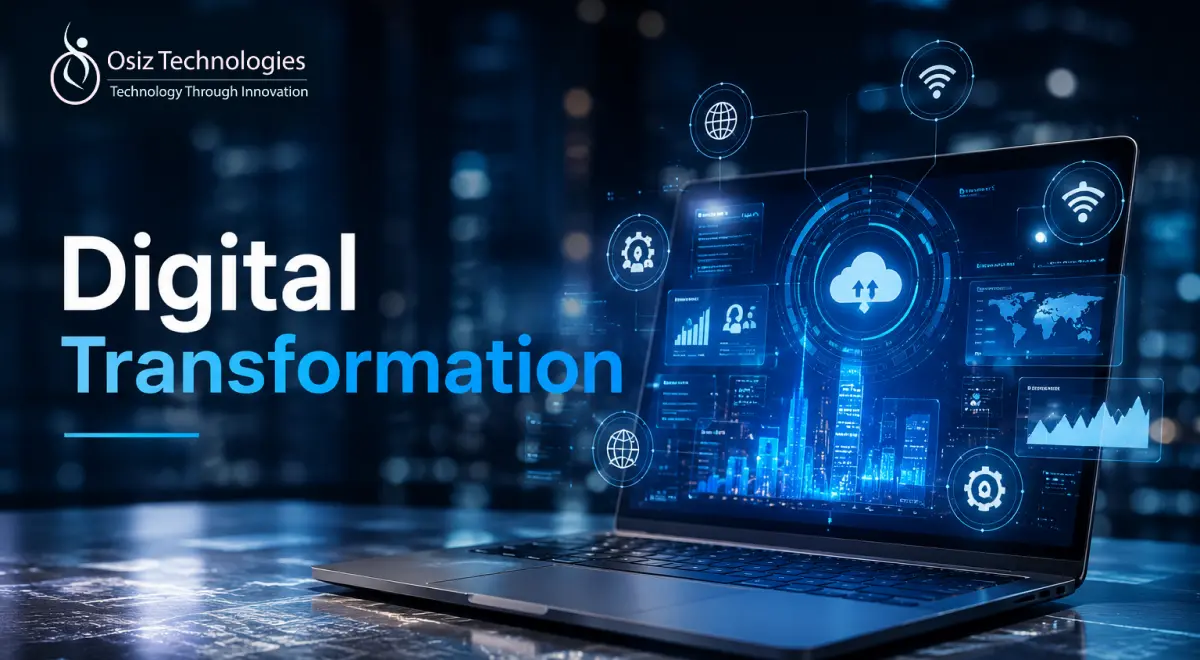
In today's rapidly evolving business landscape, the concept of digital transformation has become a cornerstone for organizations aiming to stay competitive and relevant. Digital transformation refers to the process by which companies reevaluate their processes, products, operations, and technology stack in order to enhance efficiency and speed up product delivery to market. This comprehensive overhaul is not merely about adopting new technologies but fundamentally altering how businesses operate internally and interact with customers externally. Organizations often partner with a Digital Transformation Company to accelerate this journey and achieve sustainable business growth.
Digital transformation encompasses a wide array of changes aimed at leveraging digital capabilities to improve business outcomes. It involves integrating various technological advancements into every aspect of an organization, from customer interactions to internal workflows, thereby creating more personalized experiences for both customers and employees. This shift towards digitalization not only accelerates the pace of innovation but also empowers organizations to better serve their stakeholders by streamlining operations and enhancing service delivery.
Understanding what constitutes digital transformation is crucial
What is digital transformation?
Digital transformation is a business strategy initiative that incorporates digital technology across all areas of an organization. It evaluates and modernizes an organization’s processes, products, operations, and technologies to enhance efficiency, improve customer experience, and drive innovation. This process often involves leveraging new digital tools such as cloud computing, artificial intelligence (AI), the Internet of Things (IoT), and data analytics to transform traditional business models.
The earliest, headline-making examples of digital transformation—like Uber, AirBnB, and Netflix—used mobile and cloud computing technologies to reimagine transactions and interactions with customers. These companies disrupted their respective industries by offering new ways for people to find rides, book accommodations, or watch videos at home.
Digital transformation is not just about technology; it’s also about how organizations adapt their business models and operational processes to better serve their customers and stakeholders in a digital world. By integrating these technologies effectively, businesses can create more personalized experiences, reduce costs, improve decision-making, and ultimately stay competitive in an increasingly connected marketplace.
Digital Transformation Domains
In digital transformation, domains are essentially targets or levers for transformation. Most digital transformation strategies target one or more of these domains to achieve meaningful change within an organization.
Business and operating models represent a fundamental shift in how an organization delivers products, services, and value to its customers, investors, or stakeholders. This could involve rethinking the business model entirely—such as Uber’s disruption of traditional taxi services—or making incremental changes that enhance efficiency and customer satisfaction. Digital transformation often starts with understanding where these models can be improved through digital technology.
Processes are another critical domain for digital transformation. Organizations are increasingly focused on optimizing their internal processes to improve productivity, reduce costs, and enhance the overall customer experience. This might involve automating routine tasks, integrating different systems, or adopting new workflows that leverage digital tools and data analytics.
Products also fall under this category of domains. As technology advances, products themselves become more integral parts of a company’s strategy. Digital innovation is not just about how a product works but also about the way it's developed, produced, and delivered to customers. For instance, companies like Apple have successfully leveraged digital transformation by continuously innovating their hardware and software ecosystems.
By focusing on these domains—business models, processes, and products—an organization can significantly enhance its competitive position in today’s rapidly evolving market landscape.
Digital Transformation Technologies
Virtually any digital technology can play a role in an organization's digital transformation strategy, but these technologies are most closely associated with transformation initiatives. For instance, customer experience (CX) improvements often rely on advanced analytics to understand and predict consumer needs, while employee experience (EX) enhancements leverage AI-driven tools for training and support. Digital transformation involves not just the adoption of new technology, but also a fundamental shift in how these technologies are integrated into processes, products, and business models through strategic Software Development and technology modernization initiatives.
The earliest, headline-making examples of digital transformation—Uber, AirBnB, Netflix—are prime illustrations of this process. These companies used mobile and cloud computing technologies to reimagine transactions that were previously conducted offline or through traditional channels. Today, the scope of digital technology applications is broader than ever before, encompassing everything from AI-driven customer service chatbots to blockchain for secure transaction management.
In digital transformation, domains are essentially targets or levers for transformation. Most digital transformation strategies target one or more of these domains: business model, processes, and products. By focusing on these areas, organizations can create a more seamless and personalized experience for customers while also improving efficiency within their own operations. This multifaceted approach ensures that the benefits of digital transformation are felt across all aspects of an organization, leading to sustained growth and competitive advantage in today's fast-paced business environment.
Benefits of Digital Transformation
Experts and organizations credit digital transformation with everything from improved supply chain and resource management to significant gains in overall productivity, profitability, and competitive advantage. One of the key benefits is enhanced employee experience. As technology evolves, so too does its integration within an organization's operations. This evolution not only streamlines processes but also elevates the way employees interact with these systems, making work more efficient and enjoyable. For instance, digital tools that support remote working have become indispensable for many companies, fostering a more flexible and inclusive workplace culture.
Moreover, digital transformation can lead to new products and services that were previously unimaginable. By embracing cutting-edge technologies like artificial intelligence (AI), robotics process automation (RPA), and the Internet of Things (IoT), organizations can innovate at an unprecedented pace. This not only diversifies their product offerings but also opens up entirely new markets and revenue streams. For example, a manufacturing company might leverage AI to develop custom products for niche markets or integrate IoT sensors into existing devices to gather real-time data that drives better decision-making.
In summary, digital transformation transforms how organizations operate by optimizing processes, enhancing employee experience, and driving innovation through the creation of new technologies and products. These changes collectively contribute to a more resilient, efficient, and competitive business environment.
Digital Transformation Samples Case Studies
Most people have read or heard how companies like Netflix and Uber have disrupted their business models and industries through digital transformation. But other organizations also have compelling stories about digital transformation that can serve as valuable case studies for others looking to navigate this journey.
One such company is Osiz Technologies, a leading provider of smart home automation solutions. By integrating IoT (Internet of Things) technologies into its products, Osiz has transformed the way customers interact with their homes. The company's digital transformation initiative focused on enhancing the customer experience by creating intuitive and responsive smart home systems that could be controlled through mobile apps or voice commands.
Another example comes from a manufacturing firm that implemented advanced robotics and AI in its production lines to optimize processes and reduce costs. This not only improved efficiency but also allowed for more personalized product customization, leading to higher satisfaction among customers who valued the unique offerings.
These case studies illustrate how digital transformation can manifest in various forms—ranging from enhancing customer experiences through technology integration to optimizing internal operations by leveraging new technologies. As these examples demonstrate, digital transformation is not just about adopting new tools or platforms but fundamentally rethinking business models and processes to better serve customers and stakeholders.
Listen To The Article

Founder & CEO Osiz Technologies
Mr. Thangapandi, the CEO of Osiz, has a proven track record of conceptualizing and architecting 100+ user-centric and scalable solutions for startups and enterprises. He brings a deep understanding of both technical and user experience aspects. The CEO, being an early adopter of new technology, said, \"I believe in the transformative power of AI to revolutionize industries and improve lives. My goal is to integrate AI in ways that not only enhance operational efficiency but also drive sustainable development and innovation.\" Proving his commitment, Mr. Thangapandi has built a dedicated team of AI experts proficient in coming up with innovative AI solutions and have successfully completed several AI projects across diverse sectors.
Recent Blogs



No 22,Astalakshmi Nagar, Thanakankullam, (Opp Seetha lakshmi Mill gate Bus stop) Thirunagar, Madurai - 625 006.
(Corporate Office)


Canada Office address, 1150, Rue Patrick, Laval, Quebec - H7Y 2C4, Canada.
(Sales Office)


Explore Our
AI Portfolio

 Artificial Intelligence
- AI Development
- AI Predictive Analytics Services
- AI SaaS Development
- RAG Development
- AI Assistant Development
- ChatGPT Development
- Data Analytics Services
- AI Copilot Development
- Adaptive AI Development
- Machine Learning Development
- NLP
- AI Consulting Services
- AI Software Builder
- AI Token Development
- AI Integration Services
- Enterprise AI Solution
- AI As a Service
- AI Marketing Tools
- AI Video Generator
- Computer Vision Services
- Explore AI
- Dataset
- Machine Learning in Healthcare
- Machine Learning in Retail
- Hire AI Engineers
- Hire Prompt Engineers
- Hire ChatGPT Developers
- Hire Stable Diffusion Developers
- Hire Action Transformer Developers
- Blockchain
- Blockchain Development
- Private Blockchain Development
- Smart Contract Development
- Custom Blockchain Development
- Solana Blockchain Development
- Polygon Blockchain Development
- Public Blockchain Development
- DAO Blockchain Development
- Binance Smart Chain (BSC) Blockchain Development
- DApp Development
- Solana DApp Development
- White Label Blockchain Solutions
- Custom Blockchain On Avalanche
- Custom Blockchain On Polygon
- Blockchain Game Development
- Blockchain Consulting Services
- Blockchain Explorer Development
- Ethereum Blockchain Development
- TRON Blockchain Development
- Prediction Market Platform Development Company
Layer 1 & 2 Solutions- Layer-1 Blockchain Development
- Cross Chain Bridge Development
- Data Availability Layer Development
- Ethereum Layer 2 Scaling Solutions
- Cross-L2 DEX Solution
- Layer 2 Token Development
- Layer 2 Token Marketing
- Layer 2 Cryptocurrency Development
- Layer 2 Solutions For Blockchain Games
- Layer 2 Solutions For Web3 Gaming
- Layer 2 Blockchain Solutions
- Rollups As A Service
- Optimistic Rollups Development
- ZK Tech Development
- Bitcoin Layer 2 Solutions
Crypto Exchange- Cryptocurrency Exchange Development
- White Label Crypto Exchange
- Decentralized Exchange Development
- P2P Exchange Development
- Crypto Derivatives Exchange Development
- Centralized Exchange Development
- Crypto Exchange Clone Script
- Cryptocurrency Exchange App Development
- OTC Exchange Development
- Exchange Listing Services
- Binance Like Exchange Development
- Bitstamp Like Exchange Development
- Crypto Exchange Script
CryptoCrypto WalletToken Standards- Token Development
- AI Token Development
- RWA Tokenization Development
- Coinremitter Clone Script
- Asset Tokenization
- Real Estate Tokenization
- Tokenization Platform Development
- Crypto ETF Development
- Solona Token Development
- Semi-Fungible Token Development
- BEP20 Token Development
- Ethereum Token Development
- ERC1400 Token Development
- ERC998 Token Development
- ERC 721 Token Development
- ERC20 Token Development
- Defi Token Development
- ERC1155 Token Development
- BEP721 Token Development
- Utility Token Development
- ERC 777 Token Development
- ERC 827 Token Development
- Social Token Development
- Metaverse Token Development
- Tron Token Development
- ERC404 Token Development
- Governance Token
- Shibarium Token
- polygon Token
- BRC-20
- TRC20 Token Development
- TRC10 Token Development
- Soulbound Token Development
- NFT Token Development
Trading BotsClone- Crypto Exchange Clone Script
- Binance Clone Script
- Metamask Clone Script
- Coinbase Clone Script
- Kucoin Clone Script
- Paxful Clone Script
- Remitano Clone Script
- Wazirx Clone Script
- ByBit Clone Script
- Bitfinex Clone Script
- MEXC Clone Script
- Bitget Clone Script
- Cointool App Clone Script
- Trust Wallet Clone App
- Coinmarketcap Clone Script
- Changelly Clone Script
- BingX Clone Script
CybersecurityApp SecurityDigital Forensics & Incident ResponseAudit & ConsultingEducation & TrainingSolutionsWeb 3DeFi- Decentralized Finance (DeFi) Development
- DeFi Lending/ Borrowing Platform Development
- DeFi Staking Platform Development
- DeFi Token Development
- DeFi Wallet Development
- DeFi Smart Contract Development
- DeFi DApp Development
- Decentralized Exchange Development
- DeFi Insurance Development
- DeFi Crypto Synthetic Assets Development
Game Development- Game Development
- Android Game Development
- IOS Game Development
- Metaverse Game Development
- VR Game Development
- AI Game Development
- Unity 3D Game Development
- Unreal Engine Game Development
- Mobile Game Development
- Blockchain Game Development
- NFT Game Development
- Play to Earn Game Development
- Move to Earn Game Development
- Casino Game Development
- Slot Game Development
- Poker Game Development
- AAA Game Development
- AR Game Development
- Social Network Game Development
- Gamification Services
- Decentralized Sports Betting Platform
- Sports Betting Dapp Development
- Blockchain Casino Game Development
- Game Asset Creation
- Baccarat Game Development
- Rollbit Clone Script
- Fortnite Clone Script
- Slot Game Development
- Tap to Earn Game Development
- Slot Game Development
Metaverse Platforms- Metaverse Game Development
- Metaverse Event Platform Development
- Metaverse Virtual Mall Development
- Metaverse NFT Marketplace Development
- Metaverse Token Development
- Metaverse Virtual Land Development
- Metaverse Avatar Development
- Metaverse 3d Space Development
- Metaverse Real Estate Development
- Metaverse Social Media Platform Development
- Top 10 Metaverse Development Company
- Metaverse Business Ideas
- Metaverse Launchpad Development
- Metaverse App Development
- Metaverse Casino Game Development
NFT SolutionsNFT Platforms- NFT Minting Development
- NFT Token Development
- NFT Exchange Platform Development
- NFT Launchpad Development
- NFT Fashion Marketplace Development
- NFT Art Marketplace Development
- NFT Music Marketplace Development
- Carbon Credits NFT Marketplace Development
- Binance NFT Marketplace Development
- Polygon NFT Marketplace Development
- Solana NFT Marketplace Development
- Influencers NFT Marketplace Development
- NFT Ticketing Marketplace Development
- DeFi NFT Marketplace Development
- NFT Fantasy Sports Platform Development
- NFT Storage Development
- NFT Lending Platform Development
- Top10 NFT Business Ideas
NFT Game ClonesSustainabilityServiceNow - Blog
- Contact Us
- Works