
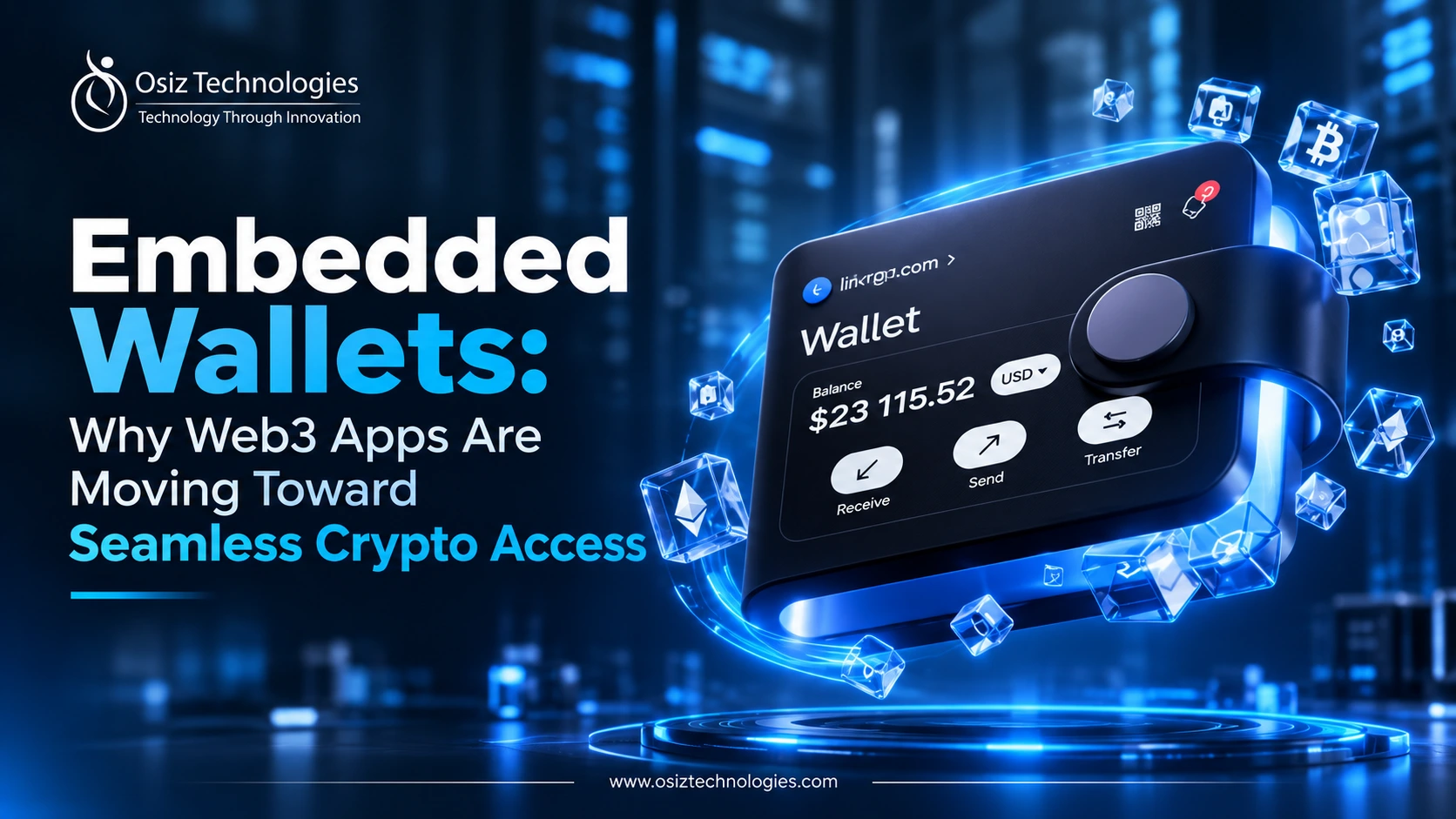
As the digital landscape evolves, the demand for seamless crypto access has never been higher. Embedded wallets are emerging as a pivotal solution for Web3 applications, allowing users to engage with cryptocurrencies effortlessly. This article explores the benefits, features, and future of embedded wallets, providing insights on how they transform user experiences in the crypto space.
Understanding Embedded Wallets in Web3
Embedded wallets are integrated directly into Web3 applications, allowing users to manage their cryptocurrencies without needing a separate wallet interface. This integration streamlines the user experience, making it easier for individuals to interact with decentralized applications (dApps) and access their digital assets.
How Embedded Wallets Work?
These wallets function by leveraging smart contracts and blockchain technology, enabling secure transactions and asset management. Users can send, receive, and store cryptocurrencies directly within the app, eliminating the need for multiple platforms.
Benefits of Embedded Wallets
Embedded wallets offer numerous advantages that enhance the user experience and promote crypto adoption:
Seamless Integration: Users can access their wallets without leaving the application, simplifying interactions.
Enhanced Security: With advanced encryption and security protocols, embedded wallets protect user assets effectively.
Improved User Experience: The intuitive design of embedded wallets caters to both novice and experienced users.
How to Use Embedded Wallets?
Using embedded wallets is straightforward:
Create an Account: Users typically need to register within the Web3 app.
Set Up Wallet: Follow prompts to create a wallet, often involving generating a seed phrase.
Fund Your Wallet: Users can transfer cryptocurrencies from other wallets or purchase directly through the app.
Engage with dApps: Once funded, users can interact with various dApps seamlessly.
Embedded Wallet Security
Security is paramount in the crypto space. Embedded wallets utilize several layers of security:
Encryption: Data is encrypted to protect against unauthorized access.
Two-Factor Authentication: Additional verification steps enhance security.
Regular Audits: Continuous monitoring and audits ensure the wallet's integrity.
Best Embedded Wallets of 2026
1. Privy
Privy is a popular embedded wallet solution that enables Web3 applications to offer seamless wallet creation through email, social logins, and passkeys. It supports secure key management, multi-chain transactions, and simplified user onboarding. Its developer-friendly SDKs make it suitable for DeFi platforms, gaming applications, and Web3 marketplaces.
2. Dynamic
Dynamic provides embedded wallet infrastructure that combines user authentication, wallet creation, and blockchain connectivity. It allows users to access crypto wallets through familiar login methods without requiring separate wallet installations. Its support for multiple blockchain networks makes it useful for applications that need flexible wallet connectivity and streamlined onboarding.
3. MetaMask Embedded Wallets
MetaMask Embedded Wallets, formerly known as Web3Auth, enables developers to integrate crypto wallets directly into their applications. It supports social logins, email authentication, and secure key management through threshold cryptography and key-sharing mechanisms. It helps businesses simplify Web3 onboarding while providing users with convenient access to blockchain services.
4. Turnkey
Turnkey offers secure wallet infrastructure designed for applications requiring programmable signing and advanced key management. Its secure enclave technology protects private keys while enabling developers to build customized wallet experiences. It is suitable for fintech platforms, crypto applications, and businesses that require flexible transaction authorization and secure signing workflows.
5. Thirdweb
Thirdweb provides embedded wallet solutions alongside a comprehensive Web3 development toolkit. It supports social and email authentication, smart accounts, blockchain interactions, and gas sponsorship integrations. Developers can use its SDKs and APIs to create user-friendly wallets for NFT marketplaces, blockchain games, DeFi applications, and decentralized platforms.
Embedded Wallets vs. Traditional Wallets
While traditional wallets require separate applications, embedded wallets integrate directly into platforms, offering distinct advantages:
Convenience: Users can manage assets without switching between apps.
Speed: Transactions are faster due to direct integration.
Accessibility: Users can access their wallets from any device with internet connectivity.
Web3 Wallet Trends
The landscape of Web3 wallets is rapidly changing:
Increased Adoption: More users are embracing embedded wallets as they become more user-friendly.
Focus on Security: Developers are prioritizing security features to build trust.
Interoperability: Future wallets are expected to support multiple blockchain networks.
How to Choose a Crypto Wallet?
When selecting a crypto wallet, consider the following factors:
Security Features: Look for wallets with strong encryption and multi-factor authentication.
User Experience: Choose wallets that offer intuitive interfaces.
Supported Assets: Ensure the wallet supports the cryptocurrencies you plan to use.
The Future of Embedded Wallets
As technology advances, embedded wallets are poised to become even more integral to the crypto ecosystem. Innovations in user experience, security, and interoperability will drive their adoption, making them a staple in Web3 applications.
Integrating Wallets in Web3 Apps
For developers, integrating wallets into Web3 apps involves:
Choosing the Right Wallet: Select a wallet that aligns with your app's goals.
Utilizing APIs: Leverage APIs provided by wallet services for seamless integration.
Testing: Conduct thorough testing to ensure functionality and security.
Conclusion
Embedded wallets are transforming how users access and manage cryptocurrencies by simplifying onboarding, enabling seamless transactions, and strengthening security across Web3 applications. As wallet technology advances, businesses must keep up with emerging innovations to deliver better accessibility and user experiences. Partnering with a reliable Crypto Wallet Development Company like Osiz Technologies can help businesses build secure, scalable, and feature-rich embedded wallet solutions tailored to their Web3 requirements. Connect with us at osiztechnologies.com to explore the possibilities of embedded wallet development.
Listen To The Article

Founder & CEO Osiz Technologies
Mr. Thangapandi, the CEO of Osiz, has a proven track record of conceptualizing and architecting 100+ user-centric and scalable solutions for startups and enterprises. He brings a deep understanding of both technical and user experience aspects. The CEO, being an early adopter of new technology, said, \"I believe in the transformative power of AI to revolutionize industries and improve lives. My goal is to integrate AI in ways that not only enhance operational efficiency but also drive sustainable development and innovation.\" Proving his commitment, Mr. Thangapandi has built a dedicated team of AI experts proficient in coming up with innovative AI solutions and have successfully completed several AI projects across diverse sectors.
Recent Blogs



No 22,Astalakshmi Nagar, Thanakankullam, (Opp Seetha lakshmi Mill gate Bus stop) Thirunagar, Madurai - 625 006.
(Corporate Office)


Canada Office address, 1150, Rue Patrick, Laval, Quebec - H7Y 2C4, Canada.
(Sales Office)


Meydan Grandstand, 6th floor, Meydan Road, Nad Al Sheba, Dubai, U.A.E.
(Sales Office)


 Artificial Intelligence
- AI Development
- AI Predictive Analytics Services
- AI SaaS Development
- RAG Development
- AI Assistant Development
- ChatGPT Development
- Data Analytics Services
- AI Copilot Development
- Adaptive AI Development
- Machine Learning Development
- NLP
- AI Consulting Services
- AI Software Builder
- AI Token Development
- AI Integration Services
- AI Agent Bots
- Enterprise AI Solution
- AI As a Service
- AI Marketing Tools
- AI Video Generator
- Computer Vision Services
- Explore AI
- Dataset
- Machine Learning in Healthcare
- Machine Learning in Retail
- Hire AI Engineers
- Hire Prompt Engineers
- Hire ChatGPT Developers
- Hire Stable Diffusion Developers
- Hire Action Transformer Developers
Portfolio- AI Agriculture
- AI Healthcare
- NLP Services
- AI Brainstorming Tool
- Academic AI
- AI Dermatologist Software
- Best AI Tools
- Artificial Influencer Generator
- AI E-Learning Software
- AI Agriculture Software
- Generative AI Tool
- AI Assistant
- AI Sales Agent
- Intelligence OS For Medical Imaging
- Intelligence OS For Diagnosis Systems
- Intelligence OS For Control Systems
- Intelligence OS For Dialog Systems
- Intelligence OS For Health Management Systems
- Intelligence OS For Chat-Bots
- Intelligence OS For Crypto API
- Intelligence OS For Autocomplete In Search Engines
- Intelligence OS For CCTV To AI Camera
- Intelligence OS For Object Detection
- Intelligence OS For Voice Assistants
- Intelligence OS For Language
- Intelligence OS For Autonomous Vehicles
- Intelligence OS For Educational Assistant
- Intelligence OS For KYT
- Intelligence OS For Recommendation System
- Intelligence OS For Prediction System
- Intelligence OS For Finance
- Intelligence Fourier Transform Analysis
- AI Arbitrage Bot
- Intelligence OS For Multi-Lingual Assistant
- Blockchain
- Blockchain Development
- Private Blockchain Development
- Smart Contract Development
- Custom Blockchain Development
- Solana Blockchain Development
- Polygon Blockchain Development
- Public Blockchain Development
- DAO Blockchain Development
- Binance Smart Chain (BSC) Blockchain Development
- DApp Development
- Solana DApp Development
- White Label Blockchain Solutions
- Custom Blockchain On Avalanche
- Custom Blockchain On Polygon
- Blockchain Game Development
- Blockchain Consulting Services
- Blockchain Explorer Development
- Ethereum Blockchain Development
- TRON Blockchain Development
- Prediction Market Platform Development Company
Layer 1 & 2 Solutions- Layer-1 Blockchain Development
- Cross Chain Bridge Development
- Data Availability Layer Development
- Ethereum Layer 2 Scaling Solutions
- Cross-L2 DEX Solution
- Layer 2 Token Development
- Layer 2 Token Marketing
- Layer 2 Cryptocurrency Development
- Layer 2 Solutions For Blockchain Games
- Layer 2 Solutions For Web3 Gaming
- Layer 2 Blockchain Solutions
- Rollups As A Service
- Optimistic Rollups Development
- ZK Tech Development
- Bitcoin Layer 2 Solutions
Crypto Exchange- Cryptocurrency Exchange Development
- White Label Crypto Exchange
- Decentralized Exchange Development
- P2P Exchange Development
- Crypto Derivatives Exchange Development
- Centralized Exchange Development
- Crypto Exchange Clone Script
- Cryptocurrency Exchange App Development
- OTC Exchange Development
- Exchange Listing Services
- Binance Like Exchange Development
- Bitstamp Like Exchange Development
- Crypto Exchange Script
CryptoCrypto WalletToken Standards- Token Development
- AI Token Development
- RWA Tokenization Development
- Coinremitter Clone Script
- Asset Tokenization
- Real Estate Tokenization
- Tokenization Platform Development
- Crypto ETF Development
- Solona Token Development
- Semi-Fungible Token Development
- BEP20 Token Development
- Ethereum Token Development
- ERC1400 Token Development
- ERC998 Token Development
- ERC 721 Token Development
- ERC20 Token Development
- Defi Token Development
- ERC1155 Token Development
- BEP721 Token Development
- Utility Token Development
- ERC 777 Token Development
- ERC 827 Token Development
- Social Token Development
- Metaverse Token Development
- Tron Token Development
- ERC404 Token Development
- Governance Token
- Shibarium Token
- polygon Token
- BRC-20
- TRC20 Token Development
- TRC10 Token Development
- Soulbound Token Development
- NFT Token Development
Trading BotsClone- Crypto Exchange Clone Script
- Binance Clone Script
- Metamask Clone Script
- Coinbase Clone Script
- Kucoin Clone Script
- Paxful Clone Script
- Remitano Clone Script
- Wazirx Clone Script
- ByBit Clone Script
- Bitfinex Clone Script
- MEXC Clone Script
- Bitget Clone Script
- Cointool App Clone Script
- Trust Wallet Clone App
- Coinmarketcap Clone Script
- Changelly Clone Script
- BingX Clone Script
CybersecurityApp SecurityDigital Forensics & Incident ResponseAudit & ConsultingEducation & TrainingSolutionsWeb 3DeFi- Decentralized Finance (DeFi) Development
- DeFi Lending/ Borrowing Platform Development
- DeFi Staking Platform Development
- DeFi Token Development
- DeFi Wallet Development
- DeFi Smart Contract Development
- DeFi DApp Development
- Decentralized Exchange Development
- DeFi Insurance Development
- DeFi Crypto Synthetic Assets Development
Game Development- Game Development
- Android Game Development
- IOS Game Development
- Metaverse Game Development
- VR Game Development
- AI Game Development
- Unity 3D Game Development
- Unreal Engine Game Development
- Mobile Game Development
- Blockchain Game Development
- NFT Game Development
- Play to Earn Game Development
- Move to Earn Game Development
- Casino Game Development
- Slot Game Development
- Poker Game Development
- AAA Game Development
- AR Game Development
- Social Network Game Development
- Gamification Services
- Decentralized Sports Betting Platform
- Sports Betting Dapp Development
- Blockchain Casino Game Development
- Game Asset Creation
- Baccarat Game Development
- Rollbit Clone Script
- Fortnite Clone Script
- Slot Game Development
- Tap to Earn Game Development
- Slot Game Development
Metaverse Platforms- Metaverse Game Development
- Metaverse Event Platform Development
- Metaverse Virtual Mall Development
- Metaverse NFT Marketplace Development
- Metaverse Token Development
- Metaverse Virtual Land Development
- Metaverse Avatar Development
- Metaverse 3d Space Development
- Metaverse Real Estate Development
- Metaverse Social Media Platform Development
- Top 10 Metaverse Development Company
- Metaverse Business Ideas
- Metaverse Launchpad Development
- Metaverse App Development
- Metaverse Casino Game Development
NFT SolutionsNFT Platforms- NFT Minting Development
- NFT Token Development
- NFT Exchange Platform Development
- NFT Launchpad Development
- NFT Fashion Marketplace Development
- NFT Art Marketplace Development
- NFT Music Marketplace Development
- Carbon Credits NFT Marketplace Development
- Binance NFT Marketplace Development
- Polygon NFT Marketplace Development
- Solana NFT Marketplace Development
- Influencers NFT Marketplace Development
- NFT Ticketing Marketplace Development
- DeFi NFT Marketplace Development
- NFT Fantasy Sports Platform Development
- NFT Storage Development
- NFT Lending Platform Development
- Top10 NFT Business Ideas
NFT Game ClonesSustainabilityServiceNow - Blog
- Contact Us
- Works