
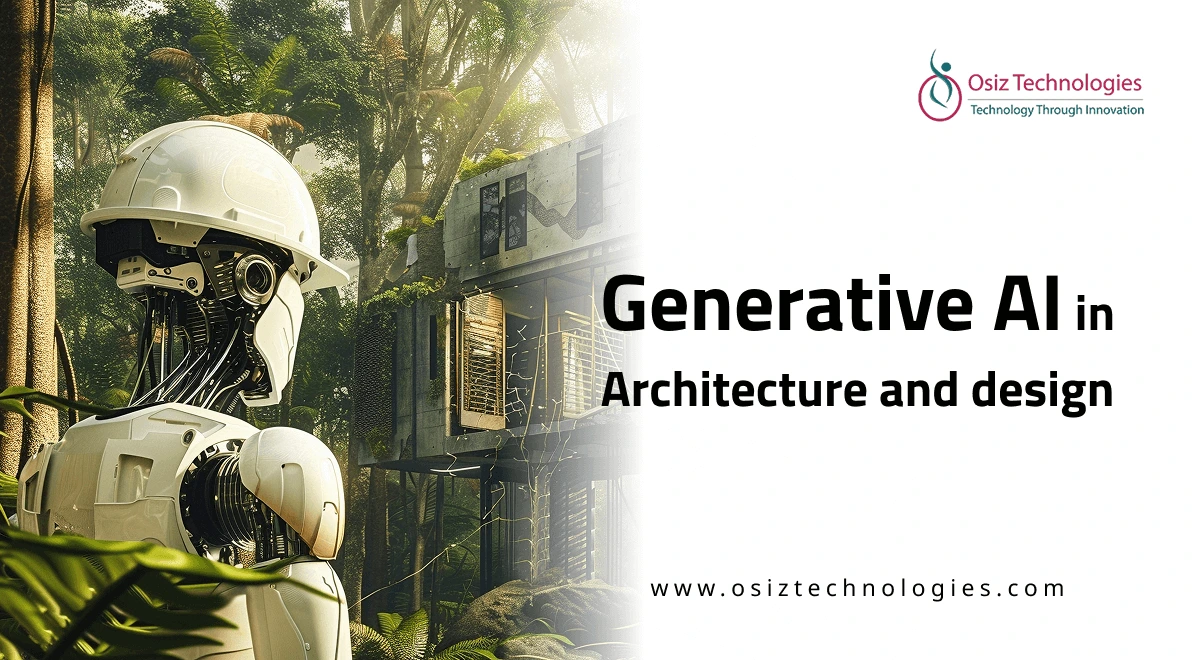
Architecture has always changed alongside technology, from hand-drawn blueprints to advanced CAD software. Today, generative AI is emerging as a transformative tool, helping architects and designers explore creative forms, optimize structures, and simplify workflows. By combining creativity with computational power, AI allows faster versions, smarter material use, and more sustainable designs. Across residential, commercial, and urban planning projects, generative AI is opening new possibilities that were previously unimaginable.
Layers Within the Architecture of Generative AI
Understanding the layers within generative AI helps architects and designers use its full potential for creative and effective solutions
Data Handling:
This part gathers readers and arranges design data so AI can spot patterns in real-world projects.
Logic:
Here, design tools and AI work with data to make designs, adjust layouts, and guess how things will change.
Usage:
This part puts AI to work on design jobs, like 3D modeling and adjustable designs, so designers can make buildings that work well and look good.
How People Use It:
Designers and clients look at AI design ideas using simple screens, offering ways to tweak, personalize, and decide together.
Checking and Fixing:
AI designs get checked for being useful, following rules, and being eco-friendly. Then, feedback helps make the models better over time.
Putting It All Together:
This part makes sure AI designs work with current design programs, BIM tools, and project organizers for easy work.
Architectural Design Principles for Generative AI
Using good design helps generative AI in architecture create building plans that work well, look good, and last.
Balancing Design and Use
AI designs should be both creative and practical to satisfy clients and meet rules.
Better Space Use
AI models check layouts to get the most out of every bit of space, without losing good design.
Changing Designs Easily
With AI, architects can easily change design details and check out different ideas fast.
Thinking About Sustainability
AI can help make buildings greener by cutting down on waste and energy use.
Knowing the Surroundings
AI designers think about the environment, culture, and city around them, so buildings fit in well.
Design for People
AI helps create buildings that are easy to use, accessible, and can change as needed, while also helping clients and designers work together.
Key Features of Generative AI for Conceptual Design
Generative AI provides tools that allow architects and designers to turn initial ideas into clear, usable designs.
Fast Idea Generation
AI quickly creates many design options, which saves time and sparks creativity for architects and clients.
Better Visuals
Designs are shown in 3D with realistic materials and lighting, so everyone can easily understand the proposed structure.
AI for Space Planning
AI-driven design makes layouts that are efficient, functional, and appealing.
Simulation and Analysis
AI checks structural performance, energy use, and environmental impact to improve designs before building starts.
Teamwork-Friendly Design
Easy-to-use interfaces help designers, clients, and engineers give feedback and change AI-created proposals easily.
Works with BIM and CAD
AI outputs work with current software, guaranteeing smooth workflow and practical use in actual projects.
Improving Efficiency and Sustainability in Projects
Generative AI not only accelerates design workflows but also promotes sustainable practices throughout architectural projects.
Optimized Resource Usage
AI analyzes material requirements to reduce waste, assuring efficient use of resources in construction and design processes.
Energy-Efficient Design
By simulating lighting, HVAC, and energy flows, AI helps create buildings that consume less energy and reduce operational costs.
Sustainable Material Recommendations
AI suggests eco-friendly materials and construction techniques that align with sustainability goals.
Reduced Iteration Time
Automated design iterations shorten project timelines, allowing architects to focus on creation and environmental considerations.
Lifecycle Analysis
Generative AI models evaluate environmental impact throughout the building’s lifespan, supporting long-term planning.
Compliance with Green Standards
AI assures designs meet local regulations and international green building certifications, improving project trustworthiness and environmental responsibility.
Future Trends in AI-Driven Architecture and Design
AI is set to change architecture through creation, productivity, and green solutions.
Advanced Design Tools
Expect next-level AI to produce designs that are complex and adapt to their surroundings in ways we haven't seen before.
Smart City Integration
AI will build buildings to sync with city systems. This will make energy, traffic, and resource use simpler to handle across the whole city.
VR Previews
With virtual and augmented reality driven by AI, clients and architects can walk through designs before anything is built.
Custom Spaces
AI is going to adjust spaces to fit the people using them. It will tweak layouts, lighting, and features to give a custom feel.
Conclusion
Generative AI is changing architecture and design by providing resources that boost creativity, output, and eco-friendly methods for projects of any size. At Osiz, we use modern AI tech to assist architects, designers, and companies in making ambitious ideas real with both accuracy and speed. By partnering with a Prominent Generative AI Development Company such as Osiz, you can use AI in design, make workflows easier, and develop spaces that look great and work well. The future of architecture involves more intelligence, quicker processes, and greater flexibility, which is possible for anyone with the correct AI solutions.
Listen To The Article

Founder & CEO Osiz Technologies
Mr. Thangapandi, the CEO of Osiz, has a proven track record of conceptualizing and architecting 100+ user-centric and scalable solutions for startups and enterprises. He brings a deep understanding of both technical and user experience aspects. The CEO, being an early adopter of new technology, said, "I believe in the transformative power of AI to revolutionize industries and improve lives. My goal is to integrate AI in ways that not only enhance operational efficiency but also drive sustainable development and innovation." Proving his commitment, Mr. Thangapandi has built a dedicated team of AI experts proficient in coming up with innovative AI solutions and have successfully completed several AI projects across diverse sectors.
Recent Blogs




No 22,Astalakshmi Nagar, Thanakankullam, (Opp Seetha lakshmi Mill gate Bus stop) Thirunagar, Madurai - 625 006.
(Corporate Office)


Canada Office address, 1150, Rue Patrick, Laval, Quebec - H7Y 2C4, Canada.
(Sales Office)


Explore
Our AI Portfolio

 Artificial Intelligence
- AI Development
- AI Predictive Analytics Services
- AI SaaS Development
- RAG Development
- AI Assistant Development
- ChatGPT Development
- Data Analytics Services
- AI Copilot Development
- Adaptive AI Development
- Machine Learning Development
- NLP
- AI Consulting Services
- AI Software Builder
- AI Token Development
- AI Integration Services
- Enterprise AI Solution
- AI As a Service
- AI Marketing Tools
- AI Video Generator
- Computer Vision Services
- Explore AI
- Dataset
- Machine Learning in Healthcare
- Machine Learning in Retail
- Hire AI Engineers
- Hire Prompt Engineers
- Hire ChatGPT Developers
- Hire Stable Diffusion Developers
- Hire Action Transformer Developers
- Blockchain
- Blockchain Development
- Private Blockchain Development
- Smart Contract Development
- Custom Blockchain Development
- Solana Blockchain Development
- Polygon Blockchain Development
- Public Blockchain Development
- DAO Blockchain Development
- Binance Smart Chain (BSC) Blockchain Development
- DApp Development
- Solana DApp Development
- White Label Blockchain Solutions
- Custom Blockchain On Avalanche
- Custom Blockchain On Polygon
- Blockchain Game Development
- Blockchain Consulting Services
- Blockchain Explorer Development
- Ethereum Blockchain Development
- TRON Blockchain Development
- Prediction Market Platform Development Company
Layer 1 & 2 Solutions- Layer-1 Blockchain Development
- Cross Chain Bridge Development
- Data Availability Layer Development
- Ethereum Layer 2 Scaling Solutions
- Cross-L2 DEX Solution
- Layer 2 Token Development
- Layer 2 Token Marketing
- Layer 2 Cryptocurrency Development
- Layer 2 Solutions For Blockchain Games
- Layer 2 Solutions For Web3 Gaming
- Layer 2 Blockchain Solutions
- Rollups As A Service
- Optimistic Rollups Development
- ZK Tech Development
- Bitcoin Layer 2 Solutions
Crypto Exchange- Cryptocurrency Exchange Development
- White Label Crypto Exchange
- Decentralized Exchange Development
- P2P Exchange Development
- Crypto Derivatives Exchange Development
- Centralized Exchange Development
- Crypto Exchange Clone Script
- Cryptocurrency Exchange App Development
- OTC Exchange Development
- Exchange Listing Services
- Binance Like Exchange Development
- Bitstamp Like Exchange Development
- Crypto Exchange Script
CryptoCrypto WalletToken Standards- Token Development
- AI Token Development
- RWA Tokenization Development
- Coinremitter Clone Script
- Asset Tokenization
- Real Estate Tokenization
- Tokenization Platform Development
- Crypto ETF Development
- Solona Token Development
- Semi-Fungible Token Development
- BEP20 Token Development
- Ethereum Token Development
- ERC1400 Token Development
- ERC998 Token Development
- ERC 721 Token Development
- ERC20 Token Development
- Defi Token Development
- ERC1155 Token Development
- BEP721 Token Development
- Utility Token Development
- ERC 777 Token Development
- ERC 827 Token Development
- Social Token Development
- Metaverse Token Development
- Tron Token Development
- ERC404 Token Development
- Governance Token
- Shibarium Token
- polygon Token
- BRC-20
- TRC20 Token Development
- TRC10 Token Development
- Soulbound Token Development
- NFT Token Development
Trading BotsClone- Crypto Exchange Clone Script
- Binance Clone Script
- Metamask Clone Script
- Coinbase Clone Script
- Kucoin Clone Script
- Paxful Clone Script
- Remitano Clone Script
- Wazirx Clone Script
- ByBit Clone Script
- Bitfinex Clone Script
- MEXC Clone Script
- Bitget Clone Script
- Cointool App Clone Script
- Trust Wallet Clone App
- Coinmarketcap Clone Script
- Changelly Clone Script
- BingX Clone Script
CybersecurityApp SecurityDigital Forensics & Incident ResponseAudit & ConsultingEducation & TrainingSolutionsWeb 3DeFi- Decentralized Finance (DeFi) Development
- DeFi Lending/ Borrowing Platform Development
- DeFi Staking Platform Development
- DeFi Token Development
- DeFi Wallet Development
- DeFi Smart Contract Development
- DeFi DApp Development
- Decentralized Exchange Development
- DeFi Insurance Development
- DeFi Crypto Synthetic Assets Development
Game Development- Game Development
- Android Game Development
- IOS Game Development
- Metaverse Game Development
- VR Game Development
- AI Game Development
- Unity 3D Game Development
- Unreal Engine Game Development
- Mobile Game Development
- Blockchain Game Development
- NFT Game Development
- Play to Earn Game Development
- Move to Earn Game Development
- Casino Game Development
- Slot Game Development
- Poker Game Development
- AAA Game Development
- AR Game Development
- Social Network Game Development
- Gamification Services
- Decentralized Sports Betting Platform
- Sports Betting Dapp Development
- Blockchain Casino Game Development
- Game Asset Creation
- Baccarat Game Development
- Rollbit Clone Script
- Fortnite Clone Script
- Slot Game Development
- Tap to Earn Game Development
- Slot Game Development
Metaverse Platforms- Metaverse Game Development
- Metaverse Event Platform Development
- Metaverse Virtual Mall Development
- Metaverse NFT Marketplace Development
- Metaverse Token Development
- Metaverse Virtual Land Development
- Metaverse Avatar Development
- Metaverse 3d Space Development
- Metaverse Real Estate Development
- Metaverse Social Media Platform Development
- Top 10 Metaverse Development Company
- Metaverse Business Ideas
- Metaverse Launchpad Development
- Metaverse App Development
- Metaverse Casino Game Development
NFT SolutionsNFT Platforms- NFT Minting Development
- NFT Token Development
- NFT Exchange Platform Development
- NFT Launchpad Development
- NFT Fashion Marketplace Development
- NFT Art Marketplace Development
- NFT Music Marketplace Development
- Carbon Credits NFT Marketplace Development
- Binance NFT Marketplace Development
- Polygon NFT Marketplace Development
- Solana NFT Marketplace Development
- Influencers NFT Marketplace Development
- NFT Ticketing Marketplace Development
- DeFi NFT Marketplace Development
- NFT Fantasy Sports Platform Development
- NFT Storage Development
- NFT Lending Platform Development
- Top10 NFT Business Ideas
NFT Game ClonesSustainabilityServiceNow - Blog
- Contact Us
- Works