
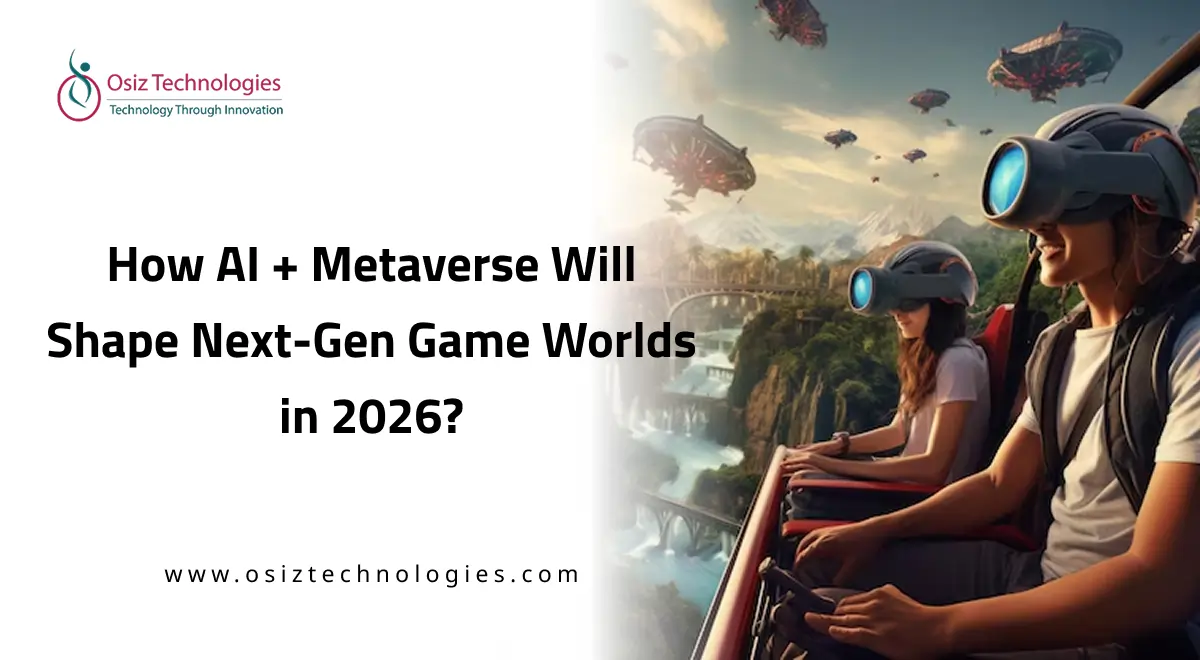
AI and virtual environments are transforming interactive entertainment by enabling games that respond dynamically to player actions. This shift makes game worlds feel realistic and responsive, rather than static levels. As the gaming industry evolves, understanding the significance of the AI Metaverse Gaming model and its historical development becomes essential.
The Evolution of Game Worlds Before AI + Metaverse
1. In the early days, levels were created manually, resulting in identical gameplay and fixed maps each time. This lack of variation limited the game's replayability.
2. NPCs, events, and story lines were meticulously planned, limiting player choices and offering few branching paths or varied endings.
3. Games expanded with larger maps allowing players to explore, yet the environments were still crafted by humans.
4. Online gaming enabled shared spaces where many players could connect, growing the player community and reaching, but these virtual worlds were governed by servers.
5. MMOs built virtual worlds that continued to evolve even after players had left. However, these worlds lacked intelligent systems capable of generating content autonomously.
How AI Is Transforming Metaverse-Based Game Worlds (Core Ways)
Procedural world generation
Generate immersive worlds quickly, where landscapes, ecosystems, and structures evolve according to dynamic rules that continuously adapt, creating boundless environments.
Real-time environment adaptation
Game worlds change based on player behavior, community actions, and global activity, so every moment feels fresh.
Smarter NPC behavior
Characters develop thoughts, respond, and evolve based on context, enabling more engaging and authentic narratives that reflect real-world AI applications in gaming.
Personalized story paths
Stories change based on your choices, how you play, and your emotions, creating experiences that feel custom-made.
AI-driven physics and interactions
Movements, crashes, and how the environment reacts create realism across the growing virtual world, leading to understanding the platform that makes these big, interactive spaces possible.
Role of Metaverse in Expanding Game Experiences
Shared Virtual Spaces
Digital environments where players gather and engage together, blending socializing, exploring, and gaming to enrich the community's shared experiences.
Digital Identity & Avatars
Your online presence becomes an enduring part of who you are, allowing you to form emotional connections and maintain a consistent sense of self across various virtual environments.
Interoperable Game Ecosystems
Items and progress move between games, reflecting the increasing importance of owning things across platforms.
Persistent Worlds
The surroundings evolve even when you're not actively playing, enhancing immersion and demonstrating how AI will advance Metaverse games by 2026.
Key Ways AI + Metaverse Will Shape Next-Gen Games in 2026
Hyper-Realistic Game Environments
Hyper realistic ecosystem will seem real because of changing weather, smarter animal and plant systems, and realistic land formations.
Human-Like NPCs with Context Awareness
Game characters will reflect your tone, actions, and surroundings, making conversations feel more authentic and enhancing the overall immersion.
Emotion-Driven Avatar Interactions
Your avatar will react to feelings, how people act, and social situations, letting you express yourself and tell stories in a better way.
Cross-World Asset Portability
Players can carry over their belongings, abilities, and identities across connected worlds, helping the metaverse gain broader acceptance.
AI-Powered Community Governance
Online communities will use smart systems to keep things in order, handle money matters, and keep things fair. This leads to how creators will change along with it.
Impact on Game Developers & Studios
1. Changes in Development Pipelines
AI manages repetitive tasks like level design, NPC configuration, and testing, accelerating metaverse game development by enabling teams to experiment deliver features faster.
2. Transformation of Asset Creation
AI tools assist in generating and enhancing game elements such as 3D models, textures, and animations, allowing artists to create assets faster, maintain a uniform style, and Efficiency
3. Evolving Production Cycles
Games have grown far beyond their original launch, transforming into vibrant, ever-changing worlds powered by AI.
Future: What Comes After 2026?
Looking ahead, we see a future of connected digital worlds where smart tech shapes economies, events, and cultures. Gamers can jump between experiences without waiting for screens to load, and creators can use tools to build whole new worlds quickly.
Osiz, a top game development company, is working on AI Metaverse Gaming to help studios create these big, smart, connected universes. As this continues, expect intelligence and virtual worlds to change how games are made and played after 2026.
Listen To The Article

Founder & CEO Osiz Technologies
As the CEO of Osiz Technologies, Mr. Thangapandi has exhibited exceptional leadership and innovation in the field of game development. An early adopter of new technology, Mr. Thangapandi asserts, "The world of games has always held a special place in my heart. It's a realm of boundless creativity, where imagination takes form and stories come alive. As CEO of Osiz Technologies, it's been an immense privilege to be a part of the gaming universe" With Osiz on the verge of game development, the future of gaming is bright, brimming with innovative experiences and captivating narratives.
Recent Blogs



No 22,Astalakshmi Nagar, Thanakankullam, (Opp Seetha lakshmi Mill gate Bus stop) Thirunagar, Madurai - 625 006.
(Corporate Office)


Canada Office address, 1150, Rue Patrick, Laval, Quebec - H7Y 2C4, Canada.
(Sales Office)


Explore Our
AI Portfolio

 Artificial Intelligence
- AI Development
- AI Predictive Analytics Services
- AI SaaS Development
- RAG Development
- AI Assistant Development
- ChatGPT Development
- Data Analytics Services
- AI Copilot Development
- Adaptive AI Development
- Machine Learning Development
- NLP
- AI Consulting Services
- AI Software Builder
- AI Token Development
- AI Integration Services
- Enterprise AI Solution
- AI As a Service
- AI Marketing Tools
- AI Video Generator
- Computer Vision Services
- Explore AI
- Dataset
- Machine Learning in Healthcare
- Machine Learning in Retail
- Hire AI Engineers
- Hire Prompt Engineers
- Hire ChatGPT Developers
- Hire Stable Diffusion Developers
- Hire Action Transformer Developers
- Blockchain
- Blockchain Development
- Private Blockchain Development
- Smart Contract Development
- Custom Blockchain Development
- Solana Blockchain Development
- Polygon Blockchain Development
- Public Blockchain Development
- DAO Blockchain Development
- Binance Smart Chain (BSC) Blockchain Development
- DApp Development
- Solana DApp Development
- White Label Blockchain Solutions
- Custom Blockchain On Avalanche
- Custom Blockchain On Polygon
- Blockchain Game Development
- Blockchain Consulting Services
- Blockchain Explorer Development
- Ethereum Blockchain Development
- TRON Blockchain Development
- Prediction Market Platform Development Company
Layer 1 & 2 Solutions- Layer-1 Blockchain Development
- Cross Chain Bridge Development
- Data Availability Layer Development
- Ethereum Layer 2 Scaling Solutions
- Cross-L2 DEX Solution
- Layer 2 Token Development
- Layer 2 Token Marketing
- Layer 2 Cryptocurrency Development
- Layer 2 Solutions For Blockchain Games
- Layer 2 Solutions For Web3 Gaming
- Layer 2 Blockchain Solutions
- Rollups As A Service
- Optimistic Rollups Development
- ZK Tech Development
- Bitcoin Layer 2 Solutions
Crypto Exchange- Cryptocurrency Exchange Development
- White Label Crypto Exchange
- Decentralized Exchange Development
- P2P Exchange Development
- Crypto Derivatives Exchange Development
- Centralized Exchange Development
- Crypto Exchange Clone Script
- Cryptocurrency Exchange App Development
- OTC Exchange Development
- Exchange Listing Services
- Binance Like Exchange Development
- Bitstamp Like Exchange Development
- Crypto Exchange Script
CryptoCrypto WalletToken Standards- Token Development
- AI Token Development
- RWA Tokenization Development
- Coinremitter Clone Script
- Asset Tokenization
- Real Estate Tokenization
- Tokenization Platform Development
- Crypto ETF Development
- Solona Token Development
- Semi-Fungible Token Development
- BEP20 Token Development
- Ethereum Token Development
- ERC1400 Token Development
- ERC998 Token Development
- ERC 721 Token Development
- ERC20 Token Development
- Defi Token Development
- ERC1155 Token Development
- BEP721 Token Development
- Utility Token Development
- ERC 777 Token Development
- ERC 827 Token Development
- Social Token Development
- Metaverse Token Development
- Tron Token Development
- ERC404 Token Development
- Governance Token
- Shibarium Token
- polygon Token
- BRC-20
- TRC20 Token Development
- TRC10 Token Development
- Soulbound Token Development
- NFT Token Development
Trading BotsClone- Crypto Exchange Clone Script
- Binance Clone Script
- Metamask Clone Script
- Coinbase Clone Script
- Kucoin Clone Script
- Paxful Clone Script
- Remitano Clone Script
- Wazirx Clone Script
- ByBit Clone Script
- Bitfinex Clone Script
- MEXC Clone Script
- Bitget Clone Script
- Cointool App Clone Script
- Trust Wallet Clone App
- Coinmarketcap Clone Script
- Changelly Clone Script
- BingX Clone Script
CybersecurityApp SecurityDigital Forensics & Incident ResponseAudit & ConsultingEducation & TrainingSolutionsWeb 3DeFi- Decentralized Finance (DeFi) Development
- DeFi Lending/ Borrowing Platform Development
- DeFi Staking Platform Development
- DeFi Token Development
- DeFi Wallet Development
- DeFi Smart Contract Development
- DeFi DApp Development
- Decentralized Exchange Development
- DeFi Insurance Development
- DeFi Crypto Synthetic Assets Development
Game Development- Game Development
- Android Game Development
- IOS Game Development
- Metaverse Game Development
- VR Game Development
- AI Game Development
- Unity 3D Game Development
- Unreal Engine Game Development
- Mobile Game Development
- Blockchain Game Development
- NFT Game Development
- Play to Earn Game Development
- Move to Earn Game Development
- Casino Game Development
- Slot Game Development
- Poker Game Development
- AAA Game Development
- AR Game Development
- Social Network Game Development
- Gamification Services
- Decentralized Sports Betting Platform
- Sports Betting Dapp Development
- Blockchain Casino Game Development
- Game Asset Creation
- Baccarat Game Development
- Rollbit Clone Script
- Fortnite Clone Script
- Slot Game Development
- Tap to Earn Game Development
- Slot Game Development
Metaverse Platforms- Metaverse Game Development
- Metaverse Event Platform Development
- Metaverse Virtual Mall Development
- Metaverse NFT Marketplace Development
- Metaverse Token Development
- Metaverse Virtual Land Development
- Metaverse Avatar Development
- Metaverse 3d Space Development
- Metaverse Real Estate Development
- Metaverse Social Media Platform Development
- Top 10 Metaverse Development Company
- Metaverse Business Ideas
- Metaverse Launchpad Development
- Metaverse App Development
- Metaverse Casino Game Development
NFT SolutionsNFT Platforms- NFT Minting Development
- NFT Token Development
- NFT Exchange Platform Development
- NFT Launchpad Development
- NFT Fashion Marketplace Development
- NFT Art Marketplace Development
- NFT Music Marketplace Development
- Carbon Credits NFT Marketplace Development
- Binance NFT Marketplace Development
- Polygon NFT Marketplace Development
- Solana NFT Marketplace Development
- Influencers NFT Marketplace Development
- NFT Ticketing Marketplace Development
- DeFi NFT Marketplace Development
- NFT Fantasy Sports Platform Development
- NFT Storage Development
- NFT Lending Platform Development
- Top10 NFT Business Ideas
NFT Game ClonesSustainabilityServiceNow - Blog
- Contact Us
- Works