
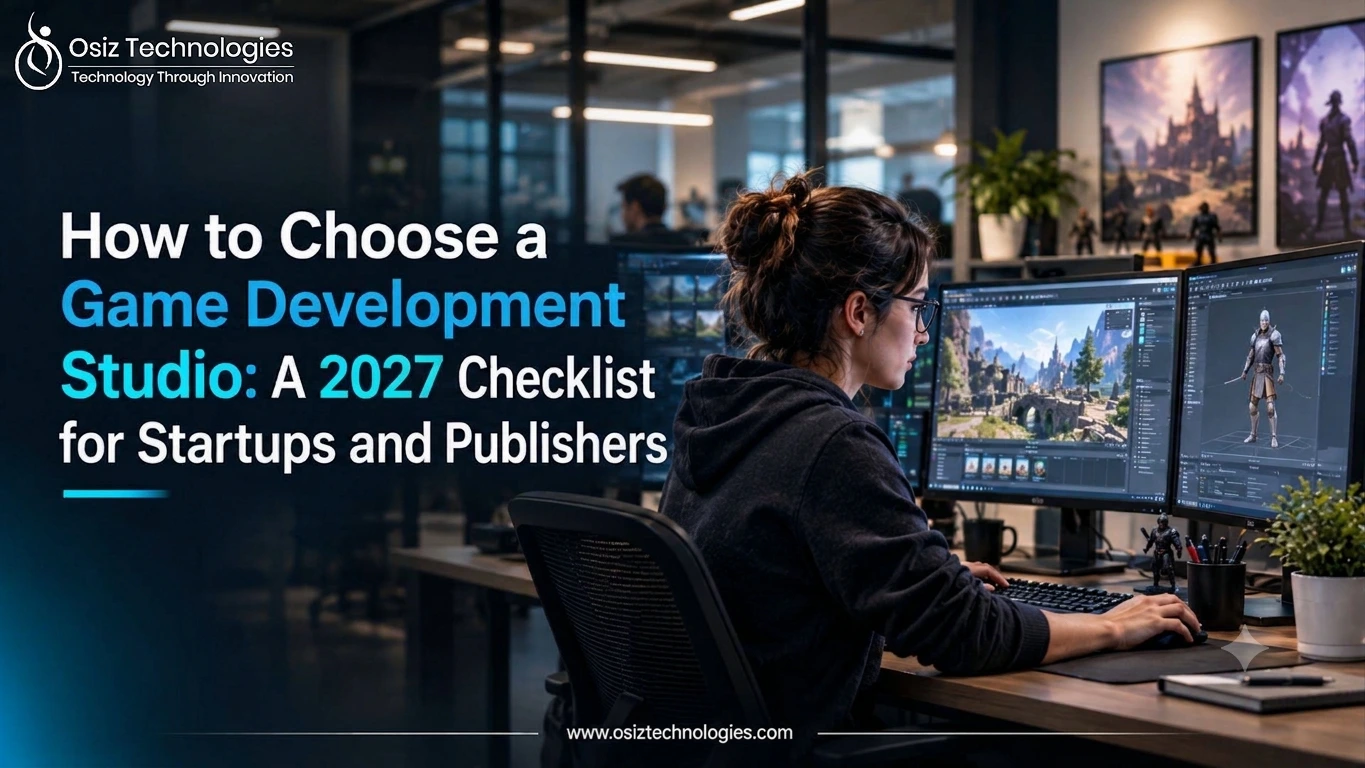
Picking the right game development studio is one of the biggest decisions a startup or publisher makes. The partner you choose shapes your budget, your release date and, most importantly, how players feel about your game. This guide walks through a practical checklist for 2027, covering the questions to ask, how pricing works, outsourcing tips and the trends worth watching, so you can compare studios with confidence instead of guesswork.
Understanding Your Project Needs
Before you speak to any studio, get clear on what you are building. A casual mobile game, a console title and an immersive AR/VR and metaverse game each demand different skills, tools and team sizes. Write down your game concept, target audience, platforms, must-have features and a rough budget range.
This short brief does two things. It helps you shortlist studios that genuinely fit your project, and it gives every studio the same information, which makes their proposals easier to compare later.
Researching Game Development Studios
Once your brief is ready, start building a shortlist. Look for studios that already work in your genre and platform, and that can show finished, released games rather than only concepts. Industry forums, review platforms and social media are useful starting points, but treat them as leads, not proof.
Check each studio's website for team size, engines they use, services offered and how recently they shipped a project. A studio that has been active, transparent and consistent over the years is usually a safer bet than one with a polished pitch and little to show.
Evaluating Portfolios and Case Studies
A studio's portfolio is the clearest picture of what it can actually deliver. When you review it, focus on these points:
Diversity of projects: A range of genres and platforms shows the team can adapt to different requirements.
Quality of work: Look closely at visuals, gameplay mechanics, performance and overall user experience. If art and motion matter to your game, check whether the studio creates game art, animation and 3D characters and environments in-house.
Relevance: Previous work should match your game's genre, art style and target audience.
Case studies add more depth than screenshots. They show how a studio approached a problem, how it planned timelines and how it worked with the client. Ask for playable builds where possible, because a game feels very different to play than it looks in a trailer.
Questions to Ask Potential Game Developers?
When you narrow down your options, a prepared list of questions quickly shows how a studio thinks and communicates. Start with these:
- What is your development process, from concept to launch?
- How do you handle project timelines and budgets when scope changes?
- Can you provide references from past clients?
- Which tools and technologies do you use, such as Unity or Unreal Engine, and why are they right for your game?
- How do you approach quality assurance and testing?
- Who owns the source code and intellectual property after delivery?
Pay attention to how clearly and honestly they answer. Specific, confident answers are a good sign. Vague replies or a rush to close the deal are worth noting.
Understanding Pricing Models
The cost of hiring a game development studio depends on the studio's location, the experience of its team and the complexity of your game. Three arrangements are common:
Fixed price: One agreed fee for a clearly defined scope. It works best when requirements are stable.
Hourly rate: You pay for the hours worked, which suits projects where scope may change along the way.
Milestone payments: The total cost is split into payments tied to delivered stages, such as prototype, alpha and beta.
Whichever you choose, ask for a written breakdown of what is included and what is not, such as testing, art assets, store submission and post-launch fixes. Settling these details early prevents surprise charges later.
Game Development Outsourcing Tips
Outsourcing can help you control costs and reach specialist skills that are hard to hire locally. To get the most from it:
- Choose a studio with real experience working with external clients.
- Set up clear communication channels, such as weekly demos and a shared task board.
- Agree on deliverables, milestones and timelines in writing.
- Plan for time zone differences and fix overlapping working hours.
A good outsourcing partner works like an extension of your own team, not a distant vendor, so judge a studio on its communication as much as its price.
Game Development Trends in 2027
A forward-looking studio helps your game stay relevant after launch. Three trends are worth asking about
Wider use of AI: Studios are using AI tools to speed up prototyping, asset creation and testing, while still relying on human designers for creative direction.
Cross-platform play: Players expect to continue on mobile, PC and console, so more projects are planned for multiple platforms from day one.
Sustainability: Some studios are beginning to consider energy-efficient builds and responsible practices, which may matter to certain publishers and audiences.
If Web3 mechanics fit your idea, ask whether the studio has hands-on experience with a blockchain game development company style workflow, including smart contracts and in-game asset ownership. Choosing a studio that follows these shifts helps keep your game adaptable.
Negotiating with Game Developers
Negotiation is easier when both sides know what they want. Share your budget range, timeline, and expectations openly, then work toward an agreement that feels fair to both parties. A few strategies help:
- Be upfront about your budget limits.
- Ask for a cost breakdown by feature or phase so you can see where the money goes.
- Stay open to suggestions, since an experienced studio may propose a smarter way to reach the same goal.
- Put every agreed point into the contract, including payment terms, IP ownership and support after launch.
A fair negotiation builds trust and sets the tone for the whole project.
Reviewing Game Development Studio Feedback
Feedback from past clients tells you what the sales pitch will not. Read reviews on platforms such as Clutch and GoodFirms, and, where possible, speak directly with one or two previous clients. Look for comments about communication, meeting deadlines, handling changes, and support after launch. A pattern of similar feedback, positive or negative, is far more reliable than a single review.
Building a Long-Term Partnership
The best results usually come from studios you can work with again. A partner who understands your vision, your players and your business goals can improve each release, from updates and new levels to full sequels. Look for a studio that values clear communication, shares ideas proactively and stays available after launch for updates and live support.
Conclusion: Taking the Next Steps
Choosing the right Game Development Studio comes down to a clear brief, honest portfolio checks, the right questions, transparent pricing and a partner you trust. Follow this checklist and you will be able to compare studios on facts, not promises.
If you are ready to explore your options, connect with the team at Osiz Technologies, a game development studio that supports projects from concept to launch and beyond.
Listen To The Article

Founder & CEO Osiz Technologies
As the CEO of Osiz Technologies, Mr. Thangapandi has exhibited exceptional leadership and innovation in the field of game development. An early adopter of new technology, Mr. Thangapandi asserts, "The world of games has always held a special place in my heart. It's a realm of boundless creativity, where imagination takes form and stories come alive. As CEO of Osiz Technologies, it's been an immense privilege to be a part of the gaming universe" With Osiz on the verge of game development, the future of gaming is bright, brimming with innovative experiences and captivating narratives.
Recent Blogs




No 22,Astalakshmi Nagar, Thanakankullam, (Opp Seetha lakshmi Mill gate Bus stop) Thirunagar, Madurai - 625 006.
(Corporate Office)


Canada Office address, 1150, Rue Patrick, Laval, Quebec - H7Y 2C4, Canada.
(Sales Office)


Meydan Grandstand, 6th floor, Meydan Road, Nad Al Sheba, Dubai, U.A.E.
(Sales Office)


Halloween
Offers
 Artificial Intelligence
- AI Development
- AI Predictive Analytics Services
- AI SaaS Development
- RAG Development
- AI Assistant Development
- ChatGPT Development
- Data Analytics Services
- AI Copilot Development
- Adaptive AI Development
- Machine Learning Development
- NLP
- AI Consulting Services
- AI Software Builder
- AI Token Development
- AI Integration Services
- AI Agent Bots
- Enterprise AI Solution
- AI As a Service
- AI Marketing Tools
- AI Video Generator
- Computer Vision Services
- Explore AI
- Dataset
- Machine Learning in Healthcare
- Machine Learning in Retail
- Hire AI Engineers
- Hire Prompt Engineers
- Hire ChatGPT Developers
- Hire Stable Diffusion Developers
- Hire Action Transformer Developers
Portfolio- AI Agriculture
- AI Healthcare
- NLP Services
- AI Brainstorming Tool
- Academic AI
- AI Dermatologist Software
- Best AI Tools
- Artificial Influencer Generator
- AI E-Learning Software
- AI Agriculture Software
- Generative AI Tool
- AI Assistant
- AI Sales Agent
- Intelligence OS For Medical Imaging
- Intelligence OS For Diagnosis Systems
- Intelligence OS For Control Systems
- Intelligence OS For Dialog Systems
- Intelligence OS For Health Management Systems
- Intelligence OS For Chat-Bots
- Intelligence OS For Crypto API
- Intelligence OS For Autocomplete In Search Engines
- Intelligence OS For CCTV To AI Camera
- Intelligence OS For Object Detection
- Intelligence OS For Voice Assistants
- Intelligence OS For Language
- Intelligence OS For Autonomous Vehicles
- Intelligence OS For Educational Assistant
- Intelligence OS For KYT
- Intelligence OS For Recommendation System
- Intelligence OS For Prediction System
- Intelligence OS For Finance
- Intelligence Fourier Transform Analysis
- AI Arbitrage Bot
- Intelligence OS For Multi-Lingual Assistant
- Blockchain
- Blockchain Development
- Private Blockchain Development
- Smart Contract Development
- Custom Blockchain Development
- Solana Blockchain Development
- Polygon Blockchain Development
- Public Blockchain Development
- DAO Blockchain Development
- Binance Smart Chain (BSC) Blockchain Development
- DApp Development
- Solana DApp Development
- White Label Blockchain Solutions
- Custom Blockchain On Avalanche
- Custom Blockchain On Polygon
- Blockchain Game Development
- Blockchain Consulting Services
- Blockchain Explorer Development
- Ethereum Blockchain Development
- TRON Blockchain Development
- Prediction Market Platform Development Company
Layer 1 & 2 Solutions- Layer-1 Blockchain Development
- Cross Chain Bridge Development
- Data Availability Layer Development
- Ethereum Layer 2 Scaling Solutions
- Cross-L2 DEX Solution
- Layer 2 Token Development
- Layer 2 Token Marketing
- Layer 2 Cryptocurrency Development
- Layer 2 Solutions For Blockchain Games
- Layer 2 Solutions For Web3 Gaming
- Layer 2 Blockchain Solutions
- Rollups As A Service
- Optimistic Rollups Development
- ZK Tech Development
- Bitcoin Layer 2 Solutions
Crypto Exchange- Cryptocurrency Exchange Development
- White Label Crypto Exchange
- Decentralized Exchange Development
- P2P Exchange Development
- Crypto Derivatives Exchange Development
- Centralized Exchange Development
- Crypto Exchange Clone Script
- Cryptocurrency Exchange App Development
- OTC Exchange Development
- Exchange Listing Services
- Binance Like Exchange Development
- Bitstamp Like Exchange Development
- Crypto Exchange Script
CryptoCrypto WalletToken Standards- Token Development
- AI Token Development
- RWA Tokenization Development
- Coinremitter Clone Script
- Asset Tokenization
- Real Estate Tokenization
- Tokenization Platform Development
- Crypto ETF Development
- Solona Token Development
- Semi-Fungible Token Development
- BEP20 Token Development
- Ethereum Token Development
- ERC1400 Token Development
- ERC998 Token Development
- ERC 721 Token Development
- ERC20 Token Development
- Defi Token Development
- ERC1155 Token Development
- BEP721 Token Development
- Utility Token Development
- ERC 777 Token Development
- ERC 827 Token Development
- Social Token Development
- Metaverse Token Development
- Tron Token Development
- ERC404 Token Development
- Governance Token
- Shibarium Token
- polygon Token
- BRC-20
- TRC20 Token Development
- TRC10 Token Development
- Soulbound Token Development
- NFT Token Development
Trading BotsClone- Crypto Exchange Clone Script
- Binance Clone Script
- Metamask Clone Script
- Coinbase Clone Script
- Kucoin Clone Script
- Paxful Clone Script
- Remitano Clone Script
- Wazirx Clone Script
- ByBit Clone Script
- Bitfinex Clone Script
- MEXC Clone Script
- Bitget Clone Script
- Cointool App Clone Script
- Trust Wallet Clone App
- Coinmarketcap Clone Script
- Changelly Clone Script
- BingX Clone Script
CybersecurityApp SecurityDigital Forensics & Incident ResponseAudit & ConsultingEducation & TrainingSolutionsWeb 3DeFi- Decentralized Finance (DeFi) Development
- DeFi Lending/ Borrowing Platform Development
- DeFi Staking Platform Development
- DeFi Token Development
- DeFi Wallet Development
- DeFi Smart Contract Development
- DeFi DApp Development
- Decentralized Exchange Development
- DeFi Insurance Development
- DeFi Crypto Synthetic Assets Development
Game Development- Game Development
- Android Game Development
- IOS Game Development
- Metaverse Game Development
- VR Game Development
- AI Game Development
- Unity 3D Game Development
- Unreal Engine Game Development
- Mobile Game Development
- Blockchain Game Development
- NFT Game Development
- Play to Earn Game Development
- Move to Earn Game Development
- Casino Game Development
- Slot Game Development
- Poker Game Development
- AAA Game Development
- AR Game Development
- Social Network Game Development
- Gamification Services
- Decentralized Sports Betting Platform
- Sports Betting Dapp Development
- Blockchain Casino Game Development
- Game Asset Creation
- Baccarat Game Development
- Rollbit Clone Script
- Fortnite Clone Script
- Slot Game Development
- Tap to Earn Game Development
- Slot Game Development
Metaverse Platforms- Metaverse Game Development
- Metaverse Event Platform Development
- Metaverse Virtual Mall Development
- Metaverse NFT Marketplace Development
- Metaverse Token Development
- Metaverse Virtual Land Development
- Metaverse Avatar Development
- Metaverse 3d Space Development
- Metaverse Real Estate Development
- Metaverse Social Media Platform Development
- Top 10 Metaverse Development Company
- Metaverse Business Ideas
- Metaverse Launchpad Development
- Metaverse App Development
- Metaverse Casino Game Development
NFT SolutionsNFT Platforms- NFT Minting Development
- NFT Token Development
- NFT Exchange Platform Development
- NFT Launchpad Development
- NFT Fashion Marketplace Development
- NFT Art Marketplace Development
- NFT Music Marketplace Development
- Carbon Credits NFT Marketplace Development
- Binance NFT Marketplace Development
- Polygon NFT Marketplace Development
- Solana NFT Marketplace Development
- Influencers NFT Marketplace Development
- NFT Ticketing Marketplace Development
- DeFi NFT Marketplace Development
- NFT Fantasy Sports Platform Development
- NFT Storage Development
- NFT Lending Platform Development
- Top10 NFT Business Ideas
NFT Game ClonesSustainabilityServiceNow - Blog
- Contact Us
- Works