
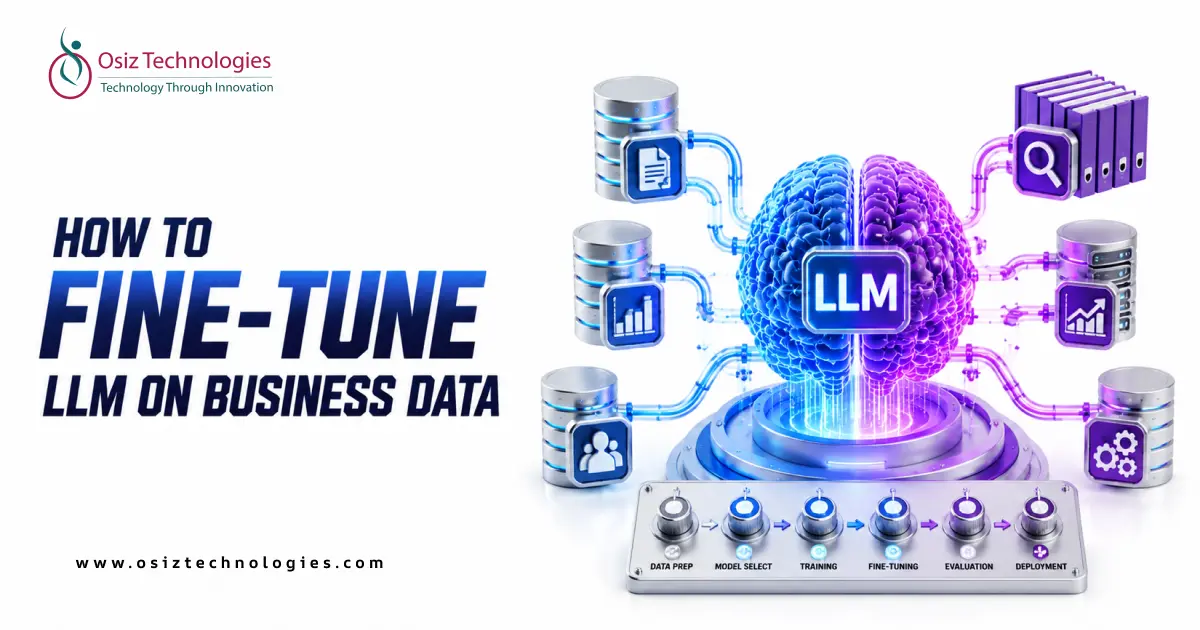
Fine-tuning a Large Language Model (LLM) on your own business data can seem daunting, but it offers immense potential for enhancing your organization's operations. By customizing an LLM, you can improve its relevance and accuracy for your specific use cases, whether it’s customer support, content generation, or data analysis. In this article, we will explore the steps, techniques, and best practices for fine-tuning an LLM, ensuring that you can leverage its capabilities effectively.
Understanding LLMs and Their Importance
Large Language Models (LLMs) like GPT-3 and BERT have revolutionized the field of natural language processing (NLP). These models are pre-trained on vast datasets and can perform a variety of language tasks. However, their performance can be significantly enhanced when fine-tuned on specific business data. This process tailors the model to understand the nuances of your industry, leading to better outcomes.
What is Fine-Tuning?
Fine-tuning is the process of taking a pre-trained model and training it further on a smaller, task-specific dataset. This allows the model to adapt its general knowledge to the specific context of your business. For instance, if you run a healthcare company, fine-tuning an LLM on medical texts will help it generate more relevant responses in that domain.
Why Fine-Tune an LLM on Your Business Data?
Fine-tuning an LLM can yield several benefits:
-
Improved Accuracy: Tailoring the model to your specific data enhances its accuracy in understanding and generating text.
-
Relevance: The model becomes more relevant to your business needs, whether that’s customer queries, product descriptions, or internal documentation.
-
Efficiency: Fine-tuning can reduce the time and resources needed for training from scratch.
Key Steps to Fine-Tune an LLM
1. Define Your Objectives
Before diving into the technical aspects, it’s crucial to define what you want to achieve with fine-tuning. Are you looking to improve customer service responses? Or perhaps generate marketing content? Clear objectives will guide your training process.
2. Gather Your Data
Data is the backbone of any machine learning model. Collect relevant datasets that reflect the language and context of your business. This could include customer interactions, product descriptions, or industry-specific documents.
3. Preprocess Your Data
Data preprocessing involves cleaning and formatting your data for the model. This may include removing irrelevant information, correcting typos, and ensuring consistent formatting. Properly preprocessed data will lead to better model performance.
4. Choose the Right Framework
Selecting the appropriate training framework is crucial for fine-tuning. Popular frameworks include Hugging Face's Transformers and TensorFlow. These frameworks provide pre-built models and tools to facilitate the fine-tuning process.
5. Fine-Tuning Techniques
There are various techniques to fine-tune an LLM:
-
Supervised Fine-Tuning: Train the model on labeled data to improve its performance on specific tasks.
-
Unsupervised Fine-Tuning: Use unlabeled data to help the model learn the structure and patterns of your data.
-
Transfer Learning: Leverage knowledge from one domain to improve performance in another.
6. Monitor Performance Metrics
During the fine-tuning process, it’s essential to monitor performance metrics to evaluate the model's effectiveness. Common metrics include accuracy, precision, recall, and F1 score. Regular monitoring allows you to make necessary adjustments to improve outcomes.
7. Addressing Challenges in Fine-Tuning
Fine-tuning can present several challenges, such as overfitting, data imbalance, and computational resource constraints. To mitigate these issues, consider techniques like data augmentation, regularization, and using a validation set to monitor performance.
8. Deployment Strategies
Once fine-tuning is complete, it’s time to deploy the model. Consider how the model will be integrated into your existing systems. Will it be used in real-time applications, or will it generate reports? A well-thought-out deployment strategy ensures that the model delivers value to your organization.
9. Success Stories of LLM Fine-Tuning
Many businesses have successfully fine-tuned LLMs to achieve remarkable results. For example, a customer service chatbot that was fine-tuned on historical chat logs improved response accuracy by over 30%. Such success stories highlight the potential of fine-tuning in real-world applications.
10. Best Practices for LLM Fine-Tuning
To ensure successful fine-tuning, follow these best practices:
-
Clearly define objectives and success metrics.
-
Use diverse and representative datasets.
-
Regularly evaluate and iterate on the model.
Stay updated with the latest research and techniques in LLM fine-tuning.
Conclusion
Fine-tuning a large language model with business-specific data enables organizations to build AI solutions that better understand their workflows, deliver more relevant responses, and improve overall operational efficiency. With the right strategy and implementation, businesses can maximize the value of LLMs while creating intelligent applications tailored to their unique requirements.
Osiz Technologies, a trusted AI development company, helps organizations develop and fine-tune custom AI models that align with real business objectives. By combining technical expertise with practical AI implementation, Osiz Technologies enables businesses to build scalable, high-performing AI solutions that support long-term growth and innovation.
Listen To The Article

Founder & CEO Osiz Technologies
Mr. Thangapandi, the CEO of Osiz, has a proven track record of conceptualizing and architecting 100+ user-centric and scalable solutions for startups and enterprises. He brings a deep understanding of both technical and user experience aspects. The CEO, being an early adopter of new technology, said, "I believe in the transformative power of AI to revolutionize industries and improve lives. My goal is to integrate AI in ways that not only enhance operational efficiency but also drive sustainable development and innovation." Proving his commitment, Mr. Thangapandi has built a dedicated team of AI experts proficient in coming up with innovative AI solutions and have successfully completed several AI projects across diverse sectors.
Recent Blogs



No 22,Astalakshmi Nagar, Thanakankullam, (Opp Seetha lakshmi Mill gate Bus stop) Thirunagar, Madurai - 625 006.
(Corporate Office)


Canada Office address, 1150, Rue Patrick, Laval, Quebec - H7Y 2C4, Canada.
(Sales Office)


Explore Our
AI Portfolio

 Artificial Intelligence
- AI Development
- AI Predictive Analytics Services
- AI SaaS Development
- RAG Development
- AI Assistant Development
- ChatGPT Development
- Data Analytics Services
- AI Copilot Development
- Adaptive AI Development
- Machine Learning Development
- NLP
- AI Consulting Services
- AI Software Builder
- AI Token Development
- AI Integration Services
- Enterprise AI Solution
- AI As a Service
- AI Marketing Tools
- AI Video Generator
- Computer Vision Services
- Explore AI
- Dataset
- Machine Learning in Healthcare
- Machine Learning in Retail
- Hire AI Engineers
- Hire Prompt Engineers
- Hire ChatGPT Developers
- Hire Stable Diffusion Developers
- Hire Action Transformer Developers
- Blockchain
- Blockchain Development
- Private Blockchain Development
- Smart Contract Development
- Custom Blockchain Development
- Solana Blockchain Development
- Polygon Blockchain Development
- Public Blockchain Development
- DAO Blockchain Development
- Binance Smart Chain (BSC) Blockchain Development
- DApp Development
- Solana DApp Development
- White Label Blockchain Solutions
- Custom Blockchain On Avalanche
- Custom Blockchain On Polygon
- Blockchain Game Development
- Blockchain Consulting Services
- Blockchain Explorer Development
- Ethereum Blockchain Development
- TRON Blockchain Development
- Prediction Market Platform Development Company
Layer 1 & 2 Solutions- Layer-1 Blockchain Development
- Cross Chain Bridge Development
- Data Availability Layer Development
- Ethereum Layer 2 Scaling Solutions
- Cross-L2 DEX Solution
- Layer 2 Token Development
- Layer 2 Token Marketing
- Layer 2 Cryptocurrency Development
- Layer 2 Solutions For Blockchain Games
- Layer 2 Solutions For Web3 Gaming
- Layer 2 Blockchain Solutions
- Rollups As A Service
- Optimistic Rollups Development
- ZK Tech Development
- Bitcoin Layer 2 Solutions
Crypto Exchange- Cryptocurrency Exchange Development
- White Label Crypto Exchange
- Decentralized Exchange Development
- P2P Exchange Development
- Crypto Derivatives Exchange Development
- Centralized Exchange Development
- Crypto Exchange Clone Script
- Cryptocurrency Exchange App Development
- OTC Exchange Development
- Exchange Listing Services
- Binance Like Exchange Development
- Bitstamp Like Exchange Development
- Crypto Exchange Script
CryptoCrypto WalletToken Standards- Token Development
- AI Token Development
- RWA Tokenization Development
- Coinremitter Clone Script
- Asset Tokenization
- Real Estate Tokenization
- Tokenization Platform Development
- Crypto ETF Development
- Solona Token Development
- Semi-Fungible Token Development
- BEP20 Token Development
- Ethereum Token Development
- ERC1400 Token Development
- ERC998 Token Development
- ERC 721 Token Development
- ERC20 Token Development
- Defi Token Development
- ERC1155 Token Development
- BEP721 Token Development
- Utility Token Development
- ERC 777 Token Development
- ERC 827 Token Development
- Social Token Development
- Metaverse Token Development
- Tron Token Development
- ERC404 Token Development
- Governance Token
- Shibarium Token
- polygon Token
- BRC-20
- TRC20 Token Development
- TRC10 Token Development
- Soulbound Token Development
- NFT Token Development
Trading BotsClone- Crypto Exchange Clone Script
- Binance Clone Script
- Metamask Clone Script
- Coinbase Clone Script
- Kucoin Clone Script
- Paxful Clone Script
- Remitano Clone Script
- Wazirx Clone Script
- ByBit Clone Script
- Bitfinex Clone Script
- MEXC Clone Script
- Bitget Clone Script
- Cointool App Clone Script
- Trust Wallet Clone App
- Coinmarketcap Clone Script
- Changelly Clone Script
- BingX Clone Script
CybersecurityApp SecurityDigital Forensics & Incident ResponseAudit & ConsultingEducation & TrainingSolutionsWeb 3DeFi- Decentralized Finance (DeFi) Development
- DeFi Lending/ Borrowing Platform Development
- DeFi Staking Platform Development
- DeFi Token Development
- DeFi Wallet Development
- DeFi Smart Contract Development
- DeFi DApp Development
- Decentralized Exchange Development
- DeFi Insurance Development
- DeFi Crypto Synthetic Assets Development
Game Development- Game Development
- Android Game Development
- IOS Game Development
- Metaverse Game Development
- VR Game Development
- AI Game Development
- Unity 3D Game Development
- Unreal Engine Game Development
- Mobile Game Development
- Blockchain Game Development
- NFT Game Development
- Play to Earn Game Development
- Move to Earn Game Development
- Casino Game Development
- Slot Game Development
- Poker Game Development
- AAA Game Development
- AR Game Development
- Social Network Game Development
- Gamification Services
- Decentralized Sports Betting Platform
- Sports Betting Dapp Development
- Blockchain Casino Game Development
- Game Asset Creation
- Baccarat Game Development
- Rollbit Clone Script
- Fortnite Clone Script
- Slot Game Development
- Tap to Earn Game Development
- Slot Game Development
Metaverse Platforms- Metaverse Game Development
- Metaverse Event Platform Development
- Metaverse Virtual Mall Development
- Metaverse NFT Marketplace Development
- Metaverse Token Development
- Metaverse Virtual Land Development
- Metaverse Avatar Development
- Metaverse 3d Space Development
- Metaverse Real Estate Development
- Metaverse Social Media Platform Development
- Top 10 Metaverse Development Company
- Metaverse Business Ideas
- Metaverse Launchpad Development
- Metaverse App Development
- Metaverse Casino Game Development
NFT SolutionsNFT Platforms- NFT Minting Development
- NFT Token Development
- NFT Exchange Platform Development
- NFT Launchpad Development
- NFT Fashion Marketplace Development
- NFT Art Marketplace Development
- NFT Music Marketplace Development
- Carbon Credits NFT Marketplace Development
- Binance NFT Marketplace Development
- Polygon NFT Marketplace Development
- Solana NFT Marketplace Development
- Influencers NFT Marketplace Development
- NFT Ticketing Marketplace Development
- DeFi NFT Marketplace Development
- NFT Fantasy Sports Platform Development
- NFT Storage Development
- NFT Lending Platform Development
- Top10 NFT Business Ideas
NFT Game ClonesSustainabilityServiceNow - Blog
- Contact Us
- Works