
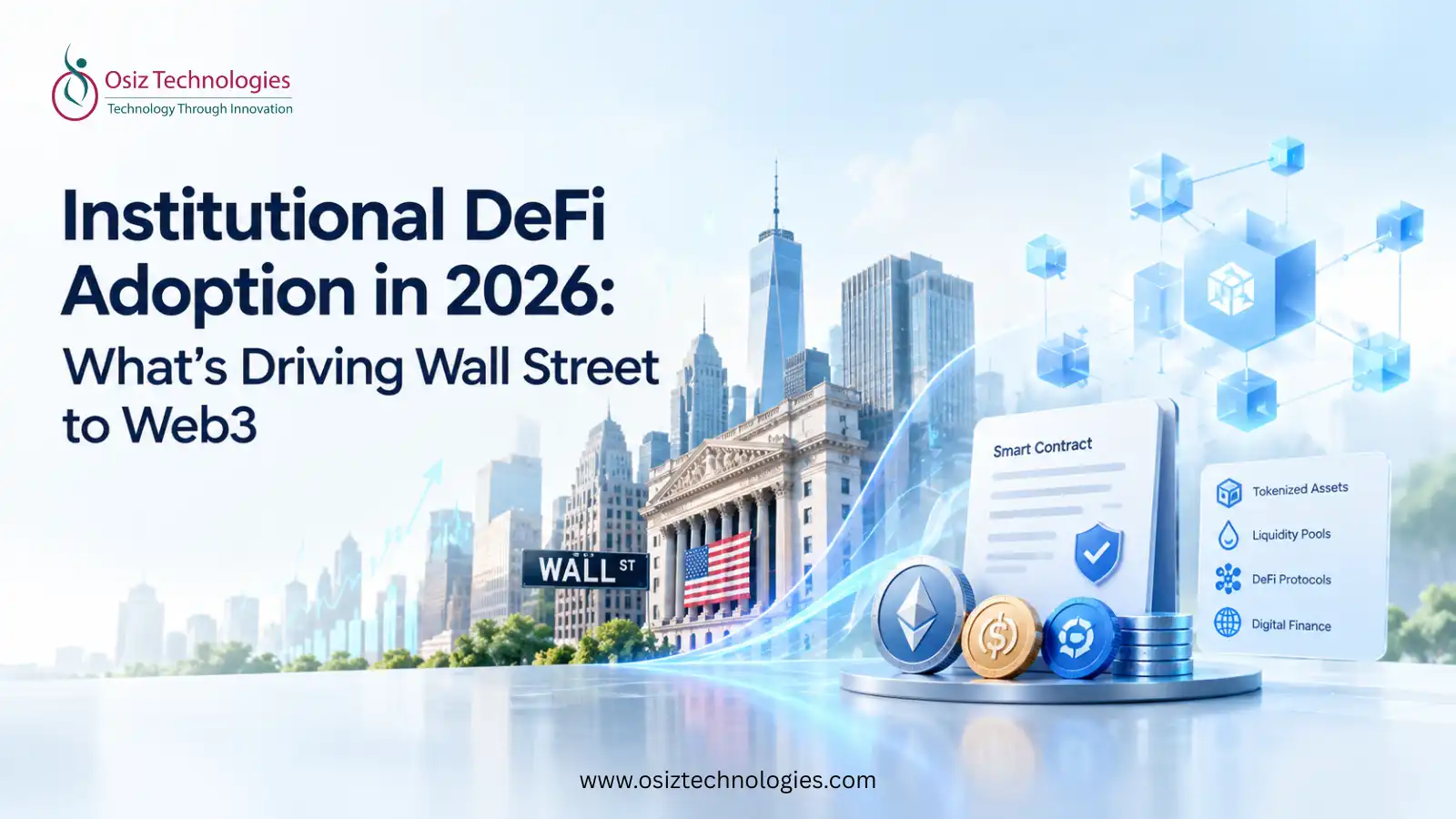
The world of finance is undergoing a seismic shift as institutional investors increasingly embrace decentralized finance (DeFi). By 2026, the integration of Wall Street with Web3 technologies promises to redefine investment strategies, risk management, and financial products. This article delves into the driving forces behind this transformation, the challenges institutions face, and the potential impact on traditional finance. As we explore the future of decentralized finance, we will also highlight key use cases, regulatory landscapes, and the benefits of blockchain technology in finance.
Understanding DeFi and Its Significance
Decentralized finance, or DeFi, refers to a financial ecosystem built on blockchain technology that enables peer-to-peer transactions without intermediaries. This model democratizes access to financial services, allowing individuals and institutions to engage in lending, borrowing, trading, and investing without traditional banking systems. The significance of DeFi lies in its potential to reduce costs, increase transparency, and enhance financial inclusion.
The Rise of Institutional Interest in DeFi
In recent years, institutional interest in DeFi has surged. Major financial institutions are recognizing the advantages of blockchain technology, such as improved efficiency and reduced operational costs. According to a report by The Future of DeFi: Institutional Adoption, institutions are increasingly exploring DeFi investment strategies to diversify their portfolios and tap into new revenue streams. This shift is driven by the need to remain competitive in a rapidly evolving financial landscape.
Key Drivers of Wall Street's Move to Web3
Several factors are propelling Wall Street's transition to Web3 technologies. Firstly, the demand for transparency and security in financial transactions has never been greater. Blockchain's immutable ledger provides a solution to these concerns, making it an attractive option for institutions. Secondly, the potential for innovative financial products in the Web3 space, such as decentralized exchanges and automated market makers, is enticing investors. Lastly, regulatory clarity is improving, fostering a more conducive environment for institutional participation.
DeFi Investment Strategies for 2026
As we look ahead to 2026, institutions are expected to adopt various DeFi investment strategies. These may include yield farming, liquidity provision, and staking, which allow investors to earn passive income on their crypto assets. Furthermore, institutions will likely leverage DeFi protocols for hedging and risk management, utilizing smart contracts to automate complex financial transactions.
The Impact of DeFi on Traditional Finance
The integration of DeFi into traditional finance is set to disrupt established banking models. Financial institutions may face increased competition from decentralized platforms that offer lower fees and faster transaction times. This shift could lead to a reevaluation of traditional banking services, pushing institutions to innovate and adapt to the changing landscape.
Web3 Financial Products: A New Era
The emergence of Web3 financial products is revolutionizing the way institutions approach finance. From decentralized lending platforms to tokenized assets, these innovations are reshaping investment paradigms. Institutions can now access a broader range of financial instruments, enabling them to diversify their portfolios and enhance liquidity.
Navigating the DeFi Regulatory Landscape in 2026
As DeFi continues to grow, the regulatory landscape will also evolve. By 2026, we can expect clearer guidelines that address the unique challenges posed by decentralized finance. Institutions will need to navigate this landscape carefully, ensuring compliance while capitalizing on the opportunities presented by DeFi.
Challenges and Barriers to DeFi Adoption
Despite the promising potential of DeFi, several challenges remain. Security concerns, such as smart contract vulnerabilities and hacks, pose significant risks for institutional investors. Additionally, the lack of regulatory clarity and the complexity of DeFi protocols can deter institutions from fully embracing this technology. Overcoming these barriers will be crucial for widespread adoption.
Case Studies of Successful Institutional DeFi Adoption
Several institutions have already ventured into the DeFi space, showcasing successful adoption. For instance, a leading investment firm recently launched a DeFi fund that focuses on yield-generating assets. This initiative highlights the potential for institutions to leverage DeFi while managing risk effectively. Such case studies serve as valuable learning experiences for others looking to enter the DeFi market.
The Future of Decentralized Finance: What Lies Ahead
The future of decentralized finance is bright, with significant growth expected in the coming years. As institutions continue to explore DeFi, we can anticipate the development of more sophisticated financial products and services. The integration of artificial intelligence and machine learning with DeFi protocols will further enhance decision-making processes and risk assessment.
Conclusion: Embracing the DeFi Revolution
As we move toward 2026, institutional adoption of decentralized finance (DeFi) is expected to redefine the global financial ecosystem. Driven by the transparency, efficiency, and innovation of blockchain technology, institutions are increasingly exploring DeFi to unlock new investment opportunities and optimize financial operations. Partnering with an experienced Blockchain Development Company enables businesses and financial institutions to build secure, scalable, and future-ready DeFi solutions tailored to evolving market demands. As the DeFi landscape continues to expand, embracing blockchain innovation will be essential for organizations seeking sustainable growth and a competitive edge. To learn more about blockchain and DeFi solutions, connect with Osiz Technologies.
Listen To The Article

Founder & CEO Osiz Technologies
Mr. Thangapandi, the CEO of Osiz, has a proven track record of conceptualizing and architecting 100+ user-centric and scalable solutions for startups and enterprises. He brings a deep understanding of both technical and user experience aspects. The CEO, being an early adopter of new technology, said, \"I believe in the transformative power of AI to revolutionize industries and improve lives. My goal is to integrate AI in ways that not only enhance operational efficiency but also drive sustainable development and innovation.\" Proving his commitment, Mr. Thangapandi has built a dedicated team of AI experts proficient in coming up with innovative AI solutions and have successfully completed several AI projects across diverse sectors.
Recent Blogs



No 22,Astalakshmi Nagar, Thanakankullam, (Opp Seetha lakshmi Mill gate Bus stop) Thirunagar, Madurai - 625 006.
(Corporate Office)


Canada Office address, 1150, Rue Patrick, Laval, Quebec - H7Y 2C4, Canada.
(Sales Office)


Meydan Grandstand, 6th floor, Meydan Road, Nad Al Sheba, Dubai, U.A.E.
(Sales Office)


Halloween
Offers

 Artificial Intelligence
- AI Development
- AI Predictive Analytics Services
- AI SaaS Development
- RAG Development
- AI Assistant Development
- ChatGPT Development
- Data Analytics Services
- AI Copilot Development
- Adaptive AI Development
- Machine Learning Development
- NLP
- AI Consulting Services
- AI Software Builder
- AI Token Development
- AI Integration Services
- AI Agent Bots
- Enterprise AI Solution
- AI As a Service
- AI Marketing Tools
- AI Video Generator
- Computer Vision Services
- Explore AI
- Dataset
- Machine Learning in Healthcare
- Machine Learning in Retail
- Hire AI Engineers
- Hire Prompt Engineers
- Hire ChatGPT Developers
- Hire Stable Diffusion Developers
- Hire Action Transformer Developers
- Blockchain
- Blockchain Development
- Private Blockchain Development
- Smart Contract Development
- Custom Blockchain Development
- Solana Blockchain Development
- Polygon Blockchain Development
- Public Blockchain Development
- DAO Blockchain Development
- Binance Smart Chain (BSC) Blockchain Development
- DApp Development
- Solana DApp Development
- White Label Blockchain Solutions
- Custom Blockchain On Avalanche
- Custom Blockchain On Polygon
- Blockchain Game Development
- Blockchain Consulting Services
- Blockchain Explorer Development
- Ethereum Blockchain Development
- TRON Blockchain Development
- Prediction Market Platform Development Company
Layer 1 & 2 Solutions- Layer-1 Blockchain Development
- Cross Chain Bridge Development
- Data Availability Layer Development
- Ethereum Layer 2 Scaling Solutions
- Cross-L2 DEX Solution
- Layer 2 Token Development
- Layer 2 Token Marketing
- Layer 2 Cryptocurrency Development
- Layer 2 Solutions For Blockchain Games
- Layer 2 Solutions For Web3 Gaming
- Layer 2 Blockchain Solutions
- Rollups As A Service
- Optimistic Rollups Development
- ZK Tech Development
- Bitcoin Layer 2 Solutions
Crypto Exchange- Cryptocurrency Exchange Development
- White Label Crypto Exchange
- Decentralized Exchange Development
- P2P Exchange Development
- Crypto Derivatives Exchange Development
- Centralized Exchange Development
- Crypto Exchange Clone Script
- Cryptocurrency Exchange App Development
- OTC Exchange Development
- Exchange Listing Services
- Binance Like Exchange Development
- Bitstamp Like Exchange Development
- Crypto Exchange Script
CryptoCrypto WalletToken Standards- Token Development
- AI Token Development
- RWA Tokenization Development
- Coinremitter Clone Script
- Asset Tokenization
- Real Estate Tokenization
- Tokenization Platform Development
- Crypto ETF Development
- Solona Token Development
- Semi-Fungible Token Development
- BEP20 Token Development
- Ethereum Token Development
- ERC1400 Token Development
- ERC998 Token Development
- ERC 721 Token Development
- ERC20 Token Development
- Defi Token Development
- ERC1155 Token Development
- BEP721 Token Development
- Utility Token Development
- ERC 777 Token Development
- ERC 827 Token Development
- Social Token Development
- Metaverse Token Development
- Tron Token Development
- ERC404 Token Development
- Governance Token
- Shibarium Token
- polygon Token
- BRC-20
- TRC20 Token Development
- TRC10 Token Development
- Soulbound Token Development
- NFT Token Development
Trading BotsClone- Crypto Exchange Clone Script
- Binance Clone Script
- Metamask Clone Script
- Coinbase Clone Script
- Kucoin Clone Script
- Paxful Clone Script
- Remitano Clone Script
- Wazirx Clone Script
- ByBit Clone Script
- Bitfinex Clone Script
- MEXC Clone Script
- Bitget Clone Script
- Cointool App Clone Script
- Trust Wallet Clone App
- Coinmarketcap Clone Script
- Changelly Clone Script
- BingX Clone Script
CybersecurityApp SecurityDigital Forensics & Incident ResponseAudit & ConsultingEducation & TrainingSolutionsWeb 3DeFi- Decentralized Finance (DeFi) Development
- DeFi Lending/ Borrowing Platform Development
- DeFi Staking Platform Development
- DeFi Token Development
- DeFi Wallet Development
- DeFi Smart Contract Development
- DeFi DApp Development
- Decentralized Exchange Development
- DeFi Insurance Development
- DeFi Crypto Synthetic Assets Development
Game Development- Game Development
- Android Game Development
- IOS Game Development
- Metaverse Game Development
- VR Game Development
- AI Game Development
- Unity 3D Game Development
- Unreal Engine Game Development
- Mobile Game Development
- Blockchain Game Development
- NFT Game Development
- Play to Earn Game Development
- Move to Earn Game Development
- Casino Game Development
- Slot Game Development
- Poker Game Development
- AAA Game Development
- AR Game Development
- Social Network Game Development
- Gamification Services
- Decentralized Sports Betting Platform
- Sports Betting Dapp Development
- Blockchain Casino Game Development
- Game Asset Creation
- Baccarat Game Development
- Rollbit Clone Script
- Fortnite Clone Script
- Slot Game Development
- Tap to Earn Game Development
- Slot Game Development
Metaverse Platforms- Metaverse Game Development
- Metaverse Event Platform Development
- Metaverse Virtual Mall Development
- Metaverse NFT Marketplace Development
- Metaverse Token Development
- Metaverse Virtual Land Development
- Metaverse Avatar Development
- Metaverse 3d Space Development
- Metaverse Real Estate Development
- Metaverse Social Media Platform Development
- Top 10 Metaverse Development Company
- Metaverse Business Ideas
- Metaverse Launchpad Development
- Metaverse App Development
- Metaverse Casino Game Development
NFT SolutionsNFT Platforms- NFT Minting Development
- NFT Token Development
- NFT Exchange Platform Development
- NFT Launchpad Development
- NFT Fashion Marketplace Development
- NFT Art Marketplace Development
- NFT Music Marketplace Development
- Carbon Credits NFT Marketplace Development
- Binance NFT Marketplace Development
- Polygon NFT Marketplace Development
- Solana NFT Marketplace Development
- Influencers NFT Marketplace Development
- NFT Ticketing Marketplace Development
- DeFi NFT Marketplace Development
- NFT Fantasy Sports Platform Development
- NFT Storage Development
- NFT Lending Platform Development
- Top10 NFT Business Ideas
NFT Game ClonesSustainabilityServiceNow - Blog
- Contact Us
- Works