
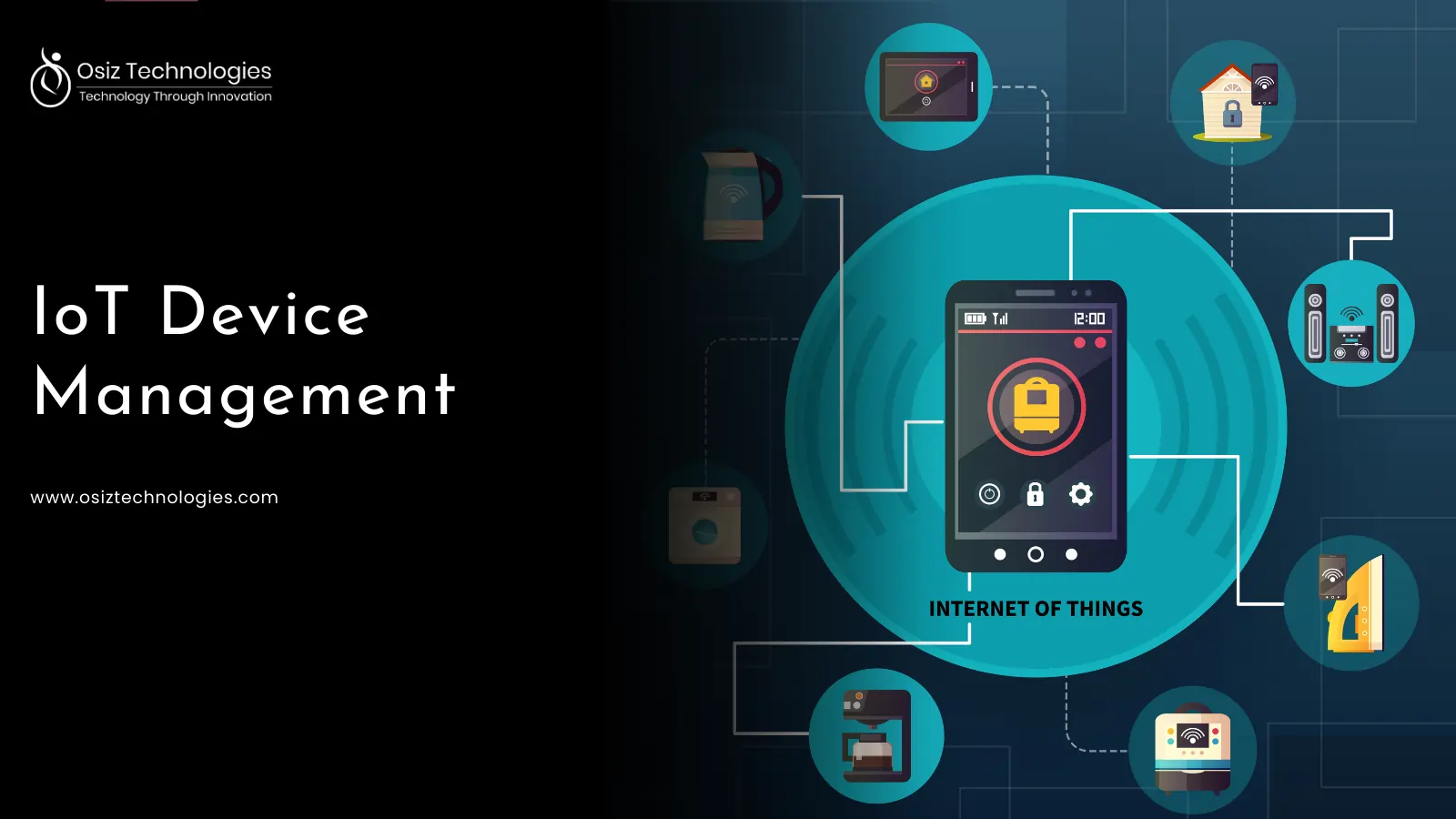
Within linked business systems, overseeing numerous intelligent devices matters for consistent function, efficiency, and stability. Osiz delivers support for handling such equipment deployment, observation, remote adjustments through networked setups. Instead of isolated fixes, broad frameworks adapt as needs grow, track activity continuously, and guard data pathways carefully. Operations remain steady; infrastructure gains resilience through structured oversight mechanisms designed by Osiz.
IoT Device Management
IoT device management involves securely setting up, overseeing, maintaining, and governing connected devices across their full lifecycle, from first deployment to decommissioning. It leverages dedicated tools to manage large numbers of devices efficiently, keeping them secure, operational, and up to date remotely.
What are the fundamentals of IoT device?
Device Connectivity and Communication
Stable links underpin how internet-connected gadgets stay linked within management systems, letting hardware units talk to main control centers along with company networks through steady pathways. Security layers inside dedicated oversight tools help firms keep information moving without interruption while supporting constant access even in extensive setups.
Device Provisioning and Registration
When a new device joins the network, it must be registered and set up safely; this is what IoT Device Provisioning provides. From that point onward, correct identification and access rights are confirmed through secure methods. Instead of manual setup, automation allows companies to activate many devices without losing oversight.
Device Monitoring and Performance Tracking
Every moment, devices within an IoT network share signals about their condition, connection quality, and function; this flow of information forms the base of constant oversight. Oversight that works without pause reveals irregular patterns, slowdowns, or breakdowns well ahead of service interruption.
Device Security and Access Control
Protection of linked gadgets stands firm when controls are tight, blocking unwelcome entries alongside harmful software risks. The system requires users to verify their identities before accessing tools. All data transmitted within the system is encrypted to ensure security and privacy.
Device Lifecycle Management
Beginning at first use, IoT Device Lifecycle Management supports devices through every phase, including setup, ongoing care, upgrades, and decommissioning. From a single hub, enterprise oversight makes it possible to track software revisions, carry out fixes without physical access, and also improve operation steadily.
Key features of IoT device management
Centralized Device Control Dashboard
A single point of access for IoT devices enables oversight across multiple systems without requiring separate logins. From one location, settings adjustments happen alongside performance checks, using structured workflows instead of manual steps. Remote regulation of hardware actions becomes possible due to unified data pathways feeding real-time updates.
Automated Device Provisioning
When new devices are integrated into a company's system, automation securely manages their registration and configuration. Rather than setting them up individually, businesses use comprehensive management tools to enable large-scale deployments. Following fast deployment, attention shifts toward observing how devices operate and respond over time.
Real-Time Device Monitoring
Remote device behavior becomes apparent through continuous monitoring with real-time updates, ensuring responses always match the current status of connected devices. Where patterns shift unexpectedly, alerts appear before failures spread widely. Following visibility gains, attention moves toward shielding networked units from emerging threats.
Advanced Security Management
Security for linked gadgets comes built into the system, using verified login rules, coded transmissions, together with tightly governed entry systems. Protection steps like these keep company-wide connections and digital setups shielded through the management hub. Since stable ecosystems rely on continuous trust, focus now turns to promptly addressing repairs.
Remote Updates and Maintenance
Even with distance, firmware updates can be made remotely, eliminating the need for physical visits. Since monitoring can scale effectively, businesses maintain operations while deploying upgrades consistently. When devices stay current through automated support, effectiveness persists across varied sites.
Benefits of using IoT device
Improved Operational Efficiency
Centralized control of devices enables companies to streamline monitoring, maintenance, and daily operations. Smart software for IoT assets automates regular tasks and reduces system requirements.
Enhanced Device Security
Properly managing IoT devices enables companies to safeguard their networks from threats, as built-in security ensures safe data transmission between devices and central systems. When defenses are active, awareness across connected environments increases naturally.
Real-Time Monitoring and Insights
Watching IoT devices nonstop allows companies to follow how well machines work along with their running details instantly, even when spread far apart. Thanks to its strong tracking system, organizations gain clear visibility into needed changes before issues worsen.
Scalable Device Deployment
Managing many connected devices becomes easier when using systems that grow with demand. From remote sites to central offices, oversight stays consistent through unified connection controls.
Reduced Maintenance Costs
As automation assumes control of IoT device lifecycle management, the need for manual involvement diminishes. Remote maintenance can be implemented, reducing the need for on-site visits, and over time, continuous operating costs start to decrease.
When should businesses use IoT device management?
Large-Scale Device Deployments
When businesses operate vast numbers of linked sensors, gadgets, and gateways, stability in device oversight becomes necessary for awareness and function. From one central point, handling connections across IoT hardware allows smoother coordination of intricate systems.
Remote Infrastructure Monitoring
Across scattered sites, organizations apply IoT device tracking to observe how equipment functions moment by moment. Enabled through robust systems, distant infrastructure stays under watch even when staff are not present on site.
Security-Sensitive Environments
Where industries manage confidential operational information, stronger safeguards for Internet-connected devices become necessary to reduce risks of digital intrusion. In interconnected systems, where protection is crucial, monitoring tools must follow strict corporate policies.
Continuous Device Maintenance
Long-term operation of IoT systems depends on structured handling of device phases, starting from deployment to retirement. Instead of manual checks, software tools apply updates across distributed units without physical access.
What does IoT Device Management Enable?
Centralized Device Administration
One key feature of an IoT Device Management Platform is its ability to handle large numbers of connected devices using a single interface. Because operations are coordinated through one system, monitoring becomes more consistent across locations.
Reliable Device Connectivity
Consistent links between IoT tools and company platforms come from careful connection oversight. When setups for handling smart gadgets work properly, signals flow without disruption through far-reaching networks.
Continuous Device Monitoring
Monitoring systems for IoT devices deliver immediate insights into how each unit performs, connects, and stays active throughout the network. Because observation runs without pause, businesses detect irregularities sooner while preserving efficient operations.
Secure Device Ecosystem
Protection of linked gadgets stands maintained through unified IoT safety oversight. Within corporate systems, structured safeguards guard information flow alongside trusted connections.
Why Choose Osiz for IoT Device Management?
Osiz, as a leading IoT Development Company, offers advanced IoT Device Management Services that empower enterprises to efficiently handle large-scale connected device ecosystems. We design and develop scalable platforms that support device provisioning, connectivity management, real-time monitoring, and complete lifecycle control. With strong expertise in device monitoring and security management, Osiz helps businesses maintain full control over their IoT infrastructure while ensuring reliable and stable device performance.
Listen To The Article

Founder & CEO Osiz Technologies
Mr. Thangapandi, the CEO of Osiz, has a proven track record of conceptualizing and architecting 100+ user-centric and scalable solutions for startups and enterprises. He brings a deep understanding of both technical and user experience aspects. The CEO, being an early adopter of new technology, said, \"I believe in the transformative power of AI to revolutionize industries and improve lives. My goal is to integrate AI in ways that not only enhance operational efficiency but also drive sustainable development and innovation.\" Proving his commitment, Mr. Thangapandi has built a dedicated team of AI experts proficient in coming up with innovative AI solutions and have successfully completed several AI projects across diverse sectors.
Recent Blogs



No 22,Astalakshmi Nagar, Thanakankullam, (Opp Seetha lakshmi Mill gate Bus stop) Thirunagar, Madurai - 625 006.
(Corporate Office)


Canada Office address, 1150, Rue Patrick, Laval, Quebec - H7Y 2C4, Canada.
(Sales Office)


Explore Our
AI Portfolio

 Artificial Intelligence
- AI Development
- AI Predictive Analytics Services
- AI SaaS Development
- RAG Development
- AI Assistant Development
- ChatGPT Development
- Data Analytics Services
- AI Copilot Development
- Adaptive AI Development
- Machine Learning Development
- NLP
- AI Consulting Services
- AI Software Builder
- AI Token Development
- AI Integration Services
- Enterprise AI Solution
- AI As a Service
- AI Marketing Tools
- AI Video Generator
- Computer Vision Services
- Explore AI
- Dataset
- Machine Learning in Healthcare
- Machine Learning in Retail
- Hire AI Engineers
- Hire Prompt Engineers
- Hire ChatGPT Developers
- Hire Stable Diffusion Developers
- Hire Action Transformer Developers
- Blockchain
- Blockchain Development
- Private Blockchain Development
- Smart Contract Development
- Custom Blockchain Development
- Solana Blockchain Development
- Polygon Blockchain Development
- Public Blockchain Development
- DAO Blockchain Development
- Binance Smart Chain (BSC) Blockchain Development
- DApp Development
- Solana DApp Development
- White Label Blockchain Solutions
- Custom Blockchain On Avalanche
- Custom Blockchain On Polygon
- Blockchain Game Development
- Blockchain Consulting Services
- Blockchain Explorer Development
- Ethereum Blockchain Development
- TRON Blockchain Development
- Prediction Market Platform Development Company
Layer 1 & 2 Solutions- Layer-1 Blockchain Development
- Cross Chain Bridge Development
- Data Availability Layer Development
- Ethereum Layer 2 Scaling Solutions
- Cross-L2 DEX Solution
- Layer 2 Token Development
- Layer 2 Token Marketing
- Layer 2 Cryptocurrency Development
- Layer 2 Solutions For Blockchain Games
- Layer 2 Solutions For Web3 Gaming
- Layer 2 Blockchain Solutions
- Rollups As A Service
- Optimistic Rollups Development
- ZK Tech Development
- Bitcoin Layer 2 Solutions
Crypto Exchange- Cryptocurrency Exchange Development
- White Label Crypto Exchange
- Decentralized Exchange Development
- P2P Exchange Development
- Crypto Derivatives Exchange Development
- Centralized Exchange Development
- Crypto Exchange Clone Script
- Cryptocurrency Exchange App Development
- OTC Exchange Development
- Exchange Listing Services
- Binance Like Exchange Development
- Bitstamp Like Exchange Development
- Crypto Exchange Script
CryptoCrypto WalletToken Standards- Token Development
- AI Token Development
- RWA Tokenization Development
- Coinremitter Clone Script
- Asset Tokenization
- Real Estate Tokenization
- Tokenization Platform Development
- Crypto ETF Development
- Solona Token Development
- Semi-Fungible Token Development
- BEP20 Token Development
- Ethereum Token Development
- ERC1400 Token Development
- ERC998 Token Development
- ERC 721 Token Development
- ERC20 Token Development
- Defi Token Development
- ERC1155 Token Development
- BEP721 Token Development
- Utility Token Development
- ERC 777 Token Development
- ERC 827 Token Development
- Social Token Development
- Metaverse Token Development
- Tron Token Development
- ERC404 Token Development
- Governance Token
- Shibarium Token
- polygon Token
- BRC-20
- TRC20 Token Development
- TRC10 Token Development
- Soulbound Token Development
- NFT Token Development
Trading BotsClone- Crypto Exchange Clone Script
- Binance Clone Script
- Metamask Clone Script
- Coinbase Clone Script
- Kucoin Clone Script
- Paxful Clone Script
- Remitano Clone Script
- Wazirx Clone Script
- ByBit Clone Script
- Bitfinex Clone Script
- MEXC Clone Script
- Bitget Clone Script
- Cointool App Clone Script
- Trust Wallet Clone App
- Coinmarketcap Clone Script
- Changelly Clone Script
- BingX Clone Script
CybersecurityApp SecurityDigital Forensics & Incident ResponseAudit & ConsultingEducation & TrainingSolutionsWeb 3DeFi- Decentralized Finance (DeFi) Development
- DeFi Lending/ Borrowing Platform Development
- DeFi Staking Platform Development
- DeFi Token Development
- DeFi Wallet Development
- DeFi Smart Contract Development
- DeFi DApp Development
- Decentralized Exchange Development
- DeFi Insurance Development
- DeFi Crypto Synthetic Assets Development
Game Development- Game Development
- Android Game Development
- IOS Game Development
- Metaverse Game Development
- VR Game Development
- AI Game Development
- Unity 3D Game Development
- Unreal Engine Game Development
- Mobile Game Development
- Blockchain Game Development
- NFT Game Development
- Play to Earn Game Development
- Move to Earn Game Development
- Casino Game Development
- Slot Game Development
- Poker Game Development
- AAA Game Development
- AR Game Development
- Social Network Game Development
- Gamification Services
- Decentralized Sports Betting Platform
- Sports Betting Dapp Development
- Blockchain Casino Game Development
- Game Asset Creation
- Baccarat Game Development
- Rollbit Clone Script
- Fortnite Clone Script
- Slot Game Development
- Tap to Earn Game Development
- Slot Game Development
Metaverse Platforms- Metaverse Game Development
- Metaverse Event Platform Development
- Metaverse Virtual Mall Development
- Metaverse NFT Marketplace Development
- Metaverse Token Development
- Metaverse Virtual Land Development
- Metaverse Avatar Development
- Metaverse 3d Space Development
- Metaverse Real Estate Development
- Metaverse Social Media Platform Development
- Top 10 Metaverse Development Company
- Metaverse Business Ideas
- Metaverse Launchpad Development
- Metaverse App Development
- Metaverse Casino Game Development
NFT SolutionsNFT Platforms- NFT Minting Development
- NFT Token Development
- NFT Exchange Platform Development
- NFT Launchpad Development
- NFT Fashion Marketplace Development
- NFT Art Marketplace Development
- NFT Music Marketplace Development
- Carbon Credits NFT Marketplace Development
- Binance NFT Marketplace Development
- Polygon NFT Marketplace Development
- Solana NFT Marketplace Development
- Influencers NFT Marketplace Development
- NFT Ticketing Marketplace Development
- DeFi NFT Marketplace Development
- NFT Fantasy Sports Platform Development
- NFT Storage Development
- NFT Lending Platform Development
- Top10 NFT Business Ideas
NFT Game ClonesSustainabilityServiceNow - Blog
- Contact Us
- Works