
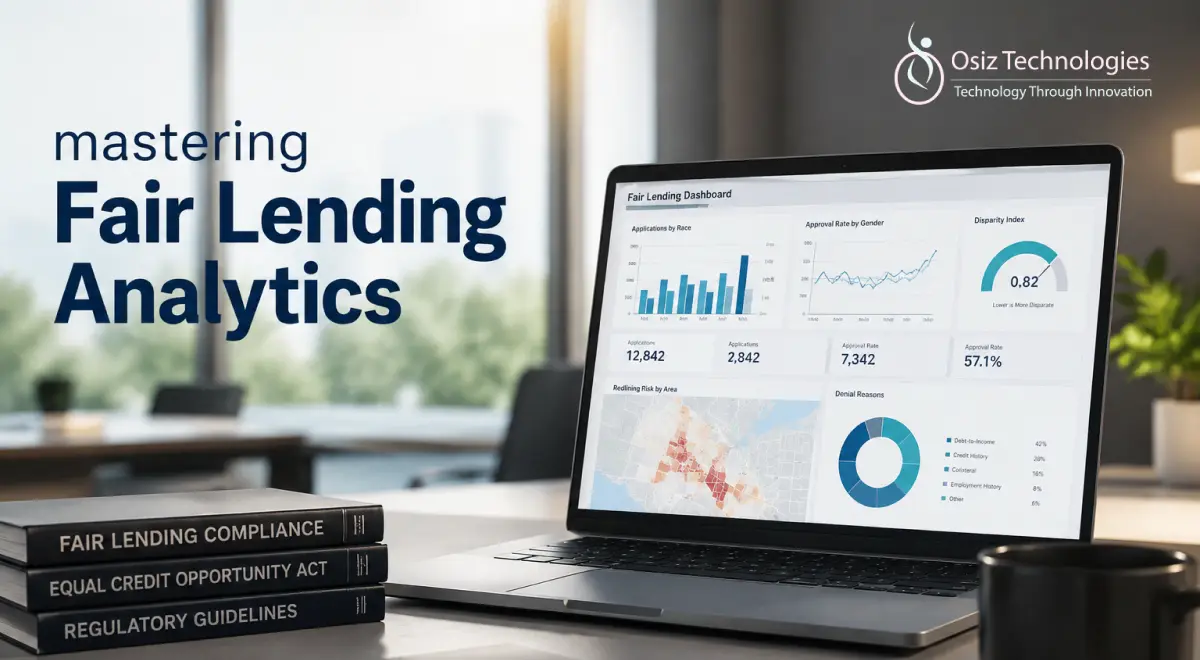
In the realm of lending, ensuring fairness and compliance with regulations is paramount. This article explores how organizations can navigate the complexities of fair lending data analytics and model risk management (MRM). We will examine strategies that help mitigate risks associated with lending practices while fostering a more equitable financial landscape.
Fair Lending Risk Management Highlights
In our experience, many banks have sufficient processes to evaluate individual controls related to fair lending; however, they often struggle to assess the effectiveness of their overall system. This disconnect can lead to inconsistencies in decision-making that may inadvertently discriminate against certain groups, such as minorities or low-income borrowers.
Fair lending analyses should be conducted within a comprehensive model risk management framework. Data analytics and statistical analysis play crucial roles in identifying potential risk areas and directing investigative efforts. However, we frequently observe banks failing to identify these issues effectively. To improve this process, it is essential for banks to evaluate the sample size of their data and create homogeneous segments during comparative file reviews.
Modeling credit, market risks, and other types of risks requires detailed documentation from regulators; however, there is less guidance provided specifically for fair lending models. This lack of specific standards can make it challenging for banks to ensure that their models are fair and unbiased.
Finally, the post-analysis file review process should be statistically driven. We have noticed that the overall process often lacks rationalization, leading to a reliance on manual reviews rather than statistical analysis. Implementing robust data-driven methodologies in this final stage is crucial for maintaining fairness and accuracy in lending practices.
Fair Lending Analyses in a Model Risk Management Framework
Data analytics and statistical analysis help identify potential risk areas and direct investigative efforts. However, in practice, we see banks fail to identify and mitigate significant data issues and modeling limitations that can lead to unfair lending practices. Regulatory fair lending guidelines provide processes for examination of these risks. While many banks have robust controls in place, they often struggle with assessing the effectiveness of their overall fair lending risk management framework.
In a model risk management (MRM) context, data analytics play a crucial role in identifying potential issues early. Banks should evaluate sample sizes carefully to ensure representativeness and create homogeneous segments for comparative file reviews, while maintaining strong Cloud Security controls for sensitive lending and customer data. Comparative file reviews are essential tools that help identify discrepancies between actual loan outcomes and predictions made by models. However, these reviews need to be statistically driven rather than relying solely on manual or anecdotal evidence.
While regulators have issued detailed documentation for developing and validating models related to credit, market, and other risks, there is less guidance specifically tailored to fair lending analyses within the MRM framework. This gap highlights a critical area where further development of best practices is needed. Post-analysis file reviews should be statistically driven as well, ensuring that all aspects of the loan decision-making process are scrutinized for fairness.
By integrating data analytics and statistical methods into their model risk management processes, banks can better identify and address potential issues related to fair lending. This proactive approach not only helps in maintaining regulatory compliance but also enhances trust among customers and stakeholders.
How Osiz Technologies Can Help
Osiz Technologies has extensive experience helping clients implement effective fair lending data analytics and fair lending MRM frameworks. Our expertise lies in developing fair lending analytical standards and procedures that ensure compliance with regulatory guidelines and industry best practices.
Many banks have robust processes to evaluate individual controls related to fair lending, but they often struggle to assess the effectiveness of these controls collectively. Osiz Technologies assists clients in bridging this gap by leveraging advanced data analytics and statistical analysis tools while supporting responsible AI Development initiatives for modern lending institutions. These methods help identify potential risk areas within their operations that may not be immediately apparent through manual review alone.
In a model risk management (MRM) framework, we emphasize the importance of thorough data evaluation. This includes evaluating sample sizes to ensure representativeness and creating homogeneous segments for comparative file reviews. Comparative file reviews are crucial as they provide concrete evidence on whether lending practices are fair across different groups. By focusing on these areas, Osiz Technologies helps banks strengthen their MRM frameworks, ensuring that all aspects of their operations align with regulatory standards through advanced analytics and Cybersecurity Software solutions.
Furthermore, we recognize the importance of post-analysis file reviews in maintaining a robust MRM process. While regulators have detailed documentation for developing and validating models for various risks like credit and market risks, there is less guidance provided on how to conduct effective post-analysis file reviews. Our team provides strategic insights into rationalizing these processes, ensuring that they are statistically driven and aligned with regulatory requirements. This approach not only enhances the accuracy of risk assessments but also builds trust among regulators and stakeholders.
Listen To The Article

Founder & CEO Osiz Technologies
Mr. Thangapandi, the CEO of Osiz, has a proven track record of conceptualizing and architecting 100+ user-centric and scalable solutions for startups and enterprises. He brings a deep understanding of both technical and user experience aspects. The CEO, being an early adopter of new technology, said, \"I believe in the transformative power of AI to revolutionize industries and improve lives. My goal is to integrate AI in ways that not only enhance operational efficiency but also drive sustainable development and innovation.\" Proving his commitment, Mr. Thangapandi has built a dedicated team of AI experts proficient in coming up with innovative AI solutions and have successfully completed several AI projects across diverse sectors.
Recent Blogs




No 22,Astalakshmi Nagar, Thanakankullam, (Opp Seetha lakshmi Mill gate Bus stop) Thirunagar, Madurai - 625 006.
(Corporate Office)


Canada Office address, 1150, Rue Patrick, Laval, Quebec - H7Y 2C4, Canada.
(Sales Office)



Explore Our
AI Portfolio

 Artificial Intelligence
- AI Development
- AI Predictive Analytics Services
- AI SaaS Development
- RAG Development
- AI Assistant Development
- ChatGPT Development
- Data Analytics Services
- AI Copilot Development
- Adaptive AI Development
- Machine Learning Development
- NLP
- AI Consulting Services
- AI Software Builder
- AI Token Development
- AI Integration Services
- Enterprise AI Solution
- AI As a Service
- AI Marketing Tools
- AI Video Generator
- Computer Vision Services
- Explore AI
- Dataset
- Machine Learning in Healthcare
- Machine Learning in Retail
- Hire AI Engineers
- Hire Prompt Engineers
- Hire ChatGPT Developers
- Hire Stable Diffusion Developers
- Hire Action Transformer Developers
- Blockchain
- Blockchain Development
- Private Blockchain Development
- Smart Contract Development
- Custom Blockchain Development
- Solana Blockchain Development
- Polygon Blockchain Development
- Public Blockchain Development
- DAO Blockchain Development
- Binance Smart Chain (BSC) Blockchain Development
- DApp Development
- Solana DApp Development
- White Label Blockchain Solutions
- Custom Blockchain On Avalanche
- Custom Blockchain On Polygon
- Blockchain Game Development
- Blockchain Consulting Services
- Blockchain Explorer Development
- Ethereum Blockchain Development
- TRON Blockchain Development
- Prediction Market Platform Development Company
Layer 1 & 2 Solutions- Layer-1 Blockchain Development
- Cross Chain Bridge Development
- Data Availability Layer Development
- Ethereum Layer 2 Scaling Solutions
- Cross-L2 DEX Solution
- Layer 2 Token Development
- Layer 2 Token Marketing
- Layer 2 Cryptocurrency Development
- Layer 2 Solutions For Blockchain Games
- Layer 2 Solutions For Web3 Gaming
- Layer 2 Blockchain Solutions
- Rollups As A Service
- Optimistic Rollups Development
- ZK Tech Development
- Bitcoin Layer 2 Solutions
Crypto Exchange- Cryptocurrency Exchange Development
- White Label Crypto Exchange
- Decentralized Exchange Development
- P2P Exchange Development
- Crypto Derivatives Exchange Development
- Centralized Exchange Development
- Crypto Exchange Clone Script
- Cryptocurrency Exchange App Development
- OTC Exchange Development
- Exchange Listing Services
- Binance Like Exchange Development
- Bitstamp Like Exchange Development
- Crypto Exchange Script
CryptoCrypto WalletToken Standards- Token Development
- AI Token Development
- RWA Tokenization Development
- Coinremitter Clone Script
- Asset Tokenization
- Real Estate Tokenization
- Tokenization Platform Development
- Crypto ETF Development
- Solona Token Development
- Semi-Fungible Token Development
- BEP20 Token Development
- Ethereum Token Development
- ERC1400 Token Development
- ERC998 Token Development
- ERC 721 Token Development
- ERC20 Token Development
- Defi Token Development
- ERC1155 Token Development
- BEP721 Token Development
- Utility Token Development
- ERC 777 Token Development
- ERC 827 Token Development
- Social Token Development
- Metaverse Token Development
- Tron Token Development
- ERC404 Token Development
- Governance Token
- Shibarium Token
- polygon Token
- BRC-20
- TRC20 Token Development
- TRC10 Token Development
- Soulbound Token Development
- NFT Token Development
Trading BotsClone- Crypto Exchange Clone Script
- Binance Clone Script
- Metamask Clone Script
- Coinbase Clone Script
- Kucoin Clone Script
- Paxful Clone Script
- Remitano Clone Script
- Wazirx Clone Script
- ByBit Clone Script
- Bitfinex Clone Script
- MEXC Clone Script
- Bitget Clone Script
- Cointool App Clone Script
- Trust Wallet Clone App
- Coinmarketcap Clone Script
- Changelly Clone Script
- BingX Clone Script
CybersecurityApp SecurityDigital Forensics & Incident ResponseAudit & ConsultingEducation & TrainingSolutionsWeb 3DeFi- Decentralized Finance (DeFi) Development
- DeFi Lending/ Borrowing Platform Development
- DeFi Staking Platform Development
- DeFi Token Development
- DeFi Wallet Development
- DeFi Smart Contract Development
- DeFi DApp Development
- Decentralized Exchange Development
- DeFi Insurance Development
- DeFi Crypto Synthetic Assets Development
Game Development- Game Development
- Android Game Development
- IOS Game Development
- Metaverse Game Development
- VR Game Development
- AI Game Development
- Unity 3D Game Development
- Unreal Engine Game Development
- Mobile Game Development
- Blockchain Game Development
- NFT Game Development
- Play to Earn Game Development
- Move to Earn Game Development
- Casino Game Development
- Slot Game Development
- Poker Game Development
- AAA Game Development
- AR Game Development
- Social Network Game Development
- Gamification Services
- Decentralized Sports Betting Platform
- Sports Betting Dapp Development
- Blockchain Casino Game Development
- Game Asset Creation
- Baccarat Game Development
- Rollbit Clone Script
- Fortnite Clone Script
- Slot Game Development
- Tap to Earn Game Development
- Slot Game Development
Metaverse Platforms- Metaverse Game Development
- Metaverse Event Platform Development
- Metaverse Virtual Mall Development
- Metaverse NFT Marketplace Development
- Metaverse Token Development
- Metaverse Virtual Land Development
- Metaverse Avatar Development
- Metaverse 3d Space Development
- Metaverse Real Estate Development
- Metaverse Social Media Platform Development
- Top 10 Metaverse Development Company
- Metaverse Business Ideas
- Metaverse Launchpad Development
- Metaverse App Development
- Metaverse Casino Game Development
NFT SolutionsNFT Platforms- NFT Minting Development
- NFT Token Development
- NFT Exchange Platform Development
- NFT Launchpad Development
- NFT Fashion Marketplace Development
- NFT Art Marketplace Development
- NFT Music Marketplace Development
- Carbon Credits NFT Marketplace Development
- Binance NFT Marketplace Development
- Polygon NFT Marketplace Development
- Solana NFT Marketplace Development
- Influencers NFT Marketplace Development
- NFT Ticketing Marketplace Development
- DeFi NFT Marketplace Development
- NFT Fantasy Sports Platform Development
- NFT Storage Development
- NFT Lending Platform Development
- Top10 NFT Business Ideas
NFT Game ClonesSustainabilityServiceNow - Blog
- Contact Us
- Works