
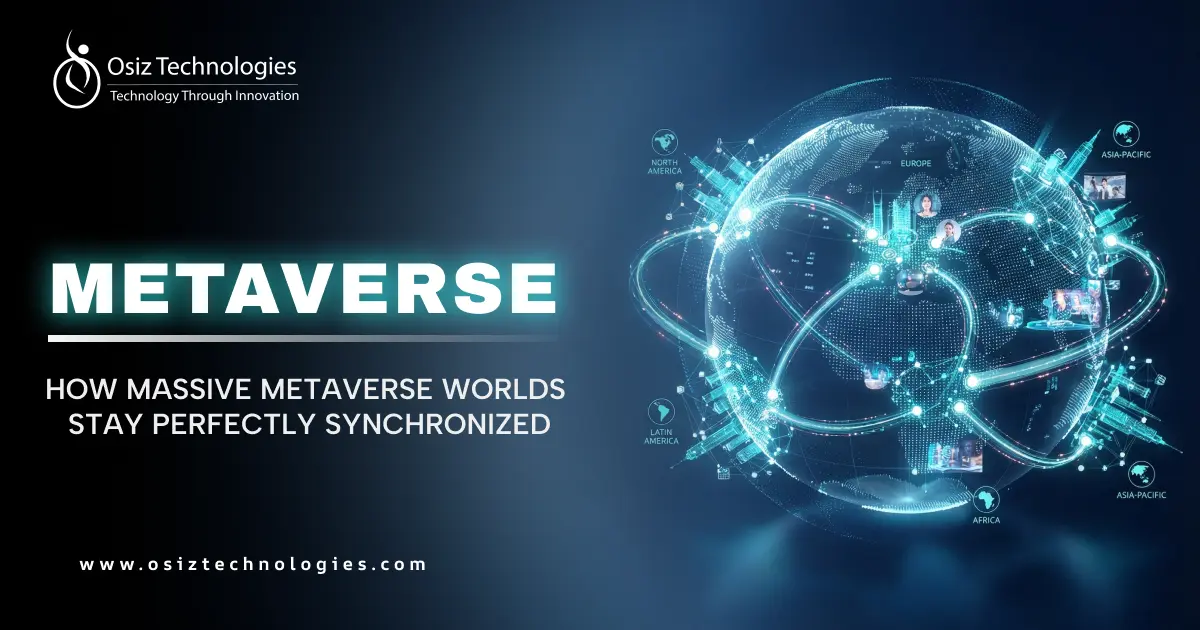
Expanding beyond experimental stages, expansive metaverse environments now thrive in active online spaces where societies, businesses, artists, and economic systems develop across interconnected digital layers. Instead of brief encounters, individuals now frequently engage in virtual reality environments or decentralized Web3 platforms as part of their daily routines.
What Makes a Metaverse World “Massive”?
Scale and user density
Inside any large-scale metaverse, seamless operation emerges only when countless individuals occupy one continuous space without lag or failure, so systems enabling such environments shift from experimental tools to essential frameworks. Raw quantity is how people behave moving through spaces, trading value, collaborating, and transforming their environment.
Persistent world environments
When players leave, activity does not stop - time moves forward regardless inside Immersive Metaverse Systems. Advancements are retained; markets continue to change seamlessly due to continuous activity. Human connections develop gradually through sustained interactions over multiple visits.
Interconnected digital ecosystems
Across vast digital landscapes, platforms link together instead of standing apart, shaping unified structures for Metaverse ecosystems. Movement between realms allows avatars, items, and personal data to shift seamlessly through varied environments. Ownership models emerge as a consequence, grounded in how value flows within these interconnected domains.
User-driven creation models
From those who join come creators, shaping Metaverse Solutions via shared effort instead of top-down direction. Expansion happens not by mandate but through original ideas, personal touches, and joint work. As environments evolve, so do ways to exchange value, quietly forming links to digital economies.
Integrated digital economies
Only at full scope does function appear, once trade operates within global frameworks via virtual markets, property control, and identity-based transactions. Value flows through digital products, support features, and shared interactions, gradually building resilience over time. This financial intricacy explains why these environments remain active and uninterrupted.
How Metaverse Worlds Stay Live 24/7
Always-on cloud environments
Stability emerges where cloud networks span continents, backing Metaverse operations without pause. Access stays consistent over time and across regions, unaffected by audience size or location.
Decentralized system models
Fault tolerance improves when components spread out, helping virtual environments stay stable under stress. Instead of one server handling everything, tasks divide among many machines to maintain steady interactions.
Real-time processing engines
Instant interactions occur through real-time systems, enabling seamless movement alongside immediate transaction handling within virtual world frameworks. Fluidity in digital environments emerges when motion follows precise timing rules.
Automated system orchestration
With backend automation, updates occur alongside seamless scaling and performance tuning - all maintained without interruption. Such operations reinforce the structure supporting metaverse environments.
Resilient network frameworks
Advanced networking reduces delays and maintains consistent access across remote locations, enabling seamless interaction in expansive 3D virtual space. Right where uninterrupted function meets foundational architecture lies the engine behind every operation.
Core Systems That Keep Metaverse Worlds Running
Cloud infrastructure
Cloud infrastructure is the backbone of Metaverse Development, as it provides scalability, storage, and processing power for the global digital world. Cloud infrastructure facilitates fast scalability without bottlenecks in the system.
Distributed servers
Distributed servers facilitate load distribution across different regions, ensuring stability and availability for Digital World Platforms. Distributed servers also facilitate localized functionality and global accessibility.
Real-time engines
Real-time engines drive the physics, movement, graphics, and user interactions in the Virtual Reality Metaverse. They enable dynamic and responsive environments by simulating realistic behaviors and reactions.
Backend orchestration
Orchestration systems play a crucial role in Metaverse Platform Development by efficiently managing services, data flows, and system capabilities. They ensure that various components of the platform work together seamlessly, maintaining consistency and reliability.
Network architecture
Network architecture facilitates efficient data transfer, minimal latency, and real-time synchronization in the ecosystem. Network architecture is the communication foundation of massive virtual systems.
Backend Architecture of Massive Metaverse Platforms
Data processing layer
This layer handles the huge amount of data produced by users, environments, and interactions within Metaverse Backend Architecture. This layer converts disorganized data into structured intelligence, which is seamlessly integrated with real-time synchronization systems.
Real-time sync layer
Real-time synchronization provides a consistent experience for users and devices within Immersive Metaverse Systems. Events unfold simultaneously across the globe, leading into the concept of global state management.
World state management
World state systems are responsible for the living state of the environment, monitoring changes, development, and evolution. This creates a lasting digital environment, which then evolves into user state handling.
User state management
User state management is responsible for the preservation of identity, assets, reputation, and development on the platform. This fosters a feeling of connection and trust, which then leads to the development of economic management systems.
Economy management
Economy systems are responsible for the regulation of transactions, value exchange, and asset exchange within the digital world. They back the Metaverse Economy, which then evolves into stable digital economic frameworks.
Digital Economy Inside Metaverse Worlds
Virtual assets
Virtual assets form the foundation of ownership and identity in digital spaces, carrying both personal and economic significance, which directly underpins the concept of NFTs.
NFTs & digital land
The NFT Metaverse enables verified ownership of digital land and assets, creating scarcity and intrinsic value, which in turn fosters trust and encourages investment.
In-world currencies
Digital currencies enable seamless transactions in immersive settings, stimulate economic engagement, and integrate directly into trading platforms.
Trading systems
Trading systems enable the transfer of assets, set value, and drive economic interactions by creating liquidity and participation, thereby supporting virtual commerce.
Virtual commerce
Virtual commerce transforms metaverse spaces into vibrant marketplaces where business, culture, and community converge, fostering continuous growth.
How Businesses Can Enter Massive Metaverse Ecosystems
Brand space creation
Companies can establish engaging brand experiences in Web3 Metaverse platforms, fostering presence and interaction that ultimately enable seamless service integration.
Service integration models
Digital transformation services can be offered directly through integrated platforms and interactive experiences, enabling user-focused engagement that drives commercial involvement.
Virtual product development
Firms can create products built for immersive digital experiences, expanding their revenue streams and paving the way for NFT-based strategies.
NFT ecosystem participation
NFT participation allows brands to create engagement models centered on ownership, fostering loyalty and trust, which in turn promotes community growth.
Community ecosystem building
Companies can generate lasting value by fostering communities rather than running campaigns building a sustainable digital presence that paves the way for future living digital ecosystems.
Conclusion
Such massive digital worlds are not created by technology but by vision, design, and sustainable architecture that combines Metaverse Development, Metaverse Infrastructure, and human experience into one living world. At osiz, this vision is turned into scalable reality by structured systems, robust Metaverse Backend Architecture, and future-ready Metaverse Solutions. As a trusted metaverse development company, osiz develops digital worlds that are not only functional but living, adaptive, and sustainable. The future is for platforms that think in terms of ecosystems, design for continuity, and build for the long-term digital life. These are not just virtual worlds; they are the building blocks of the digital civilization of tomorrow.
Listen To The Article

Founder & CEO Osiz Technologies
Mr. Thangapandi, the Founder and CEO of Osiz Technologies, is deeply passionate about metaverse development solutions. Leading with a vision, he has driven Osiz Technologies to the forefront of technological innovation, propelling the company to new heights in the digital world. Under his guidance, the company has delivered groundbreaking solutions in blockchain, cryptocurrency, and virtual reality. His dedication to exploring and developing the metaverse highlights his commitment to staying ahead in the rapidly evolving tech industry.
Recent Blogs



No 22,Astalakshmi Nagar, Thanakankullam, (Opp Seetha lakshmi Mill gate Bus stop) Thirunagar, Madurai - 625 006.
(Corporate Office)


Canada Office address, 1150, Rue Patrick, Laval, Quebec - H7Y 2C4, Canada.
(Sales Office)


Explore Our
AI Portfolio

 Artificial Intelligence
- AI Development
- AI Predictive Analytics Services
- AI SaaS Development
- RAG Development
- AI Assistant Development
- ChatGPT Development
- Data Analytics Services
- AI Copilot Development
- Adaptive AI Development
- Machine Learning Development
- NLP
- AI Consulting Services
- AI Software Builder
- AI Token Development
- AI Integration Services
- Enterprise AI Solution
- AI As a Service
- AI Marketing Tools
- AI Video Generator
- Computer Vision Services
- Explore AI
- Dataset
- Machine Learning in Healthcare
- Machine Learning in Retail
- Hire AI Engineers
- Hire Prompt Engineers
- Hire ChatGPT Developers
- Hire Stable Diffusion Developers
- Hire Action Transformer Developers
- Blockchain
- Blockchain Development
- Private Blockchain Development
- Smart Contract Development
- Custom Blockchain Development
- Solana Blockchain Development
- Polygon Blockchain Development
- Public Blockchain Development
- DAO Blockchain Development
- Binance Smart Chain (BSC) Blockchain Development
- DApp Development
- Solana DApp Development
- White Label Blockchain Solutions
- Custom Blockchain On Avalanche
- Custom Blockchain On Polygon
- Blockchain Game Development
- Blockchain Consulting Services
- Blockchain Explorer Development
- Ethereum Blockchain Development
- TRON Blockchain Development
- Prediction Market Platform Development Company
Layer 1 & 2 Solutions- Layer-1 Blockchain Development
- Cross Chain Bridge Development
- Data Availability Layer Development
- Ethereum Layer 2 Scaling Solutions
- Cross-L2 DEX Solution
- Layer 2 Token Development
- Layer 2 Token Marketing
- Layer 2 Cryptocurrency Development
- Layer 2 Solutions For Blockchain Games
- Layer 2 Solutions For Web3 Gaming
- Layer 2 Blockchain Solutions
- Rollups As A Service
- Optimistic Rollups Development
- ZK Tech Development
- Bitcoin Layer 2 Solutions
Crypto Exchange- Cryptocurrency Exchange Development
- White Label Crypto Exchange
- Decentralized Exchange Development
- P2P Exchange Development
- Crypto Derivatives Exchange Development
- Centralized Exchange Development
- Crypto Exchange Clone Script
- Cryptocurrency Exchange App Development
- OTC Exchange Development
- Exchange Listing Services
- Binance Like Exchange Development
- Bitstamp Like Exchange Development
- Crypto Exchange Script
CryptoCrypto WalletToken Standards- Token Development
- AI Token Development
- RWA Tokenization Development
- Coinremitter Clone Script
- Asset Tokenization
- Real Estate Tokenization
- Tokenization Platform Development
- Crypto ETF Development
- Solona Token Development
- Semi-Fungible Token Development
- BEP20 Token Development
- Ethereum Token Development
- ERC1400 Token Development
- ERC998 Token Development
- ERC 721 Token Development
- ERC20 Token Development
- Defi Token Development
- ERC1155 Token Development
- BEP721 Token Development
- Utility Token Development
- ERC 777 Token Development
- ERC 827 Token Development
- Social Token Development
- Metaverse Token Development
- Tron Token Development
- ERC404 Token Development
- Governance Token
- Shibarium Token
- polygon Token
- BRC-20
- TRC20 Token Development
- TRC10 Token Development
- Soulbound Token Development
- NFT Token Development
Trading BotsClone- Crypto Exchange Clone Script
- Binance Clone Script
- Metamask Clone Script
- Coinbase Clone Script
- Kucoin Clone Script
- Paxful Clone Script
- Remitano Clone Script
- Wazirx Clone Script
- ByBit Clone Script
- Bitfinex Clone Script
- MEXC Clone Script
- Bitget Clone Script
- Cointool App Clone Script
- Trust Wallet Clone App
- Coinmarketcap Clone Script
- Changelly Clone Script
- BingX Clone Script
CybersecurityApp SecurityDigital Forensics & Incident ResponseAudit & ConsultingEducation & TrainingSolutionsWeb 3DeFi- Decentralized Finance (DeFi) Development
- DeFi Lending/ Borrowing Platform Development
- DeFi Staking Platform Development
- DeFi Token Development
- DeFi Wallet Development
- DeFi Smart Contract Development
- DeFi DApp Development
- Decentralized Exchange Development
- DeFi Insurance Development
- DeFi Crypto Synthetic Assets Development
Game Development- Game Development
- Android Game Development
- IOS Game Development
- Metaverse Game Development
- VR Game Development
- AI Game Development
- Unity 3D Game Development
- Unreal Engine Game Development
- Mobile Game Development
- Blockchain Game Development
- NFT Game Development
- Play to Earn Game Development
- Move to Earn Game Development
- Casino Game Development
- Slot Game Development
- Poker Game Development
- AAA Game Development
- AR Game Development
- Social Network Game Development
- Gamification Services
- Decentralized Sports Betting Platform
- Sports Betting Dapp Development
- Blockchain Casino Game Development
- Game Asset Creation
- Baccarat Game Development
- Rollbit Clone Script
- Fortnite Clone Script
- Slot Game Development
- Tap to Earn Game Development
- Slot Game Development
Metaverse Platforms- Metaverse Game Development
- Metaverse Event Platform Development
- Metaverse Virtual Mall Development
- Metaverse NFT Marketplace Development
- Metaverse Token Development
- Metaverse Virtual Land Development
- Metaverse Avatar Development
- Metaverse 3d Space Development
- Metaverse Real Estate Development
- Metaverse Social Media Platform Development
- Top 10 Metaverse Development Company
- Metaverse Business Ideas
- Metaverse Launchpad Development
- Metaverse App Development
- Metaverse Casino Game Development
NFT SolutionsNFT Platforms- NFT Minting Development
- NFT Token Development
- NFT Exchange Platform Development
- NFT Launchpad Development
- NFT Fashion Marketplace Development
- NFT Art Marketplace Development
- NFT Music Marketplace Development
- Carbon Credits NFT Marketplace Development
- Binance NFT Marketplace Development
- Polygon NFT Marketplace Development
- Solana NFT Marketplace Development
- Influencers NFT Marketplace Development
- NFT Ticketing Marketplace Development
- DeFi NFT Marketplace Development
- NFT Fantasy Sports Platform Development
- NFT Storage Development
- NFT Lending Platform Development
- Top10 NFT Business Ideas
NFT Game ClonesSustainabilityServiceNow - Blog
- Contact Us
- Works