
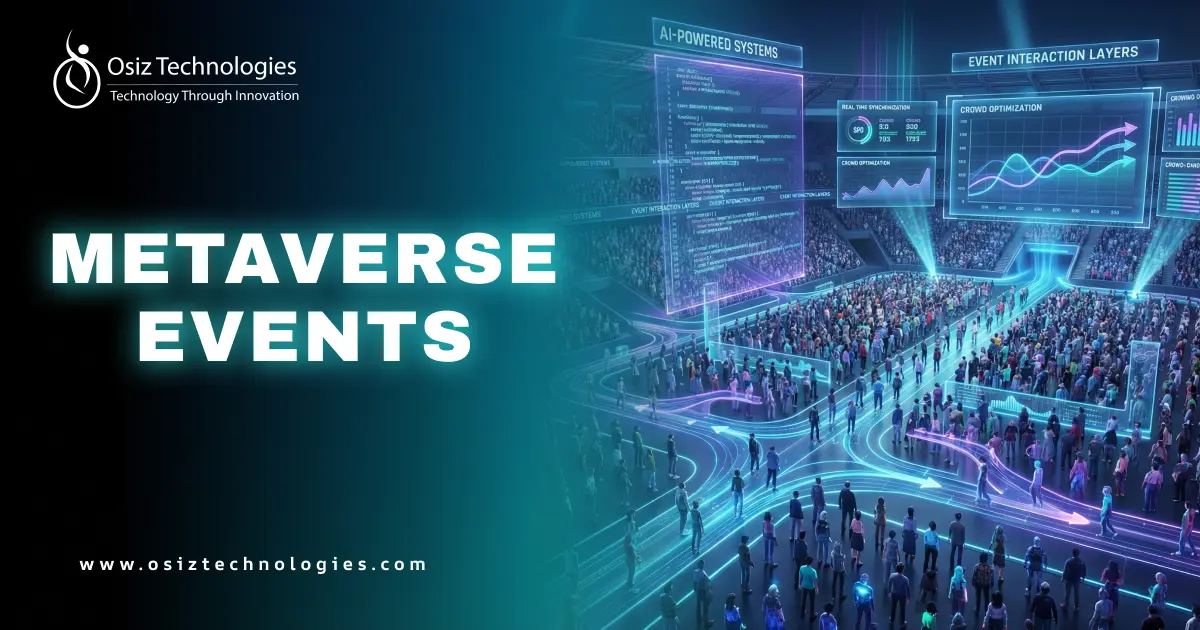
The way audiences gather, interact, and exchange experiences is evolving through Metaverse Events, which foster a feeling of shared presence, collective experience, and mutual connection. Whether it is product launches, concerts, or conferences, these events require precision in timing, immersion, and seamless execution across the globe. This has also raised the bar for Synchronized Virtual Events, and thus, we are naturally led to understand what synchronization truly means in the metaverse.
What Does “Perfect Synchronization” Mean in Metaverse Events?
In metaverse events, "perfect synchronization" means audio, visual, and sensory experiences align flawlessly and in real time across all users and virtual spaces, ensuring that avatars and environments interact instantly without any noticeable delay even when participants are in different physical locations. This degree of coordination is essential for delivering an engaging, believable, and socially interactive experience, making virtual interactions feel authentic rather than fragmented or unsettling.
Why Large-Scale Metaverse Events Need Smart Scaling
User Density Management in the Global Context
As attendance reaches millions, intelligent scaling enables Virtual Event Platforms to distribute users globally efficiently while maintaining optimal performance. Without it, traffic congestion will rapidly undermine immersion and the sense of shared experience.This is naturally linked to the role of infrastructure readiness as the next challenge in intelligent scaling.
Facilitating Real-Time Engagement
Real-time reactions, chats, movements, and avatar interactions are expected to happen in an instant, making scalability a critical factor in real-time engagement. Scalable Metaverse Architecture enables real-time engagement without the feeling of lag. This is naturally linked to the need for robust backend infrastructure.
Sustaining Event Integrity
Unforeseen traffic surges are a reality in large-scale Metaverse Events, and intelligent scaling helps ensure that the event does not crash or slow down during critical engagement periods. Scalable systems automatically adjust to ensure that environments remain stable. This is naturally linked to the role of the underlying technologies in facilitating the event.
Facilitating Cross-Device Accessibility
Attendees are expected to access the event using best VR headsets, desktop computers, and mobile devices all at once, requiring intelligent performance scaling. Scalable systems dynamically handle rendering and data transfer across devices. This naturally increases the load on the underlying technologies.
Core Technologies Behind Large-Scale Metaverse Events
Cloud-Native Metaverse Infrastructure
Cloud Metaverse Infrastructure is scalable and cloud-based, offering elastic computing capabilities, worldwide deployment, and easy scaling during traffic spikes. It also ensures that environments are always accessible, no matter the size of the audience.
Real-Time Rendering Engines
Real-time engines handle visuals, physics, and interactions in real time for simultaneous delivery to users. Also, make sure there's consistency within Real-Time Metaverse Systems, as this directly relates to backend coordination needs.
Metaverse Backend Development Frameworks
Powerful Metaverse Backend Development frameworks handle user states, interactions, data, and event logic at scale. These frameworks ensure that nothing goes out of sync during live events.
Network Optimization and Edge Processing
Optimized data routing and edge processing eliminate latency by processing interactions closer to users. This ensures that shared experiences are always simultaneous. This is naturally applicable to intelligent load handling systems.
Data Orchestration and Event Streaming
Continuous data streaming aligns audio, visuals, and user interactions in real time for millions of users, keeping events live and in sync. This capability enables platforms to handle enormous audiences.
How Metaverse Platforms Handle Millions of Users at Once
Dynamic User Sharding
The platforms break down audiences into synchronized instances, with shared event states maintained across shards. This method scales well without fragmenting the experience. It integrates directly with real-time coordination techniques.
Adaptive Load Balancing
The platforms dynamically allocate traffic based on current demand patterns, maintaining a seamless and overloaded user experience. The load balancing system integrates well with backend intelligence.
State Synchronization Systems
The platforms constantly align user activities and event state updates across environments, keeping all users in sync during live events. These systems rely on predictive performance management.
Predictive Resource Allocation
The platforms anticipate upcoming demand surges in advance and adjust resource allocation accordingly, maintaining consistent performance. This method integrates well with long-duration event reliability.
Persistent Environment Management
The platforms remain active well beyond peak usage times, supporting ongoing user engagement and real-time interactions. This extended activity demands intelligent resource allocation and dynamic load balancing to maintain performance and system stability.
The Role of Intelligent Systems in Event Stability
Intelligent systems are always tracking performance patterns, user activity, server utilization, network delays, and overall system conditions in real-time to ensure seamless experiences during massive Metaverse events.
By analyzing real-time data from infrastructure, rendering engines, and user activity, intelligent systems can effectively predict sudden spikes in traffic, avatar density, rendering bottlenecks, and synchronization issues before they become noticeable issues.
Once potential hotspots are identified, automatic actions such as dynamic load balancing, resource scaling, instance replication, or environment optimization are triggered instantly without any human intervention.
This proactive system stability ensures smooth frame rates, seamless interactions, and synchronized experiences for all users from different regions. As a result, immersive experiences can be scaled confidently, run smoothly even with massive crowds, and provide future-proof virtual experiences without any performance issues.
The Future of Large-Scale Metaverse Events
The future of Metaverse Event Development is in experiences that are effortless, shared, and immediately responsive, no matter the scale. As the bar continues to be raised, the need for greater synchronization, more intelligent infrastructure, and more dynamic systems will become paramount. At Osiz, we are committed to meeting this ever-changing set of needs through our cutting-edge Metaverse Infrastructure, strong backend development, and forward-thinking design philosophy. As a leading metaverse development company, Osiz is committed to building scalable spaces that enable truly synchronized experiences. The future is not just about bigger events, but better, more connected, and more resilient metaverse gatherings through precision and scale.
Listen To The Article

Founder & CEO Osiz Technologies
Mr. Thangapandi, the Founder and CEO of Osiz Technologies, is deeply passionate about metaverse development solutions. Leading with a vision, he has driven Osiz Technologies to the forefront of technological innovation, propelling the company to new heights in the digital world. Under his guidance, the company has delivered groundbreaking solutions in blockchain, cryptocurrency, and virtual reality. His dedication to exploring and developing the metaverse highlights his commitment to staying ahead in the rapidly evolving tech industry.
Recent Blogs



No 22,Astalakshmi Nagar, Thanakankullam, (Opp Seetha lakshmi Mill gate Bus stop) Thirunagar, Madurai - 625 006.
(Corporate Office)


Canada Office address, 1150, Rue Patrick, Laval, Quebec - H7Y 2C4, Canada.
(Sales Office)


Explore Our
AI Portfolio

 Artificial Intelligence
- AI Development
- AI Predictive Analytics Services
- AI SaaS Development
- RAG Development
- AI Assistant Development
- ChatGPT Development
- Data Analytics Services
- AI Copilot Development
- Adaptive AI Development
- Machine Learning Development
- NLP
- AI Consulting Services
- AI Software Builder
- AI Token Development
- AI Integration Services
- Enterprise AI Solution
- AI As a Service
- AI Marketing Tools
- AI Video Generator
- Computer Vision Services
- Explore AI
- Dataset
- Machine Learning in Healthcare
- Machine Learning in Retail
- Hire AI Engineers
- Hire Prompt Engineers
- Hire ChatGPT Developers
- Hire Stable Diffusion Developers
- Hire Action Transformer Developers
- Blockchain
- Blockchain Development
- Private Blockchain Development
- Smart Contract Development
- Custom Blockchain Development
- Solana Blockchain Development
- Polygon Blockchain Development
- Public Blockchain Development
- DAO Blockchain Development
- Binance Smart Chain (BSC) Blockchain Development
- DApp Development
- Solana DApp Development
- White Label Blockchain Solutions
- Custom Blockchain On Avalanche
- Custom Blockchain On Polygon
- Blockchain Game Development
- Blockchain Consulting Services
- Blockchain Explorer Development
- Ethereum Blockchain Development
- TRON Blockchain Development
- Prediction Market Platform Development Company
Layer 1 & 2 Solutions- Layer-1 Blockchain Development
- Cross Chain Bridge Development
- Data Availability Layer Development
- Ethereum Layer 2 Scaling Solutions
- Cross-L2 DEX Solution
- Layer 2 Token Development
- Layer 2 Token Marketing
- Layer 2 Cryptocurrency Development
- Layer 2 Solutions For Blockchain Games
- Layer 2 Solutions For Web3 Gaming
- Layer 2 Blockchain Solutions
- Rollups As A Service
- Optimistic Rollups Development
- ZK Tech Development
- Bitcoin Layer 2 Solutions
Crypto Exchange- Cryptocurrency Exchange Development
- White Label Crypto Exchange
- Decentralized Exchange Development
- P2P Exchange Development
- Crypto Derivatives Exchange Development
- Centralized Exchange Development
- Crypto Exchange Clone Script
- Cryptocurrency Exchange App Development
- OTC Exchange Development
- Exchange Listing Services
- Binance Like Exchange Development
- Bitstamp Like Exchange Development
- Crypto Exchange Script
CryptoCrypto WalletToken Standards- Token Development
- AI Token Development
- RWA Tokenization Development
- Coinremitter Clone Script
- Asset Tokenization
- Real Estate Tokenization
- Tokenization Platform Development
- Crypto ETF Development
- Solona Token Development
- Semi-Fungible Token Development
- BEP20 Token Development
- Ethereum Token Development
- ERC1400 Token Development
- ERC998 Token Development
- ERC 721 Token Development
- ERC20 Token Development
- Defi Token Development
- ERC1155 Token Development
- BEP721 Token Development
- Utility Token Development
- ERC 777 Token Development
- ERC 827 Token Development
- Social Token Development
- Metaverse Token Development
- Tron Token Development
- ERC404 Token Development
- Governance Token
- Shibarium Token
- polygon Token
- BRC-20
- TRC20 Token Development
- TRC10 Token Development
- Soulbound Token Development
- NFT Token Development
Trading BotsClone- Crypto Exchange Clone Script
- Binance Clone Script
- Metamask Clone Script
- Coinbase Clone Script
- Kucoin Clone Script
- Paxful Clone Script
- Remitano Clone Script
- Wazirx Clone Script
- ByBit Clone Script
- Bitfinex Clone Script
- MEXC Clone Script
- Bitget Clone Script
- Cointool App Clone Script
- Trust Wallet Clone App
- Coinmarketcap Clone Script
- Changelly Clone Script
- BingX Clone Script
CybersecurityApp SecurityDigital Forensics & Incident ResponseAudit & ConsultingEducation & TrainingSolutionsWeb 3DeFi- Decentralized Finance (DeFi) Development
- DeFi Lending/ Borrowing Platform Development
- DeFi Staking Platform Development
- DeFi Token Development
- DeFi Wallet Development
- DeFi Smart Contract Development
- DeFi DApp Development
- Decentralized Exchange Development
- DeFi Insurance Development
- DeFi Crypto Synthetic Assets Development
Game Development- Game Development
- Android Game Development
- IOS Game Development
- Metaverse Game Development
- VR Game Development
- AI Game Development
- Unity 3D Game Development
- Unreal Engine Game Development
- Mobile Game Development
- Blockchain Game Development
- NFT Game Development
- Play to Earn Game Development
- Move to Earn Game Development
- Casino Game Development
- Slot Game Development
- Poker Game Development
- AAA Game Development
- AR Game Development
- Social Network Game Development
- Gamification Services
- Decentralized Sports Betting Platform
- Sports Betting Dapp Development
- Blockchain Casino Game Development
- Game Asset Creation
- Baccarat Game Development
- Rollbit Clone Script
- Fortnite Clone Script
- Slot Game Development
- Tap to Earn Game Development
- Slot Game Development
Metaverse Platforms- Metaverse Game Development
- Metaverse Event Platform Development
- Metaverse Virtual Mall Development
- Metaverse NFT Marketplace Development
- Metaverse Token Development
- Metaverse Virtual Land Development
- Metaverse Avatar Development
- Metaverse 3d Space Development
- Metaverse Real Estate Development
- Metaverse Social Media Platform Development
- Top 10 Metaverse Development Company
- Metaverse Business Ideas
- Metaverse Launchpad Development
- Metaverse App Development
- Metaverse Casino Game Development
NFT SolutionsNFT Platforms- NFT Minting Development
- NFT Token Development
- NFT Exchange Platform Development
- NFT Launchpad Development
- NFT Fashion Marketplace Development
- NFT Art Marketplace Development
- NFT Music Marketplace Development
- Carbon Credits NFT Marketplace Development
- Binance NFT Marketplace Development
- Polygon NFT Marketplace Development
- Solana NFT Marketplace Development
- Influencers NFT Marketplace Development
- NFT Ticketing Marketplace Development
- DeFi NFT Marketplace Development
- NFT Fantasy Sports Platform Development
- NFT Storage Development
- NFT Lending Platform Development
- Top10 NFT Business Ideas
NFT Game ClonesSustainabilityServiceNow - Blog
- Contact Us
- Works