
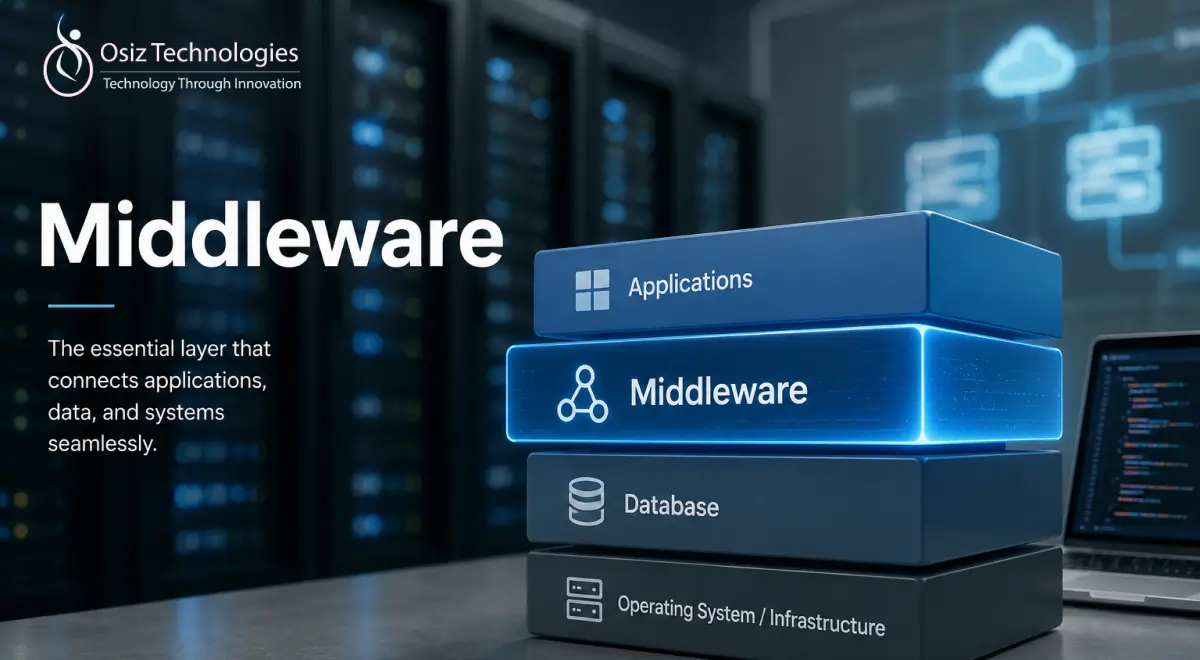
In the ever-evolving landscape of technology, one term that often gets overlooked but is crucial to understanding how applications and data interact seamlessly across different platforms and environments is middleware. Middleware acts as a bridge between various software components, facilitating communication and integration without requiring developers to rewrite or duplicate code for each new application or platform they encounter.
Middleware plays an essential role in the development of distributed systems by providing services such as transaction processing, security management, and resource sharing. Its importance cannot be overstated, especially within the realm of enterprise applications where it helps streamline complex workflows and improve system performance. Whether you're a seasoned developer looking to optimize your software projects or a business leader aiming to enhance operational efficiency through better integration capabilities, understanding middleware is key to unlocking these benefits.
Osiz Technologies specializes in developing high-quality middleware solutions that cater to diverse needs across various industries. Our expertise spans from foundational concepts of what middleware entails to advanced use cases where it can significantly impact the development process and overall system performance. We aim to provide a comprehensive overview of middleware, exploring its origins, how it functions, and the different types available today.
By delving into these topics, we hope to equip readers with the knowledge necessary to make informed decisions about incorporating middleware in their projects or operations. Whether you're just beginning your journey into middleware or looking to deepen your understanding, this article will serve as a valuable resource for navigating through the complexities of this powerful technology.
What is middleware?
Middleware is software that facilitates communication or connectivity between various applications or components in a distributed network. Essentially, it acts as "software glue" by binding different systems together, enabling them to work seamlessly with one another. The term was first introduced in the late 1960s when early versions of middleware acted primarily as intermediaries between an application's front-end (client) and back-end resources.
Middleware plays a crucial role in software development, particularly for enterprise applications where integration is often required among different systems, data sources, or computing resources. It allows developers to build applications without having to create custom integrations whenever they need to connect to these components. This saves time and effort while ensuring that the applications remain flexible and scalable.
As businesses increasingly adopt artificial intelligence (AI) technologies, middleware continues to evolve, reimagining how integration can be achieved for the AI era. Middleware not only simplifies integration but also enhances security, reliability, and performance in complex network environments.
Origins of middleware
The term middleware was first introduced in the late 1960s, a time when computer networks were just beginning to emerge. Initially, middleware acted as a mediator between an application front-end (client) and a back-end resource such as databases or other enterprise applications. This role evolved over time, becoming more sophisticated as technology advanced. Middleware was designed to handle the complexities of connecting different types of software components in a distributed network, essentially acting as "software glue" that binds disparate systems together.
As computing environments became increasingly complex with the rise of cloud services and microservices architectures, middleware continued to adapt. It now plays a crucial role in facilitating seamless integration between various applications, data sources, and devices across different platforms and environments. This evolution has empowered enterprises to accelerate innovation, streamline operations, and achieve scalable digital transformation.
How does middleware work?
Middleware works by enabling seamless communication and integration among various software components in a distributed network. It acts as "software glue," bridging the gaps between different systems, services, data sources, and devices without requiring developers to create bespoke integrations for each connection.
At its core, middleware facilitates communication between disparate applications or platforms. For example, it can connect an enterprise application with microservices, databases, cloud resources, or even physical devices like IoT sensors. By handling the complexities of protocol translation and resource management, middleware allows developers to focus on their primary tasks rather than worrying about how different systems interoperate.
In today's digital landscape, where applications often span multiple environments (cloud-based services, on-premises infrastructure), middleware plays a crucial role in ensuring these components can communicate effectively. This is particularly important as businesses look for ways to integrate legacy systems with modern cloud-native architectures while maintaining agility and scalability.
In summary, middleware is essential for developers because it abstracts away the complexity of integrating various systems, allowing them to focus on building innovative applications rather than reinventing the wheel with every new project.
Middleware components
Standard middleware architectural components include the following:
Integration Platform
This component facilitates communication between various systems, enabling seamless data flow and application integration. It acts as a central hub for integrating different software systems, often serving as an interface between legacy applications and modern cloud-based services.
Platform Service
Middleware platforms provide essential services such as security, monitoring, and management tools to ensure the reliability and performance of distributed applications. These services help in managing resources efficiently and ensuring that applications remain stable and secure.
Database Middleware
This component is crucial for database connectivity and data access across different systems. It abstracts the complexity of accessing databases from application developers, allowing them to interact with databases using standardized APIs without needing to understand the underlying database technology.
Message-Oriented Middleware (MOM)
MOM enables communication between applications that use different messaging protocols by translating or transforming messages between these applications. This is particularly useful in environments where multiple systems need to communicate asynchronously and reliably, such as in real-time trading systems or IoT networks.
These components collectively form the backbone of modern software architectures, facilitating efficient integration and connectivity among diverse systems, thereby enabling smoother digital transformation processes.
Middleware use cases for software developers
In addition to providing work-saving interoperability, middleware services help software developers in the following ways. Based on client or front-end application request information, middleware can customize the backend logic and data processing flow without requiring extensive custom coding. This not only saves time but also reduces the risk of errors that often arise from manual integration efforts.
Middleware plays a crucial role in enabling seamless communication between different components within an enterprise system. For instance, database middleware acts as a bridge between applications and databases, abstracting away complexities such as connection management and query optimization, thus allowing developers to focus on application-specific logic rather than low-level details of data access.
Moreover, middleware can facilitate the integration of diverse systems and services in enterprises. It supports communication protocols that may not be directly compatible with each other, ensuring smooth interaction between various components regardless of their underlying technologies or platforms. This is particularly beneficial for software developers who need to integrate legacy applications with modern cloud-based solutions, streamlining the process and reducing technical debt.
By leveraging middleware, developers can also enhance scalability and reliability in enterprise environments. Middleware often includes features such as load balancing, failover mechanisms, and caching capabilities that automatically handle critical operations like data replication or session management. These functionalities ensure that systems remain resilient even under high loads or network disruptions, thereby improving overall system performance and user experience.
In summary, middleware serves as a powerful tool for software developers by abstracting away complexities related to application integration, enabling them to concentrate on core business logic rather than grappling with technical details. This results in more efficient development cycles, higher productivity, and better-aligned applications that meet the evolving needs of modern enterprise environments.
Types of middleware
There are many different types of middleware, each designed to address specific needs within a distributed network environment. Some focus on providing connectivity for various types of applications and devices, while others specialize in particular functionalities such as database management or data transformation.
Middleware can be categorized into several types based on their primary functions. For instance, database middleware is specifically designed to manage interactions between application components and databases, ensuring efficient access and manipulation of data. This type of middleware bridges the gap between relational databases and client applications, facilitating seamless data retrieval and updates.
Another important category includes message-oriented middleware (MOM), which enables different application components that use various messaging protocols to communicate effectively. MOM not only facilitates communication but also handles tasks such as message routing, delivery acknowledgments, and error recovery, making it a crucial component for complex enterprise systems where multiple applications need to interact seamlessly.
In addition to these specialized types of middleware, there are broader categories that combine functionalities into one solution. For example, service-oriented architecture (SOA) middleware combines various services like database access, messaging, security, and transaction management in a single framework. This approach simplifies integration by providing a unified platform for managing multiple components, making it easier to build large-scale enterprise applications.
Understanding the different types of middleware is crucial for choosing the right solution that best fits your specific needs, whether you're dealing with database connectivity, messaging protocols, or the broader requirements of SOA architectures.
Listen To The Article

Founder & CEO Osiz Technologies
Mr. Thangapandi, the CEO of Osiz, has a proven track record of conceptualizing and architecting 100+ user-centric and scalable solutions for startups and enterprises. He brings a deep understanding of both technical and user experience aspects. The CEO, being an early adopter of new technology, said, \"I believe in the transformative power of AI to revolutionize industries and improve lives. My goal is to integrate AI in ways that not only enhance operational efficiency but also drive sustainable development and innovation.\" Proving his commitment, Mr. Thangapandi has built a dedicated team of AI experts proficient in coming up with innovative AI solutions and have successfully completed several AI projects across diverse sectors.
Recent Blogs



No 22,Astalakshmi Nagar, Thanakankullam, (Opp Seetha lakshmi Mill gate Bus stop) Thirunagar, Madurai - 625 006.
(Corporate Office)


Canada Office address, 1150, Rue Patrick, Laval, Quebec - H7Y 2C4, Canada.
(Sales Office)


Explore Our
AI Portfolio

 Artificial Intelligence
- AI Development
- AI Predictive Analytics Services
- AI SaaS Development
- RAG Development
- AI Assistant Development
- ChatGPT Development
- Data Analytics Services
- AI Copilot Development
- Adaptive AI Development
- Machine Learning Development
- NLP
- AI Consulting Services
- AI Software Builder
- AI Token Development
- AI Integration Services
- Enterprise AI Solution
- AI As a Service
- AI Marketing Tools
- AI Video Generator
- Computer Vision Services
- Explore AI
- Dataset
- Machine Learning in Healthcare
- Machine Learning in Retail
- Hire AI Engineers
- Hire Prompt Engineers
- Hire ChatGPT Developers
- Hire Stable Diffusion Developers
- Hire Action Transformer Developers
- Blockchain
- Blockchain Development
- Private Blockchain Development
- Smart Contract Development
- Custom Blockchain Development
- Solana Blockchain Development
- Polygon Blockchain Development
- Public Blockchain Development
- DAO Blockchain Development
- Binance Smart Chain (BSC) Blockchain Development
- DApp Development
- Solana DApp Development
- White Label Blockchain Solutions
- Custom Blockchain On Avalanche
- Custom Blockchain On Polygon
- Blockchain Game Development
- Blockchain Consulting Services
- Blockchain Explorer Development
- Ethereum Blockchain Development
- TRON Blockchain Development
- Prediction Market Platform Development Company
Layer 1 & 2 Solutions- Layer-1 Blockchain Development
- Cross Chain Bridge Development
- Data Availability Layer Development
- Ethereum Layer 2 Scaling Solutions
- Cross-L2 DEX Solution
- Layer 2 Token Development
- Layer 2 Token Marketing
- Layer 2 Cryptocurrency Development
- Layer 2 Solutions For Blockchain Games
- Layer 2 Solutions For Web3 Gaming
- Layer 2 Blockchain Solutions
- Rollups As A Service
- Optimistic Rollups Development
- ZK Tech Development
- Bitcoin Layer 2 Solutions
Crypto Exchange- Cryptocurrency Exchange Development
- White Label Crypto Exchange
- Decentralized Exchange Development
- P2P Exchange Development
- Crypto Derivatives Exchange Development
- Centralized Exchange Development
- Crypto Exchange Clone Script
- Cryptocurrency Exchange App Development
- OTC Exchange Development
- Exchange Listing Services
- Binance Like Exchange Development
- Bitstamp Like Exchange Development
- Crypto Exchange Script
CryptoCrypto WalletToken Standards- Token Development
- AI Token Development
- RWA Tokenization Development
- Coinremitter Clone Script
- Asset Tokenization
- Real Estate Tokenization
- Tokenization Platform Development
- Crypto ETF Development
- Solona Token Development
- Semi-Fungible Token Development
- BEP20 Token Development
- Ethereum Token Development
- ERC1400 Token Development
- ERC998 Token Development
- ERC 721 Token Development
- ERC20 Token Development
- Defi Token Development
- ERC1155 Token Development
- BEP721 Token Development
- Utility Token Development
- ERC 777 Token Development
- ERC 827 Token Development
- Social Token Development
- Metaverse Token Development
- Tron Token Development
- ERC404 Token Development
- Governance Token
- Shibarium Token
- polygon Token
- BRC-20
- TRC20 Token Development
- TRC10 Token Development
- Soulbound Token Development
- NFT Token Development
Trading BotsClone- Crypto Exchange Clone Script
- Binance Clone Script
- Metamask Clone Script
- Coinbase Clone Script
- Kucoin Clone Script
- Paxful Clone Script
- Remitano Clone Script
- Wazirx Clone Script
- ByBit Clone Script
- Bitfinex Clone Script
- MEXC Clone Script
- Bitget Clone Script
- Cointool App Clone Script
- Trust Wallet Clone App
- Coinmarketcap Clone Script
- Changelly Clone Script
- BingX Clone Script
CybersecurityApp SecurityDigital Forensics & Incident ResponseAudit & ConsultingEducation & TrainingSolutionsWeb 3DeFi- Decentralized Finance (DeFi) Development
- DeFi Lending/ Borrowing Platform Development
- DeFi Staking Platform Development
- DeFi Token Development
- DeFi Wallet Development
- DeFi Smart Contract Development
- DeFi DApp Development
- Decentralized Exchange Development
- DeFi Insurance Development
- DeFi Crypto Synthetic Assets Development
Game Development- Game Development
- Android Game Development
- IOS Game Development
- Metaverse Game Development
- VR Game Development
- AI Game Development
- Unity 3D Game Development
- Unreal Engine Game Development
- Mobile Game Development
- Blockchain Game Development
- NFT Game Development
- Play to Earn Game Development
- Move to Earn Game Development
- Casino Game Development
- Slot Game Development
- Poker Game Development
- AAA Game Development
- AR Game Development
- Social Network Game Development
- Gamification Services
- Decentralized Sports Betting Platform
- Sports Betting Dapp Development
- Blockchain Casino Game Development
- Game Asset Creation
- Baccarat Game Development
- Rollbit Clone Script
- Fortnite Clone Script
- Slot Game Development
- Tap to Earn Game Development
- Slot Game Development
Metaverse Platforms- Metaverse Game Development
- Metaverse Event Platform Development
- Metaverse Virtual Mall Development
- Metaverse NFT Marketplace Development
- Metaverse Token Development
- Metaverse Virtual Land Development
- Metaverse Avatar Development
- Metaverse 3d Space Development
- Metaverse Real Estate Development
- Metaverse Social Media Platform Development
- Top 10 Metaverse Development Company
- Metaverse Business Ideas
- Metaverse Launchpad Development
- Metaverse App Development
- Metaverse Casino Game Development
NFT SolutionsNFT Platforms- NFT Minting Development
- NFT Token Development
- NFT Exchange Platform Development
- NFT Launchpad Development
- NFT Fashion Marketplace Development
- NFT Art Marketplace Development
- NFT Music Marketplace Development
- Carbon Credits NFT Marketplace Development
- Binance NFT Marketplace Development
- Polygon NFT Marketplace Development
- Solana NFT Marketplace Development
- Influencers NFT Marketplace Development
- NFT Ticketing Marketplace Development
- DeFi NFT Marketplace Development
- NFT Fantasy Sports Platform Development
- NFT Storage Development
- NFT Lending Platform Development
- Top10 NFT Business Ideas
NFT Game ClonesSustainabilityServiceNow - Blog
- Contact Us
- Works