
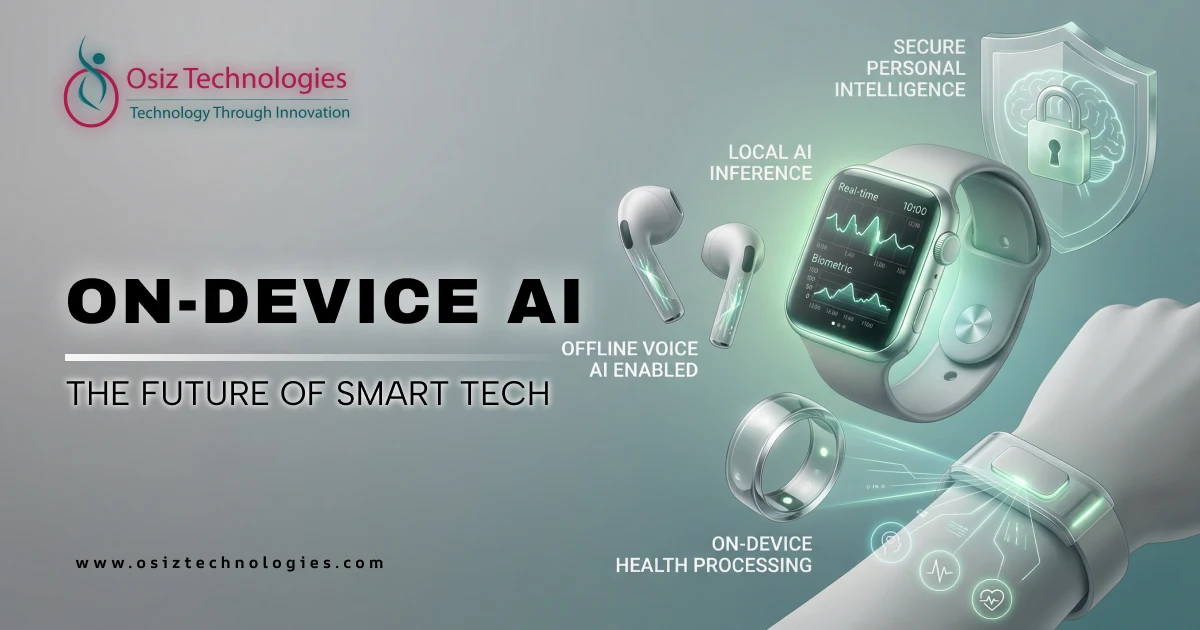
Customers want tech that’s quick, feels personal, and keeps their information safe, all while working offline. This wants to change how we come up with new tech. We're using AI directly on your devices to make things easier and keep your data private. Because of this, having AI on your device is becoming key for future smart devices instead of just using the cloud.
What is On-Device AI?
On-Device AI (also known as Edge AI) executes artificial intelligence models directly on the user's device such as smartphones, PCs, or smartwatches without sending data to the cloud. This approach supports instant responses, better privacy (since data remains on the device), offline use, and reduced latency, often using dedicated hardware like Neural Processing Units (NPUs) to deliver faster, more efficient, and tailored AI experiences.
Why Smart Tech Needs a New Leap
User Expectations Are Evolving
Today's customers want quick answers, flexible tech, and reliable performance. That’s pushing smart tech to do more on its own, without always relying on the cloud.
Privacy Concerns Are Rising
With greater awareness of how their data is used, privacy-protecting AI has become essential for intelligent systems.
Connectivity Is Not Always Reliable
Smart devices need to work even when the internet is down or slow. This is why there's a need for AI features that work offline.
Real-Time Decisions Are Critical
Some uses, like health tracking and automated systems, need AI to react right away. They can’t wait for data to travel to and from the cloud.
Scalability and Cost Matter
Reducing reliance on cloud services lowers infrastructure expenses, making it simpler to scale AI directly on devices.
1. Privacy as the Biggest Reason for On-Device AI
Processing data locally cuts down on unnecessary transfers and lowers the risk of breaches, keeping you in line with regulations and building customer trust. With this tech, your biometrics, voice, and habits stay secure, setting a fresh standard for responsible tech.
Smart devices are becoming part of daily life. AI that doesn't lean on the cloud keeps privacy tight without losing brainpower. Local processing helps you meet data rules and keeps things running smoothly. Users feel secure knowing their data stays on their device, speeding up the move to smart AI across industries.
2. Speed and Real-Time Intelligence Without the Cloud
They process information instantly without relying on a server, which is essential for applications like voice assistants, image recognition, and automated tasks. Getting rid of delays makes things feel more smooth and real. Devices work better, and you can count on them. This boost in how well they work makes using smart gadgets better every day.
When devices operate intelligently without relying on the network, they continue functioning even during slow connections. Making immediate decisions improves safety, accuracy, and overall user satisfaction. Smart setups can then work on their own instead of relying on a network. This change helps new ideas come about in areas where time is of the most importance.
3. Offline AI: Smart Tech Without Internet Dependency
Offline AI lets smart devices work without the internet, so they stay reliable in places that are far away, on the move, or have limited access. This is key for AI on IoT devices in industries like healthcare or fieldwork. Local AI keeps things running smoothly without breaks, giving users steady performance no matter the network. This makes smart tech more useful in a lot more places.
By not needing constant internet, AI without the cloud cuts down on problems and makes users trust it more. Devices get more independent. Offline AI helps keep your information private and makes things faster. This helps more people start using it, both at home and at work. Edge AI is becoming the base for smart systems you can depend on.
4. Cost and Energy Efficiency Driving Adoption
Processing data locally cuts down on constant data transfers and server use. Better models use less power but still get smart results. This makes batteries last longer in phones and wearables. Less energy use also helps hit sustainability targets. Saving energy makes smart tech cheaper on a large scale.
Depending less on cloud setups greatly lowers business costs when rolling out smart solutions. Edge AI cuts bandwidth costs and keeps things simple. Businesses can plan their expenses better. Devices last longer and need fewer resources. This money-saving benefit helps make smart device AI very popular.
5. On-Device AI as the Future Standard for Smart Devices
As people expect devices to be smarter, having AI built right into them is becoming common. Processing data locally makes things faster, keeps your info private, and makes the device more dependable. Chip makers are building chips made for AI in devices. Gadgets are becoming stand-alone systems instead of just connected screens. This change is what the future of gadgets will look like.
Making edge AI standard means things work the same across different products, from phones to factory equipment. Devices get smarter on their own while staying smart. New ideas get closer to the people who use them. This change affects how products are designed and how people use them.
Conclusion
On-device AI is transforming smart technology by delivering intelligence directly to your devices rather than relying on distant servers. AI development company like osiz enable this shift by developing intelligent, on-device AI solutions for innovative products. This means better privacy, faster response times, and lower energy use are the core things people want today. As this tech gets better, devices get faster, safer, and work anywhere. Businesses that use this technology become more dependable, trustworthy, and can easily grow.
Listen To The Article

Founder & CEO Osiz Technologies
Mr. Thangapandi, the CEO of Osiz, has a proven track record of conceptualizing and architecting 100+ user-centric and scalable solutions for startups and enterprises. He brings a deep understanding of both technical and user experience aspects. The CEO, being an early adopter of new technology, said, "I believe in the transformative power of AI to revolutionize industries and improve lives. My goal is to integrate AI in ways that not only enhance operational efficiency but also drive sustainable development and innovation." Proving his commitment, Mr. Thangapandi has built a dedicated team of AI experts proficient in coming up with innovative AI solutions and have successfully completed several AI projects across diverse sectors.
Recent Blogs





No 22,Astalakshmi Nagar, Thanakankullam, (Opp Seetha lakshmi Mill gate Bus stop) Thirunagar, Madurai - 625 006.
(Corporate Office)


Canada Office address, 1150, Rue Patrick, Laval, Quebec - H7Y 2C4, Canada.
(Sales Office)


Meydan Grandstand, 6th floor, Meydan Road, Nad Al Sheba, Dubai, U.A.E.
(Sales Office)


Halloween
Offers

 Artificial Intelligence
- AI Development
- AI Predictive Analytics Services
- AI SaaS Development
- RAG Development
- AI Assistant Development
- ChatGPT Development
- Data Analytics Services
- AI Copilot Development
- Adaptive AI Development
- Machine Learning Development
- NLP
- AI Consulting Services
- AI Software Builder
- AI Token Development
- AI Integration Services
- Enterprise AI Solution
- AI As a Service
- AI Marketing Tools
- AI Video Generator
- Computer Vision Services
- Explore AI
- Dataset
- Machine Learning in Healthcare
- Machine Learning in Retail
- Hire AI Engineers
- Hire Prompt Engineers
- Hire ChatGPT Developers
- Hire Stable Diffusion Developers
- Hire Action Transformer Developers
- Blockchain
- Blockchain Development
- Private Blockchain Development
- Smart Contract Development
- Custom Blockchain Development
- Solana Blockchain Development
- Polygon Blockchain Development
- Public Blockchain Development
- DAO Blockchain Development
- Binance Smart Chain (BSC) Blockchain Development
- DApp Development
- Solana DApp Development
- White Label Blockchain Solutions
- Custom Blockchain On Avalanche
- Custom Blockchain On Polygon
- Blockchain Game Development
- Blockchain Consulting Services
- Blockchain Explorer Development
- Ethereum Blockchain Development
- TRON Blockchain Development
- Prediction Market Platform Development Company
Layer 1 & 2 Solutions- Layer-1 Blockchain Development
- Cross Chain Bridge Development
- Data Availability Layer Development
- Ethereum Layer 2 Scaling Solutions
- Cross-L2 DEX Solution
- Layer 2 Token Development
- Layer 2 Token Marketing
- Layer 2 Cryptocurrency Development
- Layer 2 Solutions For Blockchain Games
- Layer 2 Solutions For Web3 Gaming
- Layer 2 Blockchain Solutions
- Rollups As A Service
- Optimistic Rollups Development
- ZK Tech Development
- Bitcoin Layer 2 Solutions
Crypto Exchange- Cryptocurrency Exchange Development
- White Label Crypto Exchange
- Decentralized Exchange Development
- P2P Exchange Development
- Crypto Derivatives Exchange Development
- Centralized Exchange Development
- Crypto Exchange Clone Script
- Cryptocurrency Exchange App Development
- OTC Exchange Development
- Exchange Listing Services
- Binance Like Exchange Development
- Bitstamp Like Exchange Development
- Crypto Exchange Script
CryptoCrypto WalletToken Standards- Token Development
- AI Token Development
- RWA Tokenization Development
- Coinremitter Clone Script
- Asset Tokenization
- Real Estate Tokenization
- Tokenization Platform Development
- Crypto ETF Development
- Solona Token Development
- Semi-Fungible Token Development
- BEP20 Token Development
- Ethereum Token Development
- ERC1400 Token Development
- ERC998 Token Development
- ERC 721 Token Development
- ERC20 Token Development
- Defi Token Development
- ERC1155 Token Development
- BEP721 Token Development
- Utility Token Development
- ERC 777 Token Development
- ERC 827 Token Development
- Social Token Development
- Metaverse Token Development
- Tron Token Development
- ERC404 Token Development
- Governance Token
- Shibarium Token
- polygon Token
- BRC-20
- TRC20 Token Development
- TRC10 Token Development
- Soulbound Token Development
- NFT Token Development
Trading BotsClone- Crypto Exchange Clone Script
- Binance Clone Script
- Metamask Clone Script
- Coinbase Clone Script
- Kucoin Clone Script
- Paxful Clone Script
- Remitano Clone Script
- Wazirx Clone Script
- ByBit Clone Script
- Bitfinex Clone Script
- MEXC Clone Script
- Bitget Clone Script
- Cointool App Clone Script
- Trust Wallet Clone App
- Coinmarketcap Clone Script
- Changelly Clone Script
- BingX Clone Script
CybersecurityApp SecurityDigital Forensics & Incident ResponseAudit & ConsultingEducation & TrainingSolutionsWeb 3DeFi- Decentralized Finance (DeFi) Development
- DeFi Lending/ Borrowing Platform Development
- DeFi Staking Platform Development
- DeFi Token Development
- DeFi Wallet Development
- DeFi Smart Contract Development
- DeFi DApp Development
- Decentralized Exchange Development
- DeFi Insurance Development
- DeFi Crypto Synthetic Assets Development
Game Development- Game Development
- Android Game Development
- IOS Game Development
- Metaverse Game Development
- VR Game Development
- AI Game Development
- Unity 3D Game Development
- Unreal Engine Game Development
- Mobile Game Development
- Blockchain Game Development
- NFT Game Development
- Play to Earn Game Development
- Move to Earn Game Development
- Casino Game Development
- Slot Game Development
- Poker Game Development
- AAA Game Development
- AR Game Development
- Social Network Game Development
- Gamification Services
- Decentralized Sports Betting Platform
- Sports Betting Dapp Development
- Blockchain Casino Game Development
- Game Asset Creation
- Baccarat Game Development
- Rollbit Clone Script
- Fortnite Clone Script
- Slot Game Development
- Tap to Earn Game Development
- Slot Game Development
Metaverse Platforms- Metaverse Game Development
- Metaverse Event Platform Development
- Metaverse Virtual Mall Development
- Metaverse NFT Marketplace Development
- Metaverse Token Development
- Metaverse Virtual Land Development
- Metaverse Avatar Development
- Metaverse 3d Space Development
- Metaverse Real Estate Development
- Metaverse Social Media Platform Development
- Top 10 Metaverse Development Company
- Metaverse Business Ideas
- Metaverse Launchpad Development
- Metaverse App Development
- Metaverse Casino Game Development
NFT SolutionsNFT Platforms- NFT Minting Development
- NFT Token Development
- NFT Exchange Platform Development
- NFT Launchpad Development
- NFT Fashion Marketplace Development
- NFT Art Marketplace Development
- NFT Music Marketplace Development
- Carbon Credits NFT Marketplace Development
- Binance NFT Marketplace Development
- Polygon NFT Marketplace Development
- Solana NFT Marketplace Development
- Influencers NFT Marketplace Development
- NFT Ticketing Marketplace Development
- DeFi NFT Marketplace Development
- NFT Fantasy Sports Platform Development
- NFT Storage Development
- NFT Lending Platform Development
- Top10 NFT Business Ideas
NFT Game ClonesSustainabilityServiceNow - Blog
- Contact Us
- Works