
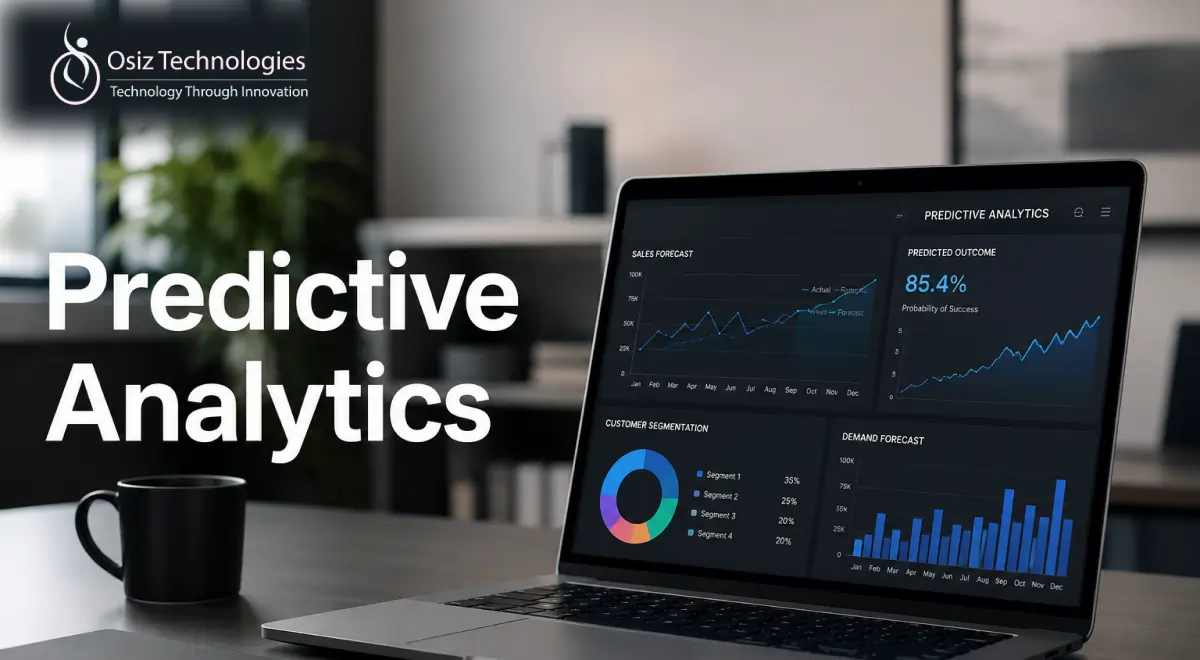
Predictive analytics leverages data, statistical modeling, and machine learning to forecast future outcomes based on historical data. This powerful tool helps businesses anticipate trends, optimize operations, and make informed decisions by identifying patterns and insights that can guide strategic planning.
Predictive analytics, defined
Predictive analytics is a branch of advanced analytics that makes predictions about future outcomes by using historical data combined with statistical modeling, data mining techniques and machine learning. Companies leverage predictive analytics to forecast trends, identify potential risks or opportunities, and make informed decisions based on insights derived from past performance. This process involves analyzing large datasets to uncover hidden patterns and correlations, which are then used to create models that can predict future events with varying degrees of accuracy. By integrating historical data with sophisticated algorithms, predictive analytics enables organizations to anticipate changes in markets, customer behaviors, or operational processes, thereby optimizing their strategies for better outcomes.
How does predictive analytics work?
Predictive analytics works by using historical data and past patterns to forecast future outcomes. Predictive analytics draws upon artificial intelligence (AI) and machine learning (ML) techniques to automate the data-driven process of identifying trends and making predictions. Essentially, it involves training algorithms with large datasets to recognize correlations and make educated guesses about what might happen next. This is achieved through various models such as classification models, regression models, clustering models, and time-series analysis. Each model leverages historical data to identify patterns that can be used for forecasting future events or behaviors. For instance, a classification model could predict which customers are likely to churn based on past customer behavior and interactions with the company. By continuously refining these models with new data, predictive analytics helps organizations make more informed decisions and improve their strategic planning.
Five steps to build a predictive analytics framework
Building a predictive analytics framework involves a structured approach that leverages historical data and advanced algorithms for future predictions. Here are five key steps to guide you through this process:
Data Collection
Gather relevant historical data from various sources such as databases, logs, and external APIs. This foundational step is crucial as the quality of your data directly impacts the accuracy of your predictive models.
Data Preparation
Clean and preprocess the collected data by handling missing values, removing outliers, and transforming variables to ensure they are suitable for analysis. This preparation phase is essential for making predictions more accurate and reliable.
Model Selection and Training
Choose appropriate machine learning algorithms based on the nature of your problem (classification, regression, clustering). Train these models using historical data to learn patterns and relationships that can be used to make future predictions. Regularly validate and tune these models to optimize performance over time.
Deployment and Monitoring
Once you have a robust model, deploy it into production environments where it can interact with real-time data streams or transactional systems. Continuously monitor the model’s performance in production settings to ensure its reliability and adaptability as new data becomes available.
Integration and Reporting
Integrate your predictive analytics framework seamlessly within existing business processes through APIs or other integration methods. Provide clear, actionable insights via dashboards and reports that highlight key predictions and trends for stakeholders across different departments.
By following these steps, you can systematically build a predictive analytics framework capable of driving informed decision-making in your organization.
Types of predictive modeling
Predictive analytics models are designed to mimic the functions of the human brain. The models assess historical data, discover patterns, observe trends and use that information to predict future trends and make informed decisions. In business, this capability is crucial for planning and decision-making.
Classification models fall under the branch of supervised machine learning models. These models categorize data based on historical data, describing relationships between different variables. For instance, in credit scoring, classification models can predict whether a loan applicant will default or not by analyzing past lending records and customer behavior patterns.
Regression models are another type that predicts continuous outcomes rather than categorical ones. They estimate the relationship between one dependent variable and multiple independent variables using statistical methods like linear regression. In business, regression models help forecast sales volumes based on factors such as price changes, marketing efforts, or economic indicators.
Clustering models group similar data points together without prior knowledge of their categories. This is particularly useful in market segmentation where businesses can identify distinct customer groups by analyzing purchasing behavior and preferences over time. By understanding these clusters, companies can tailor their products and services more effectively to meet the needs of specific segments within a broader market.
These are just a few examples of predictive modeling techniques. Each type serves different purposes depending on the nature of the problem at hand and the insights needed for better decision-making in various industries.
Predictive analytics industry use cases
Predictive analytics is not just a theoretical concept; it has practical applications across various industries. One compelling example comes from DHL Group, where predictive analytics plays a pivotal role in their financial planning process. By leveraging Osiz Planning Analytics, DHL’s finance leader achieves rapid and flexible planning, enabling teams to stay ahead of the curve.
In another industry, retail companies can use predictive analytics for inventory management. By analyzing historical sales data along with current market trends, retailers can predict future demand accurately. This allows them to optimize their supply chain operations, reduce waste, and ensure they have sufficient stock on hand without overstocking.
Healthcare providers also benefit from predictive analytics. For instance, hospitals might use it to forecast patient admissions based on seasonal variations or historical data of similar events. By doing so, they can better allocate resources like beds, staff, and medical supplies, ensuring that critical services are available when needed most.
These examples illustrate how predictive analytics transforms traditional business processes into more efficient and proactive ones. Whether in finance, retail, healthcare, or any other sector, predictive models help organizations make smarter decisions by anticipating future outcomes based on past data patterns.
Benefits of predictive modeling
Predictive analytics offers numerous benefits for organizations looking to make informed decisions about future outcomes. By leveraging historical data and past patterns, businesses can predict trends and optimize their operations more effectively. For instance, in inventory management, a company can anticipate demand fluctuations by analyzing sales data from previous years. This foresight allows them to maintain optimal stock levels without excess waste or shortages.
In workforce planning, predictive models can forecast employee turnover rates based on historical attrition data. This helps companies proactively manage their staffing needs, ensuring they have the right number of employees at all times. Similarly, in marketing campaigns, understanding consumer behavior through predictive analytics enables marketers to tailor their strategies more precisely, increasing campaign effectiveness and ROI.
Moreover, predictive modeling can also enhance financial planning by identifying potential risks or opportunities. For example, a retail business might use time series analysis to predict future sales trends, enabling them to adjust inventory levels accordingly. This proactive approach not only improves operational efficiency but also reduces costs associated with overstocking or understocking products.
Overall, the ability to predict future outcomes through predictive modeling empowers organizations to make better-informed decisions across various business functions, leading to improved performance and competitive advantage.
Listen To The Article

Founder & CEO Osiz Technologies
Mr. Thangapandi, the CEO of Osiz, has a proven track record of conceptualizing and architecting 100+ user-centric and scalable solutions for startups and enterprises. He brings a deep understanding of both technical and user experience aspects. The CEO, being an early adopter of new technology, said, \"I believe in the transformative power of AI to revolutionize industries and improve lives. My goal is to integrate AI in ways that not only enhance operational efficiency but also drive sustainable development and innovation.\" Proving his commitment, Mr. Thangapandi has built a dedicated team of AI experts proficient in coming up with innovative AI solutions and have successfully completed several AI projects across diverse sectors.
Recent Blogs




No 22,Astalakshmi Nagar, Thanakankullam, (Opp Seetha lakshmi Mill gate Bus stop) Thirunagar, Madurai - 625 006.
(Corporate Office)


Canada Office address, 1150, Rue Patrick, Laval, Quebec - H7Y 2C4, Canada.
(Sales Office)


Explore Our
AI Portfolio

 Artificial Intelligence
- AI Development
- AI Predictive Analytics Services
- AI SaaS Development
- RAG Development
- AI Assistant Development
- ChatGPT Development
- Data Analytics Services
- AI Copilot Development
- Adaptive AI Development
- Machine Learning Development
- NLP
- AI Consulting Services
- AI Software Builder
- AI Token Development
- AI Integration Services
- Enterprise AI Solution
- AI As a Service
- AI Marketing Tools
- AI Video Generator
- Computer Vision Services
- Explore AI
- Dataset
- Machine Learning in Healthcare
- Machine Learning in Retail
- Hire AI Engineers
- Hire Prompt Engineers
- Hire ChatGPT Developers
- Hire Stable Diffusion Developers
- Hire Action Transformer Developers
- Blockchain
- Blockchain Development
- Private Blockchain Development
- Smart Contract Development
- Custom Blockchain Development
- Solana Blockchain Development
- Polygon Blockchain Development
- Public Blockchain Development
- DAO Blockchain Development
- Binance Smart Chain (BSC) Blockchain Development
- DApp Development
- Solana DApp Development
- White Label Blockchain Solutions
- Custom Blockchain On Avalanche
- Custom Blockchain On Polygon
- Blockchain Game Development
- Blockchain Consulting Services
- Blockchain Explorer Development
- Ethereum Blockchain Development
- TRON Blockchain Development
- Prediction Market Platform Development Company
Layer 1 & 2 Solutions- Layer-1 Blockchain Development
- Cross Chain Bridge Development
- Data Availability Layer Development
- Ethereum Layer 2 Scaling Solutions
- Cross-L2 DEX Solution
- Layer 2 Token Development
- Layer 2 Token Marketing
- Layer 2 Cryptocurrency Development
- Layer 2 Solutions For Blockchain Games
- Layer 2 Solutions For Web3 Gaming
- Layer 2 Blockchain Solutions
- Rollups As A Service
- Optimistic Rollups Development
- ZK Tech Development
- Bitcoin Layer 2 Solutions
Crypto Exchange- Cryptocurrency Exchange Development
- White Label Crypto Exchange
- Decentralized Exchange Development
- P2P Exchange Development
- Crypto Derivatives Exchange Development
- Centralized Exchange Development
- Crypto Exchange Clone Script
- Cryptocurrency Exchange App Development
- OTC Exchange Development
- Exchange Listing Services
- Binance Like Exchange Development
- Bitstamp Like Exchange Development
- Crypto Exchange Script
CryptoCrypto WalletToken Standards- Token Development
- AI Token Development
- RWA Tokenization Development
- Coinremitter Clone Script
- Asset Tokenization
- Real Estate Tokenization
- Tokenization Platform Development
- Crypto ETF Development
- Solona Token Development
- Semi-Fungible Token Development
- BEP20 Token Development
- Ethereum Token Development
- ERC1400 Token Development
- ERC998 Token Development
- ERC 721 Token Development
- ERC20 Token Development
- Defi Token Development
- ERC1155 Token Development
- BEP721 Token Development
- Utility Token Development
- ERC 777 Token Development
- ERC 827 Token Development
- Social Token Development
- Metaverse Token Development
- Tron Token Development
- ERC404 Token Development
- Governance Token
- Shibarium Token
- polygon Token
- BRC-20
- TRC20 Token Development
- TRC10 Token Development
- Soulbound Token Development
- NFT Token Development
Trading BotsClone- Crypto Exchange Clone Script
- Binance Clone Script
- Metamask Clone Script
- Coinbase Clone Script
- Kucoin Clone Script
- Paxful Clone Script
- Remitano Clone Script
- Wazirx Clone Script
- ByBit Clone Script
- Bitfinex Clone Script
- MEXC Clone Script
- Bitget Clone Script
- Cointool App Clone Script
- Trust Wallet Clone App
- Coinmarketcap Clone Script
- Changelly Clone Script
- BingX Clone Script
CybersecurityApp SecurityDigital Forensics & Incident ResponseAudit & ConsultingEducation & TrainingSolutionsWeb 3DeFi- Decentralized Finance (DeFi) Development
- DeFi Lending/ Borrowing Platform Development
- DeFi Staking Platform Development
- DeFi Token Development
- DeFi Wallet Development
- DeFi Smart Contract Development
- DeFi DApp Development
- Decentralized Exchange Development
- DeFi Insurance Development
- DeFi Crypto Synthetic Assets Development
Game Development- Game Development
- Android Game Development
- IOS Game Development
- Metaverse Game Development
- VR Game Development
- AI Game Development
- Unity 3D Game Development
- Unreal Engine Game Development
- Mobile Game Development
- Blockchain Game Development
- NFT Game Development
- Play to Earn Game Development
- Move to Earn Game Development
- Casino Game Development
- Slot Game Development
- Poker Game Development
- AAA Game Development
- AR Game Development
- Social Network Game Development
- Gamification Services
- Decentralized Sports Betting Platform
- Sports Betting Dapp Development
- Blockchain Casino Game Development
- Game Asset Creation
- Baccarat Game Development
- Rollbit Clone Script
- Fortnite Clone Script
- Slot Game Development
- Tap to Earn Game Development
- Slot Game Development
Metaverse Platforms- Metaverse Game Development
- Metaverse Event Platform Development
- Metaverse Virtual Mall Development
- Metaverse NFT Marketplace Development
- Metaverse Token Development
- Metaverse Virtual Land Development
- Metaverse Avatar Development
- Metaverse 3d Space Development
- Metaverse Real Estate Development
- Metaverse Social Media Platform Development
- Top 10 Metaverse Development Company
- Metaverse Business Ideas
- Metaverse Launchpad Development
- Metaverse App Development
- Metaverse Casino Game Development
NFT SolutionsNFT Platforms- NFT Minting Development
- NFT Token Development
- NFT Exchange Platform Development
- NFT Launchpad Development
- NFT Fashion Marketplace Development
- NFT Art Marketplace Development
- NFT Music Marketplace Development
- Carbon Credits NFT Marketplace Development
- Binance NFT Marketplace Development
- Polygon NFT Marketplace Development
- Solana NFT Marketplace Development
- Influencers NFT Marketplace Development
- NFT Ticketing Marketplace Development
- DeFi NFT Marketplace Development
- NFT Fantasy Sports Platform Development
- NFT Storage Development
- NFT Lending Platform Development
- Top10 NFT Business Ideas
NFT Game ClonesSustainabilityServiceNow - Blog
- Contact Us
- Works