
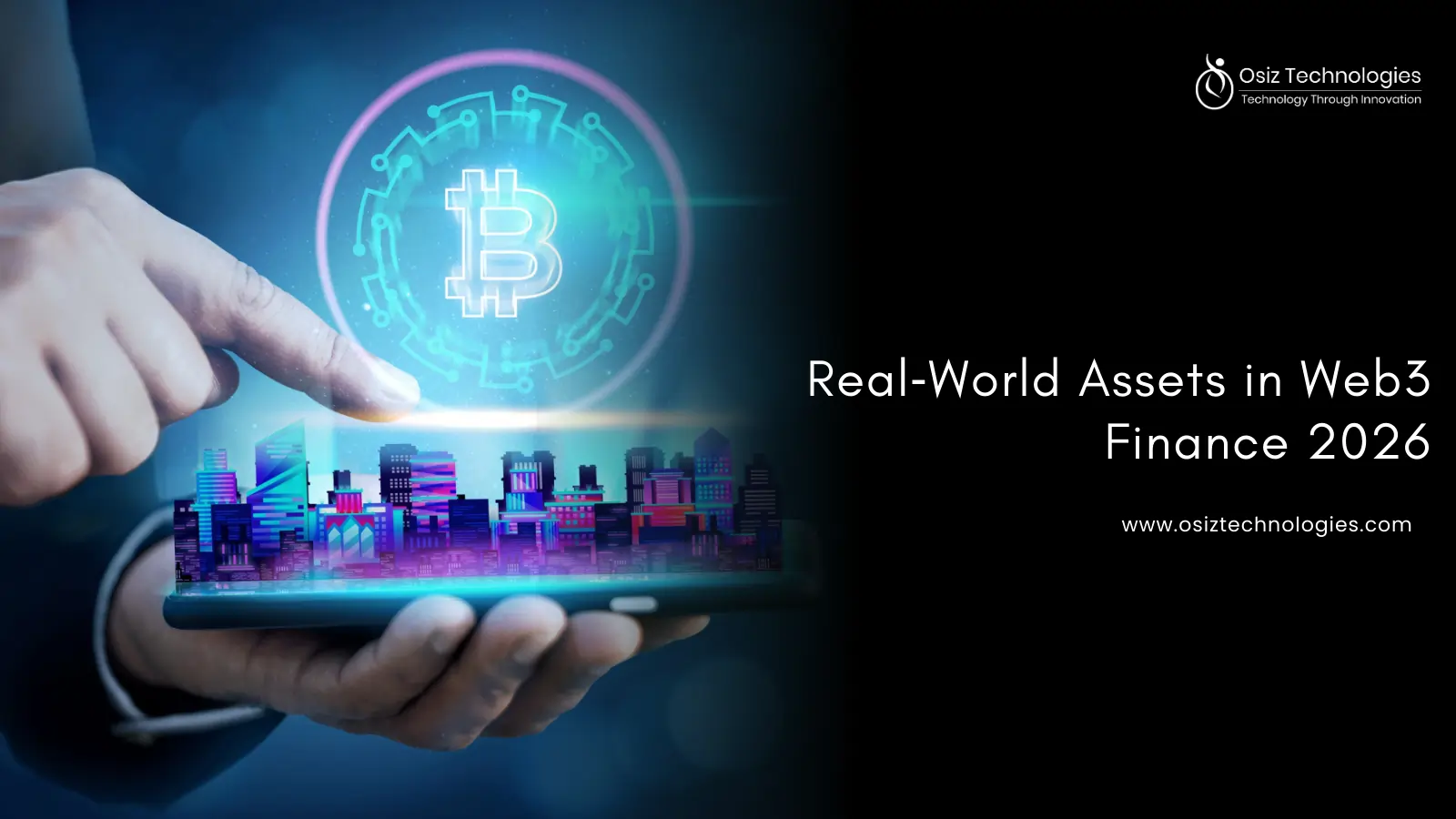
Real-world assets are changing Web3 finance by linking digital and physical markets. This makes financial participation more open, efficient, and inclusive. Tokenizing these assets opens up markets that used to be hard to trade in. It also gives more people access to real economic value and provides real yield and liquidity. By 2026, RWA tokenization should make a strong system. This system should attract regular people and big institutions, linking value with utility in Web3 finance.
Why Real‑World Assets Are Taking Over Web3 Finance?
In Web3 Finance, Real-World Assets (RWAs) involve converting physical or conventional financial assets such as real estate, bonds, art, and commodities into digital tokens on a blockchain. This integration connects traditional financial markets with decentralized finance (DeFi), enhancing liquidity, enabling fractional ownership, and boosting efficiency by allowing these assets to be traded, used as collateral, and accessed globally through blockchain-based platforms.
Tangible Value Anchoring Digital Markets
Tokenized assets show actual cash flow, physical assets, or income, which closes the gap between digital trading and the real-world economy. This appeals to those wanting stable and expected returns from things like property, goods, and accounts receivable.
Enhanced Liquidity Through Fractionalization
By using fractional real-world asset tokens, blockchain tokenization divides big, hard-to-trade assets into units that can be traded. This lets different investors get into markets like real estate on the blockchain easily.
Transparent and Programmable Ownership
Tokenizing real-world assets uses clear, secure records to track ownership and apply rights automatically. This builds trust, lowers risk, and makes following rules and auditing easier, leading to wider use by both small and big investors.
Real Yield and DeFi Integration
RWA-backed DeFi creates income from real economic actions, not just computer-based incentives. This matches interest with returns from good assets, changing DeFi from risky investments to reliable financial choices that attract careful capital.
Institutional Confidence and Regulatory Integration
As the rules and standards for keeping and following rules become clearer, big financial groups are putting money into RWA. This is because they want to invest in digital markets with risk controls they know, pushing real-world asset tokenization to the front of Web3 finance.
1. The Rise of Real‑World Assets in Blockchain Ecosystems
Real-world assets are now key to blockchain systems. They add real money value and build trust in these systems. Before, these systems mainly had tokens that changed in value a lot. Now, you can easily mix real-world markets with digital money, which makes Web3 finance stronger and better for long-term growth.
A big part of this growth is how we're using blockchain to tokenize assets such as property, art, and goods. This tokenization makes things clearer, lets more people invest, and opens up access to markets worldwide. It also helps create systems that work together across DeFi, CeFi, and other setups.
Impact in 2026:
- Traditional markets and RWA in crypto will see higher liquidity as tokenized assets attract global investors.
- Cross‑chain interoperability will enable broader access to fractional real‑world asset tokens.
- Compliance and regulatory clarity will mainstream institutional participation.
- Multi‑asset tokenization platforms will standardize on‑chain real world assets transactions.
- Real‑world assets will be embedded in financial services like lending, staking, and settlement.
2. Tokenization as the Gateway to Web3 Finance
Tokenization is fundamental to Web3 finance, enabling the conversion of real-world asset ownership into secure digital tokens.These tokens can be traded, customized, and integrated into decentralized applications, lowering barriers and improving financial access.
By transforming real estate, physical goods, invoices, and intellectual property into digital assets, tokenization enables fractional ownership, automated regulatory adherence, and faster settlements. This moves us from old financial systems to open, automated markets that benefit everyone.
Impact in 2026:
- Broader adoption of tokenized securities and digital bonds will redefine investment norms.
- Enhanced market liquidity from fractional real‑world asset tokens will increase participation.
- Smart contracts will automate compliance across jurisdictions.
- Asset managers will integrate tokenization into legacy portfolios.
- Secondary markets for tokenized assets will flourish globally.
3. RWA‑Backed DeFi: Real Yield Over Speculation
RWA-backed DeFi is changing decentralized finance. It gives you returns from real-world economic actions, not just risky token games. This attracts investors with steady returns tied to how well assets do.
It also builds trust in DeFi systems that use real money and yields adjusted for risk. This change makes Web3 finance more grown-up. Decentralized lending, borrowing, and yield plans are now based on assets that produce value. This shrinks the distance between regular finance and blockchain markets, letting users get real yield chances with clear risks.
Impact in 2026:
- DeFi platforms with real yield will attract conservative capital.
- Yield benchmarks will align with traditional markets.
- Risk assessment tools for RWA in crypto will mature.
- Insurance products will emerge for tokenized asset exposure.
- DeFi protocols will offer structured products tied to real asset performance.
4. Institutional Adoption Driving RWA Dominance
Web3 finance is seeing more real-world assets because institutions are moving in. These groups put money into tokenized markets with legal rules, checked assets, and safe storage that meets their needs. This move builds links between old finance and the blockchain, helping with quick money use and risk control.
As big banks, managers, and funds check out RWA tokenization, fresh funds improve infrastructure, governance, and liquidity. This makes real-world assets key for top-notch, decentralized finance services.
Impact in 2026:
- Institutional custodians will standardize on‑chain real world assets safekeeping
- Regulatory frameworks will expand globally for tokenized assets.
- Large capital inflows will enhance market depth.
- Certified asset origination standards will emerge.
- Institutional demand will shape product design across DeFi.
5. Web3 Finance Infrastructure Built Around Real Assets
Web3's financial system is grounded in real-world assets, which enable secure value exchange, risk distribution, and economic growth.Protocols, markets, and tech solutions are made to tokenize real-world assets and easily connect them to lending, trading, and settlement systems.
As this system grows, developers and custodians will work together to create solutions that can scale, meet regulations, and work with each other. These solutions will support different asset types, from property to businesses. This allows digital and real-world economies to interact and shape the future of finance.
Impact in 2026:
- Modular infrastructure will support asset onboarding and lifecycle management.
- Oracles and verification systems will secure real‑world data feeds.
- Cross‑platform standards will drive interoperability.
- Developer tools will simplify asset tokenization flows.
- Institutional‑grade settlement systems will underpin global markets.
Conclusion
Real-world assets are changing Web3 finance by providing sustainable returns, open access, and clear markets. Tokenized RWAs link old-school economic value with new decentralized tech, offering shared ownership, adjustable rights, and fresh ways for capital to move.
As we head into 2026, companies like Osiz, a top RWA tokenization development company, are leading this change. They offer solutions that are scalable and compliant, bringing solid practices and real-world use to blockchain finance, which helps groups get the most out of the RWA space.
Listen To The Article

Founder & CEO Osiz Technologies
Mr. Thangapandi, the CEO of Osiz, has a proven track record of conceptualizing and architecting 100+ user-centric and scalable solutions for startups and enterprises. He brings a deep understanding of both technical and user experience aspects. The CEO, being an early adopter of new technology, said, \"I believe in the transformative power of AI to revolutionize industries and improve lives. My goal is to integrate AI in ways that not only enhance operational efficiency but also drive sustainable development and innovation.\" Proving his commitment, Mr. Thangapandi has built a dedicated team of AI experts proficient in coming up with innovative AI solutions and have successfully completed several AI projects across diverse sectors.
Recent Blogs



No 22,Astalakshmi Nagar, Thanakankullam, (Opp Seetha lakshmi Mill gate Bus stop) Thirunagar, Madurai - 625 006.
(Corporate Office)


Canada Office address, 1150, Rue Patrick, Laval, Quebec - H7Y 2C4, Canada.
(Sales Office)


Meydan Grandstand, 6th floor, Meydan Road, Nad Al Sheba, Dubai, U.A.E.
(Sales Office)


Halloween
Offers

 Artificial Intelligence
- AI Development
- AI Predictive Analytics Services
- AI SaaS Development
- RAG Development
- AI Assistant Development
- ChatGPT Development
- Data Analytics Services
- AI Copilot Development
- Adaptive AI Development
- Machine Learning Development
- NLP
- AI Consulting Services
- AI Software Builder
- AI Token Development
- AI Integration Services
- Enterprise AI Solution
- AI As a Service
- AI Marketing Tools
- AI Video Generator
- Computer Vision Services
- Explore AI
- Dataset
- Machine Learning in Healthcare
- Machine Learning in Retail
- Hire AI Engineers
- Hire Prompt Engineers
- Hire ChatGPT Developers
- Hire Stable Diffusion Developers
- Hire Action Transformer Developers
- Blockchain
- Blockchain Development
- Private Blockchain Development
- Smart Contract Development
- Custom Blockchain Development
- Solana Blockchain Development
- Polygon Blockchain Development
- Public Blockchain Development
- DAO Blockchain Development
- Binance Smart Chain (BSC) Blockchain Development
- DApp Development
- Solana DApp Development
- White Label Blockchain Solutions
- Custom Blockchain On Avalanche
- Custom Blockchain On Polygon
- Blockchain Game Development
- Blockchain Consulting Services
- Blockchain Explorer Development
- Ethereum Blockchain Development
- TRON Blockchain Development
- Prediction Market Platform Development Company
Layer 1 & 2 Solutions- Layer-1 Blockchain Development
- Cross Chain Bridge Development
- Data Availability Layer Development
- Ethereum Layer 2 Scaling Solutions
- Cross-L2 DEX Solution
- Layer 2 Token Development
- Layer 2 Token Marketing
- Layer 2 Cryptocurrency Development
- Layer 2 Solutions For Blockchain Games
- Layer 2 Solutions For Web3 Gaming
- Layer 2 Blockchain Solutions
- Rollups As A Service
- Optimistic Rollups Development
- ZK Tech Development
- Bitcoin Layer 2 Solutions
Crypto Exchange- Cryptocurrency Exchange Development
- White Label Crypto Exchange
- Decentralized Exchange Development
- P2P Exchange Development
- Crypto Derivatives Exchange Development
- Centralized Exchange Development
- Crypto Exchange Clone Script
- Cryptocurrency Exchange App Development
- OTC Exchange Development
- Exchange Listing Services
- Binance Like Exchange Development
- Bitstamp Like Exchange Development
- Crypto Exchange Script
CryptoCrypto WalletToken Standards- Token Development
- AI Token Development
- RWA Tokenization Development
- Coinremitter Clone Script
- Asset Tokenization
- Real Estate Tokenization
- Tokenization Platform Development
- Crypto ETF Development
- Solona Token Development
- Semi-Fungible Token Development
- BEP20 Token Development
- Ethereum Token Development
- ERC1400 Token Development
- ERC998 Token Development
- ERC 721 Token Development
- ERC20 Token Development
- Defi Token Development
- ERC1155 Token Development
- BEP721 Token Development
- Utility Token Development
- ERC 777 Token Development
- ERC 827 Token Development
- Social Token Development
- Metaverse Token Development
- Tron Token Development
- ERC404 Token Development
- Governance Token
- Shibarium Token
- polygon Token
- BRC-20
- TRC20 Token Development
- TRC10 Token Development
- Soulbound Token Development
- NFT Token Development
Trading BotsClone- Crypto Exchange Clone Script
- Binance Clone Script
- Metamask Clone Script
- Coinbase Clone Script
- Kucoin Clone Script
- Paxful Clone Script
- Remitano Clone Script
- Wazirx Clone Script
- ByBit Clone Script
- Bitfinex Clone Script
- MEXC Clone Script
- Bitget Clone Script
- Cointool App Clone Script
- Trust Wallet Clone App
- Coinmarketcap Clone Script
- Changelly Clone Script
- BingX Clone Script
CybersecurityApp SecurityDigital Forensics & Incident ResponseAudit & ConsultingEducation & TrainingSolutionsWeb 3DeFi- Decentralized Finance (DeFi) Development
- DeFi Lending/ Borrowing Platform Development
- DeFi Staking Platform Development
- DeFi Token Development
- DeFi Wallet Development
- DeFi Smart Contract Development
- DeFi DApp Development
- Decentralized Exchange Development
- DeFi Insurance Development
- DeFi Crypto Synthetic Assets Development
Game Development- Game Development
- Android Game Development
- IOS Game Development
- Metaverse Game Development
- VR Game Development
- AI Game Development
- Unity 3D Game Development
- Unreal Engine Game Development
- Mobile Game Development
- Blockchain Game Development
- NFT Game Development
- Play to Earn Game Development
- Move to Earn Game Development
- Casino Game Development
- Slot Game Development
- Poker Game Development
- AAA Game Development
- AR Game Development
- Social Network Game Development
- Gamification Services
- Decentralized Sports Betting Platform
- Sports Betting Dapp Development
- Blockchain Casino Game Development
- Game Asset Creation
- Baccarat Game Development
- Rollbit Clone Script
- Fortnite Clone Script
- Slot Game Development
- Tap to Earn Game Development
- Slot Game Development
Metaverse Platforms- Metaverse Game Development
- Metaverse Event Platform Development
- Metaverse Virtual Mall Development
- Metaverse NFT Marketplace Development
- Metaverse Token Development
- Metaverse Virtual Land Development
- Metaverse Avatar Development
- Metaverse 3d Space Development
- Metaverse Real Estate Development
- Metaverse Social Media Platform Development
- Top 10 Metaverse Development Company
- Metaverse Business Ideas
- Metaverse Launchpad Development
- Metaverse App Development
- Metaverse Casino Game Development
NFT SolutionsNFT Platforms- NFT Minting Development
- NFT Token Development
- NFT Exchange Platform Development
- NFT Launchpad Development
- NFT Fashion Marketplace Development
- NFT Art Marketplace Development
- NFT Music Marketplace Development
- Carbon Credits NFT Marketplace Development
- Binance NFT Marketplace Development
- Polygon NFT Marketplace Development
- Solana NFT Marketplace Development
- Influencers NFT Marketplace Development
- NFT Ticketing Marketplace Development
- DeFi NFT Marketplace Development
- NFT Fantasy Sports Platform Development
- NFT Storage Development
- NFT Lending Platform Development
- Top10 NFT Business Ideas
NFT Game ClonesSustainabilityServiceNow - Blog
- Contact Us
- Works