
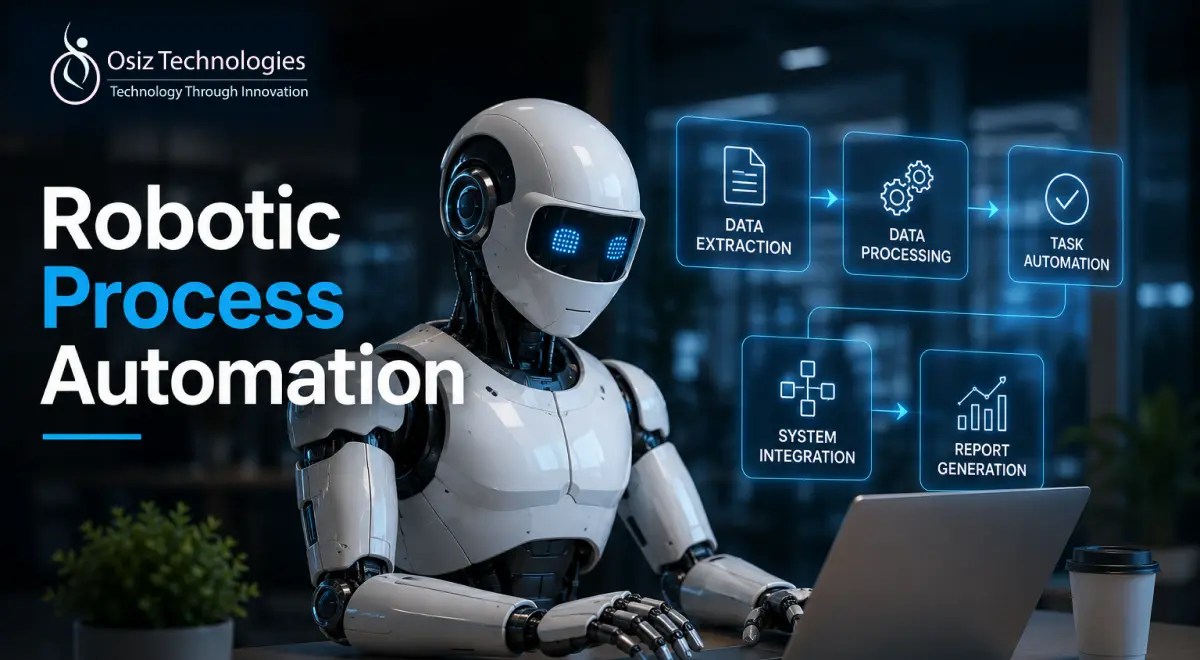
In today's fast-paced business environment, companies are constantly seeking ways to streamline their operations and increase efficiency without compromising on quality. One such solution is Robotic Process Automation (RPA), a form of business process automation technology that leverages software robots to automate tasks traditionally performed by humans. Businesses increasingly adopt AI Automation Services alongside RPA to enhance operational efficiency, automate complex workflows, and improve decision-making across departments.
What is RPA?
Robotic process automation (RPA), also known as software robotics, uses intelligent automation technologies to perform repetitive office tasks of human workers, such as data extraction from spreadsheets and databases, filling out forms, processing transactions, and more. Unlike traditional programming where developers write code for specific tasks, RPA tools mimic the actions of a human user within an application interface by using pre-programmed rules and logic to automate workflows. This technology can significantly reduce manual effort and errors associated with routine operations, thereby freeing up employees to focus on higher-value activities that require creativity and critical thinking.
RPA and intelligent automation
In order for RPA tools in the marketplace to remain competitive, they need to move beyond task automation and expand their offerings to include intelligent automation (IA). This type of automation expands on RPA functionality by incorporating advanced software that can learn from data patterns and make decisions based on context. By integrating AI capabilities into RPA solutions, companies can automate more complex processes and handle a wider range of tasks, thereby improving efficiency and reducing errors. Many organizations partner with an AI Development Company to implement intelligent automation solutions that combine RPA with advanced AI technologies for greater business impact.
RPA and artificial intelligence
Robotic process automation (RPA) is often mistaken for artificial intelligence (AI), but the two are distinctly different. While AI combines cognitive automation, machine learning (ML), natural language processing (NLP), reasoning, and other advanced technologies to enable machines to perform complex tasks that mimic human decision-making, RPA focuses on automating repetitive office tasks of human workers.
RPA tools in the marketplace typically automate routine processes such as data entry, document processing, and financial calculations. They do not require AI capabilities since their primary function is to replicate manual workflows without the need for sophisticated learning or reasoning. In order for RPA tools to remain competitive, they are moving beyond task automation and expanding into intelligent automation that can handle more complex scenarios.
RPA bots work by mimicking human interactions with software applications through predefined rules and interfaces. They interact with databases, spreadsheets, emails, and other systems using pre-programmed workflows. Unlike AI-powered solutions, which might require significant data training to understand context or nuances in language, RPA tools can be configured to perform specific tasks without the need for machine learning models.
In essence, while both RPA and AI are forms of intelligent automation, they serve different purposes within an organization’s workflow. RPA excels at automating routine, repetitive processes that do not require complex decision-making or understanding of context. By complementing each other, these technologies can create a more efficient and effective digital workforce.
How does RPA work?
RPA software tools must include core capabilities such as automation technology, which enables bots to perform repetitive office tasks traditionally handled by human workers. These bots also have the ability to access information through legacy systems and integrate well with other applications, streamlining workflows across various business processes. Additionally, RPA can leverage AI for more complex decision-making processes, making it a versatile tool in modern business operations.
The benefits of RPA
There are multiple benefits of RPA, including: It can significantly reduce the time and effort needed for repetitive tasks by automating them, which allows human workers to focus on more complex and creative work. Additionally, RPA helps in improving data accuracy and consistency across various processes, as it eliminates the potential for human errors that often occur during manual data entry or processing. By streamlining workflows, RPA also enhances overall productivity within an organization, leading to better performance and faster decision-making.
Challenges of RPA
While robotic process automation (RPA) software can significantly streamline and automate repetitive office tasks, several challenges arise that enterprises must consider. One significant hurdle is the need for a supportive organizational culture that embraces change and encourages collaboration between humans and machines. Companies often struggle with resistance to new technologies from employees who fear job displacement or lack of understanding about how RPA works.
Another critical challenge lies in managing data integrity and processing efficiency. As RPA systems handle large volumes of data, ensuring accuracy and consistency can be a delicate balance. Technical issues related to integration with existing IT infrastructure are also prevalent, requiring careful planning and implementation to avoid disruptions.
As enterprises scale their RPA initiatives, another layer of complexity emerges. Managing the growing number of bots and coordinating their interactions becomes increasingly complex. This scaling challenge requires robust governance structures and continuous monitoring to maintain system reliability and security. Addressing these challenges necessitates a comprehensive approach that integrates technological advancements with organizational readiness and cultural shifts towards automation.
Listen To The Article

Founder & CEO Osiz Technologies
Mr. Thangapandi, the CEO of Osiz, has a proven track record of conceptualizing and architecting 100+ user-centric and scalable solutions for startups and enterprises. He brings a deep understanding of both technical and user experience aspects. The CEO, being an early adopter of new technology, said, "I believe in the transformative power of AI to revolutionize industries and improve lives. My goal is to integrate AI in ways that not only enhance operational efficiency but also drive sustainable development and innovation." Proving his commitment, Mr. Thangapandi has built a dedicated team of AI experts proficient in coming up with innovative AI solutions and have successfully completed several AI projects across diverse sectors.
Recent Blogs




No 22,Astalakshmi Nagar, Thanakankullam, (Opp Seetha lakshmi Mill gate Bus stop) Thirunagar, Madurai - 625 006.
(Corporate Office)


Canada Office address, 1150, Rue Patrick, Laval, Quebec - H7Y 2C4, Canada.
(Sales Office)


Explore Our
AI Portfolio

 Artificial Intelligence
- AI Development
- AI Predictive Analytics Services
- AI SaaS Development
- RAG Development
- AI Assistant Development
- ChatGPT Development
- Data Analytics Services
- AI Copilot Development
- Adaptive AI Development
- Machine Learning Development
- NLP
- AI Consulting Services
- AI Software Builder
- AI Token Development
- AI Integration Services
- Enterprise AI Solution
- AI As a Service
- AI Marketing Tools
- AI Video Generator
- Computer Vision Services
- Explore AI
- Dataset
- Machine Learning in Healthcare
- Machine Learning in Retail
- Hire AI Engineers
- Hire Prompt Engineers
- Hire ChatGPT Developers
- Hire Stable Diffusion Developers
- Hire Action Transformer Developers
- Blockchain
- Blockchain Development
- Private Blockchain Development
- Smart Contract Development
- Custom Blockchain Development
- Solana Blockchain Development
- Polygon Blockchain Development
- Public Blockchain Development
- DAO Blockchain Development
- Binance Smart Chain (BSC) Blockchain Development
- DApp Development
- Solana DApp Development
- White Label Blockchain Solutions
- Custom Blockchain On Avalanche
- Custom Blockchain On Polygon
- Blockchain Game Development
- Blockchain Consulting Services
- Blockchain Explorer Development
- Ethereum Blockchain Development
- TRON Blockchain Development
- Prediction Market Platform Development Company
Layer 1 & 2 Solutions- Layer-1 Blockchain Development
- Cross Chain Bridge Development
- Data Availability Layer Development
- Ethereum Layer 2 Scaling Solutions
- Cross-L2 DEX Solution
- Layer 2 Token Development
- Layer 2 Token Marketing
- Layer 2 Cryptocurrency Development
- Layer 2 Solutions For Blockchain Games
- Layer 2 Solutions For Web3 Gaming
- Layer 2 Blockchain Solutions
- Rollups As A Service
- Optimistic Rollups Development
- ZK Tech Development
- Bitcoin Layer 2 Solutions
Crypto Exchange- Cryptocurrency Exchange Development
- White Label Crypto Exchange
- Decentralized Exchange Development
- P2P Exchange Development
- Crypto Derivatives Exchange Development
- Centralized Exchange Development
- Crypto Exchange Clone Script
- Cryptocurrency Exchange App Development
- OTC Exchange Development
- Exchange Listing Services
- Binance Like Exchange Development
- Bitstamp Like Exchange Development
- Crypto Exchange Script
CryptoCrypto WalletToken Standards- Token Development
- AI Token Development
- RWA Tokenization Development
- Coinremitter Clone Script
- Asset Tokenization
- Real Estate Tokenization
- Tokenization Platform Development
- Crypto ETF Development
- Solona Token Development
- Semi-Fungible Token Development
- BEP20 Token Development
- Ethereum Token Development
- ERC1400 Token Development
- ERC998 Token Development
- ERC 721 Token Development
- ERC20 Token Development
- Defi Token Development
- ERC1155 Token Development
- BEP721 Token Development
- Utility Token Development
- ERC 777 Token Development
- ERC 827 Token Development
- Social Token Development
- Metaverse Token Development
- Tron Token Development
- ERC404 Token Development
- Governance Token
- Shibarium Token
- polygon Token
- BRC-20
- TRC20 Token Development
- TRC10 Token Development
- Soulbound Token Development
- NFT Token Development
Trading BotsClone- Crypto Exchange Clone Script
- Binance Clone Script
- Metamask Clone Script
- Coinbase Clone Script
- Kucoin Clone Script
- Paxful Clone Script
- Remitano Clone Script
- Wazirx Clone Script
- ByBit Clone Script
- Bitfinex Clone Script
- MEXC Clone Script
- Bitget Clone Script
- Cointool App Clone Script
- Trust Wallet Clone App
- Coinmarketcap Clone Script
- Changelly Clone Script
- BingX Clone Script
CybersecurityApp SecurityDigital Forensics & Incident ResponseAudit & ConsultingEducation & TrainingSolutionsWeb 3DeFi- Decentralized Finance (DeFi) Development
- DeFi Lending/ Borrowing Platform Development
- DeFi Staking Platform Development
- DeFi Token Development
- DeFi Wallet Development
- DeFi Smart Contract Development
- DeFi DApp Development
- Decentralized Exchange Development
- DeFi Insurance Development
- DeFi Crypto Synthetic Assets Development
Game Development- Game Development
- Android Game Development
- IOS Game Development
- Metaverse Game Development
- VR Game Development
- AI Game Development
- Unity 3D Game Development
- Unreal Engine Game Development
- Mobile Game Development
- Blockchain Game Development
- NFT Game Development
- Play to Earn Game Development
- Move to Earn Game Development
- Casino Game Development
- Slot Game Development
- Poker Game Development
- AAA Game Development
- AR Game Development
- Social Network Game Development
- Gamification Services
- Decentralized Sports Betting Platform
- Sports Betting Dapp Development
- Blockchain Casino Game Development
- Game Asset Creation
- Baccarat Game Development
- Rollbit Clone Script
- Fortnite Clone Script
- Slot Game Development
- Tap to Earn Game Development
- Slot Game Development
Metaverse Platforms- Metaverse Game Development
- Metaverse Event Platform Development
- Metaverse Virtual Mall Development
- Metaverse NFT Marketplace Development
- Metaverse Token Development
- Metaverse Virtual Land Development
- Metaverse Avatar Development
- Metaverse 3d Space Development
- Metaverse Real Estate Development
- Metaverse Social Media Platform Development
- Top 10 Metaverse Development Company
- Metaverse Business Ideas
- Metaverse Launchpad Development
- Metaverse App Development
- Metaverse Casino Game Development
NFT SolutionsNFT Platforms- NFT Minting Development
- NFT Token Development
- NFT Exchange Platform Development
- NFT Launchpad Development
- NFT Fashion Marketplace Development
- NFT Art Marketplace Development
- NFT Music Marketplace Development
- Carbon Credits NFT Marketplace Development
- Binance NFT Marketplace Development
- Polygon NFT Marketplace Development
- Solana NFT Marketplace Development
- Influencers NFT Marketplace Development
- NFT Ticketing Marketplace Development
- DeFi NFT Marketplace Development
- NFT Fantasy Sports Platform Development
- NFT Storage Development
- NFT Lending Platform Development
- Top10 NFT Business Ideas
NFT Game ClonesSustainabilityServiceNow - Blog
- Contact Us
- Works