
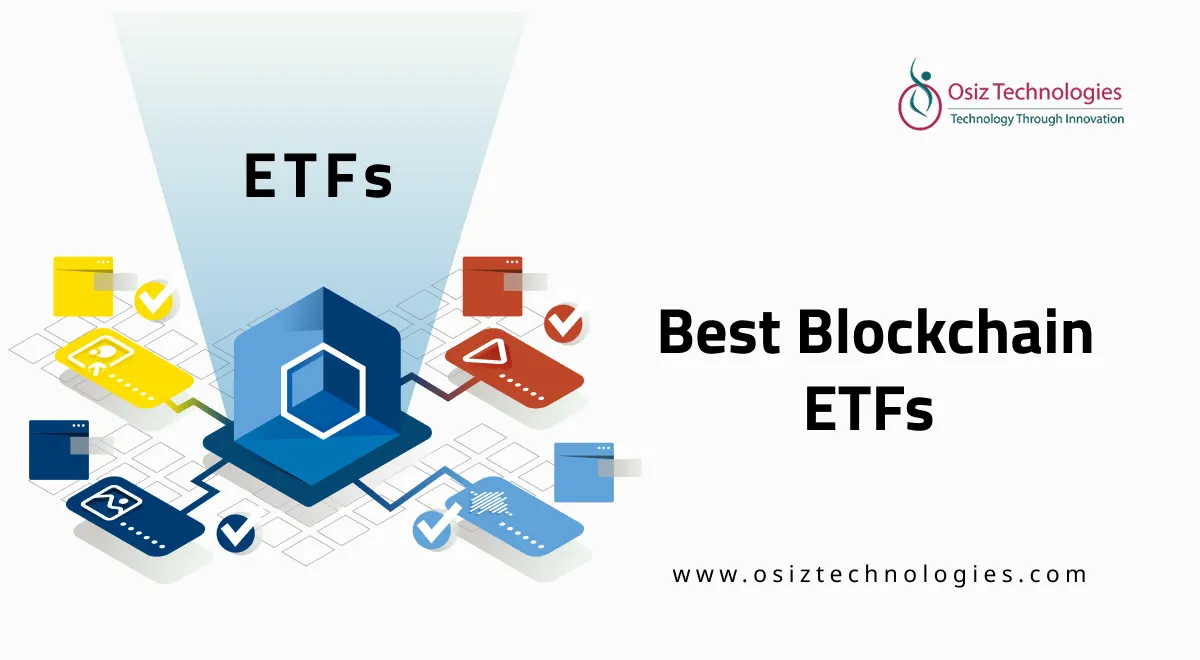
Blockchain is no longer just a term tied to cryptocurrencies; it has become a foundational technology reshaping finance, supply chains, data security, and digital ownership. As global industries adopt decentralized systems, investors are looking for practical ways to gain exposure without directly holding digital assets. This shift has brought blockchain exchange-traded funds (ETFs) into the spotlight, offering a controlled and varied entry point into the blockchain ecosystem. With creation accelerating and financial interest growing, 2025 is shaping up to be an important year for blockchain-focused investments.
Blockchain Simplified: The Technology Powering the Next Financial Era
Blockchain is a decentralized digital ledger that records transactions across multiple computers in a way that makes data open, secure, and nearly impossible to change. Instead of depending on a single authority, information is verified through a network, creating trust through technology rather than intermediaries. Each transaction is grouped into a “block” and linked to the previous one, creating a continuous and secure chain.
This structure reduces fraud, improves accuracy, and increases efficiency, key reasons why blockchain is being adopted beyond cryptocurrencies. From financial systems to global operations, blockchain is building the foundation for faster, more stable, and more open digital ecosystems.
What Are Blockchain ETFs? A Smarter Way to Invest in Web3
Blockchain ETFs offer a regulated and diversified way to gain access to blockchain innovation without directly holding digital assets.
A Regulated Gateway to Blockchain Creation
Unlike cryptocurrencies, blockchain investment ETFs focus on publicly listed companies that build, adopt, or support blockchain technology. This allows investors to participate in the growth of Web3 while staying within regular market frameworks.
Understanding the ETF Structure
To understand how blockchain ETFs work, it’s important to know that these funds track an index or group of blockchain-related stocks. Performance depends on the base companies rather than the price swings of individual tokens.
Why Investors Are Paying Attention in 2025
More companies are starting to use blockchain, and this is changing the market in 2025. Exchange-traded funds are becoming a popular way for investors to get into blockchain for the long haul because they offer a balance to investment.
Spotlight on Market-Leading Funds
In 2025, investors are paying more attention to the best blockchain ETFs. They're particularly interested in those that relate to infrastructure, finance, and practical blockchain uses, not just trading.
Top Blockchain ETFs to Watch in 2025
Investing in blockchain ETFs allows exposure to the growth of blockchain technology without directly holding cryptocurrencies. Here are some of the leading ETFs shaping the blockchain investment landscape in 2025:
Amplify Transformational Data Sharing ETF (BLOK)
BLOK is an actively managed ETF that invests in companies developing and using blockchain technologies across multiple industries.
Importance
With growing enterprise adoption of blockchain in finance, supply chain, and data security, BLOK provides investors direct access to companies advancing real-world blockchain creation.
Global X Blockchain ETF (BKCH)
BKCH focuses on companies that are going to benefit from the increased adoption and development of blockchain technology.
Importance
As blockchain expands beyond cryptocurrencies, BKCH captures growth in software, infrastructure, and business solutions globally, making it a key fund for broad blockchain reach.
Siren Nasdaq NexGen Economy ETF (BLCN)
BLCN tracks companies actively involved in the research, development, or utilization of blockchain technology across sectors.
Importance
It provides targeted access to next-generation digital economies, aligning with increasing corporate adoption and technological integration of blockchain systems.
First Trust Indxx Innovative Transaction & Process ETF (LEGR)
LEGR invests in companies applying blockchain solutions to transform transaction processing, logistics, and operational workflows.
Importance
With enterprises looking for effectiveness and openness in operations, LEGR benefits from blockchain implementations that improve real-world processes, offering long-term growth potential.
VanEck Digital Transformation ETF (DAPP)
DAPP targets companies contributing to or benefiting from digital transformation powered by blockchain technology.
Importance
As blockchain becomes central to digital finance, identity management, and secure data systems, DAPP allows investors to participate in the broader digital transformation trend.
Inside Blockchain ETFs: How These Funds Actually Work
Blockchain ETFs operate by linking blockchain creation with traditional financial markets through a structured and approved investment model.
Index-Based Fund Design
Blockchain ETFs are built for a defined index that represents companies actively involved in blockchain development or adoption. This index determines asset selection and weighting.
Company-Focused Exposure
Instead of holding digital currencies, these funds invest in publicly listed companies that generate revenue from blockchain-related products or services. This keeps exposure aligned with real business performance.
Diversification Strategy
Blockchain ETFs spread investments across multiple sectors such as finance, technology, and construction. This reduces dependence on any single company or market sector.
Market Trading Mechanism
ETF shares are traded on stock exchanges throughout the day at market prices. Investors can enter or exit positions with ease, similar to traditional equity ETFs.
Regulatory and Compliance Framework
Blockchain ETFs operate under existing financial regulations, offering openness and investor protection. This structure appeals to institutions and risk-conscious investors.
Performance and Cost Factors
Returns depend on the performance of base companies, while expense ratios affect overall gains. Long-term value is generated by adoption trends rather than short-term investment.
Understanding the Various Blockchain ETF Options in 2025
Investor interest in blockchain-focused ETFs is rising as markets favor regulated exposure to long-term technological creation.
Infrastructure-Focused ETFs
These funds focus on companies building blockchain networks, cloud infrastructure, and security layers. Their growth is dependent on enterprise adoption rather than crypto price movements.
Financial Services–Based ETFs
Some blockchain ETFs highlight companies integrating blockchain into payments, settlements, and digital finance systems. This category benefits from increasing institutional participation.
Technology Innovator ETFs
These ETFs invest in companies developing software, semiconductors, and platforms that support blockchain flexibility. Performance often matches general tech-sector growth.
Global Exposure ETFs
Certain funds offer international growth by including blockchain companies across multiple regions. This reduces dependence on a single market or regulatory environment.
Enterprise Adoption–Centered ETFs
These ETFs track organizations applying blockchain to real-world use cases like identity management and data security. Their value grows as blockchain moves deeper into business operations.
Balanced Growth ETFs
A mix of mature companies and emerging creators creates a balance between stability and growth. These ETFs are often favored for long-term portfolio allocation.
Market Outlook 2025: Are Blockchain ETFs Positioned for Long-Term Growth?
Businesses are increasingly using blockchain for efficiency, security, and transparency, inspired largely by the creation of every major blockchain development company building scalable, large-scale solutions.
New rules in base markets are helping investors feel safer, so they're more willing to put money into blockchain stocks. This switch is helping to make growth more stable than before, when it was mostly based on excitement.
The long-term success depends on how well blockchain becomes part of major industries like finance, supply chains, and digital systems. If more people start using blockchain, ETFs that focus on real-world uses could see a lot of interest.
Overall, blockchain ETFs appear well-positioned for investors looking for technology-based growth with a structured and regulated investment approach.
Conclusion
Blockchain is steadily moving from creation to infrastructure, building how modern financial systems operate. As adoption grows across enterprises and global markets, blockchain in ETFs offers investors a balanced way to participate in this change without direct involvement in digital assets. These funds combine regulatory clarity with long-term technology-based growth potential. For businesses and investors navigating this evolving market, strategic data and implementation support from Osiz can help align blockchain opportunities with profitable investment and enterprise goals.
Listen To The Article

Founder & CEO Osiz Technologies
Mr.Thangapandi, the founder and CEO of Osiz, is a pioneering figure in the field of blockchain technology. His deep understanding of both blockchain technology and user experience has led to the creation of innovative and successful blockchain solutions for businesses and startups, solidifying Osiz's reputation as a reliable service provider in the industry. Because of his unwavering quest for innovation, Mr.Thanga Pandi is well-positioned to be a thought leader and early adopter in the rapidly changing blockchain space. He keeps Osiz at the forefront of this exciting industry with his forward-thinking approach.
Recent Blogs



No 22,Astalakshmi Nagar, Thanakankullam, (Opp Seetha lakshmi Mill gate Bus stop) Thirunagar, Madurai - 625 006.
(Corporate Office)


Canada Office address, 1150, Rue Patrick, Laval, Quebec - H7Y 2C4, Canada.
(Sales Office)



Explore
Our AI Portfolio

 Artificial Intelligence
- AI Development
- AI Predictive Analytics Services
- AI SaaS Development
- RAG Development
- AI Assistant Development
- ChatGPT Development
- Data Analytics Services
- AI Copilot Development
- Adaptive AI Development
- Machine Learning Development
- NLP
- AI Consulting Services
- AI Software Builder
- AI Token Development
- AI Integration Services
- Enterprise AI Solution
- AI As a Service
- AI Marketing Tools
- AI Video Generator
- Computer Vision Services
- Explore AI
- Dataset
- Machine Learning in Healthcare
- Machine Learning in Retail
- Hire AI Engineers
- Hire Prompt Engineers
- Hire ChatGPT Developers
- Hire Stable Diffusion Developers
- Hire Action Transformer Developers
- Blockchain
- Blockchain Development
- Private Blockchain Development
- Smart Contract Development
- Custom Blockchain Development
- Solana Blockchain Development
- Polygon Blockchain Development
- Public Blockchain Development
- DAO Blockchain Development
- Binance Smart Chain (BSC) Blockchain Development
- DApp Development
- Solana DApp Development
- White Label Blockchain Solutions
- Custom Blockchain On Avalanche
- Custom Blockchain On Polygon
- Blockchain Game Development
- Blockchain Consulting Services
- Blockchain Explorer Development
- Ethereum Blockchain Development
- TRON Blockchain Development
- Prediction Market Platform Development Company
Layer 1 & 2 Solutions- Layer-1 Blockchain Development
- Cross Chain Bridge Development
- Data Availability Layer Development
- Ethereum Layer 2 Scaling Solutions
- Cross-L2 DEX Solution
- Layer 2 Token Development
- Layer 2 Token Marketing
- Layer 2 Cryptocurrency Development
- Layer 2 Solutions For Blockchain Games
- Layer 2 Solutions For Web3 Gaming
- Layer 2 Blockchain Solutions
- Rollups As A Service
- Optimistic Rollups Development
- ZK Tech Development
- Bitcoin Layer 2 Solutions
Crypto Exchange- Cryptocurrency Exchange Development
- White Label Crypto Exchange
- Decentralized Exchange Development
- P2P Exchange Development
- Crypto Derivatives Exchange Development
- Centralized Exchange Development
- Crypto Exchange Clone Script
- Cryptocurrency Exchange App Development
- OTC Exchange Development
- Exchange Listing Services
- Binance Like Exchange Development
- Bitstamp Like Exchange Development
- Crypto Exchange Script
CryptoCrypto WalletToken Standards- Token Development
- AI Token Development
- RWA Tokenization Development
- Coinremitter Clone Script
- Asset Tokenization
- Real Estate Tokenization
- Tokenization Platform Development
- Crypto ETF Development
- Solona Token Development
- Semi-Fungible Token Development
- BEP20 Token Development
- Ethereum Token Development
- ERC1400 Token Development
- ERC998 Token Development
- ERC 721 Token Development
- ERC20 Token Development
- Defi Token Development
- ERC1155 Token Development
- BEP721 Token Development
- Utility Token Development
- ERC 777 Token Development
- ERC 827 Token Development
- Social Token Development
- Metaverse Token Development
- Tron Token Development
- ERC404 Token Development
- Governance Token
- Shibarium Token
- polygon Token
- BRC-20
- TRC20 Token Development
- TRC10 Token Development
- Soulbound Token Development
- NFT Token Development
Trading BotsClone- Crypto Exchange Clone Script
- Binance Clone Script
- Metamask Clone Script
- Coinbase Clone Script
- Kucoin Clone Script
- Paxful Clone Script
- Remitano Clone Script
- Wazirx Clone Script
- ByBit Clone Script
- Bitfinex Clone Script
- MEXC Clone Script
- Bitget Clone Script
- Cointool App Clone Script
- Trust Wallet Clone App
- Coinmarketcap Clone Script
- Changelly Clone Script
- BingX Clone Script
CybersecurityApp SecurityDigital Forensics & Incident ResponseAudit & ConsultingEducation & TrainingSolutionsWeb 3DeFi- Decentralized Finance (DeFi) Development
- DeFi Lending/ Borrowing Platform Development
- DeFi Staking Platform Development
- DeFi Token Development
- DeFi Wallet Development
- DeFi Smart Contract Development
- DeFi DApp Development
- Decentralized Exchange Development
- DeFi Insurance Development
- DeFi Crypto Synthetic Assets Development
Game Development- Game Development
- Android Game Development
- IOS Game Development
- Metaverse Game Development
- VR Game Development
- AI Game Development
- Unity 3D Game Development
- Unreal Engine Game Development
- Mobile Game Development
- Blockchain Game Development
- NFT Game Development
- Play to Earn Game Development
- Move to Earn Game Development
- Casino Game Development
- Slot Game Development
- Poker Game Development
- AAA Game Development
- AR Game Development
- Social Network Game Development
- Gamification Services
- Decentralized Sports Betting Platform
- Sports Betting Dapp Development
- Blockchain Casino Game Development
- Game Asset Creation
- Baccarat Game Development
- Rollbit Clone Script
- Fortnite Clone Script
- Slot Game Development
- Tap to Earn Game Development
- Slot Game Development
Metaverse Platforms- Metaverse Game Development
- Metaverse Event Platform Development
- Metaverse Virtual Mall Development
- Metaverse NFT Marketplace Development
- Metaverse Token Development
- Metaverse Virtual Land Development
- Metaverse Avatar Development
- Metaverse 3d Space Development
- Metaverse Real Estate Development
- Metaverse Social Media Platform Development
- Top 10 Metaverse Development Company
- Metaverse Business Ideas
- Metaverse Launchpad Development
- Metaverse App Development
- Metaverse Casino Game Development
NFT SolutionsNFT Platforms- NFT Minting Development
- NFT Token Development
- NFT Exchange Platform Development
- NFT Launchpad Development
- NFT Fashion Marketplace Development
- NFT Art Marketplace Development
- NFT Music Marketplace Development
- Carbon Credits NFT Marketplace Development
- Binance NFT Marketplace Development
- Polygon NFT Marketplace Development
- Solana NFT Marketplace Development
- Influencers NFT Marketplace Development
- NFT Ticketing Marketplace Development
- DeFi NFT Marketplace Development
- NFT Fantasy Sports Platform Development
- NFT Storage Development
- NFT Lending Platform Development
- Top10 NFT Business Ideas
NFT Game ClonesSustainabilityServiceNow - Blog
- Contact Us
- Works