
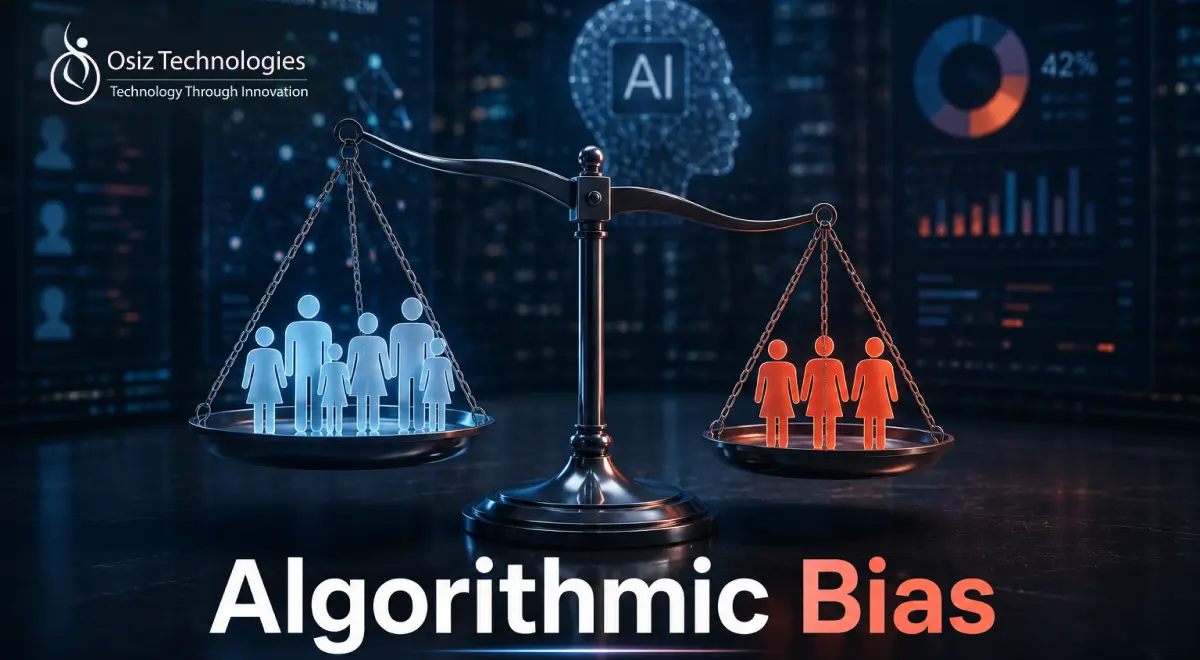
Algorithmic bias occurs when systematic errors in machine learning algorithms produce unfair or discriminatory outcomes. It often reflects or reinforces existing socioeconomic, racial, and gender biases. Artificial intelligence systems can inadvertently perpetuate these biases through various means such as flawed data that lacks diversity or representation, programming errors that favor certain attributes over others, or the use of biased proxies for protected characteristics like race or gender.
Flawed data is characterized by non-representative information, gaps in available data, historical biases, or other "bad" data. This leads to algorithms that produce unfair outcomes. Additionally, biases can be introduced during algorithm design through programming errors such as an AI designer unfairly weighting factors in decision-making processes. Moreover, proxies used for sensitive attributes like race or gender can themselves be biased if they are not representative of the population.
Biases in evaluation add another layer to this issue. When results are interpreted based on preconceptions rather than objective findings, it further amplifies any inherent biases within the algorithmic systems. Understanding and mitigating these sources of bias is crucial for building trust in AI technologies and ensuring responsible AI Development across industries.
What causes algorithmic bias?
Algorithmic bias is not caused by the algorithm itself, but by how the data science team collects and codes the training data. Specific causes include biases in data, where flawed or non-representative information can lead to unfair outcomes, particularly in NLP (Natural Language Processing) models that rely on large-scale language datasets. Biases in algorithmic design also contribute; programming errors, such as an AI designer unfairly weighting factors in decision-making, can introduce bias unknowingly. Additionally, biases arise from proxy data used by AI systems, which might be unintentionally biased if they are poor stand-ins for protected attributes like race or gender. Lastly, biases in evaluation occur when results are interpreted based on preconceptions rather than objective findings, leading to unfair outcomes. Understanding these causes is crucial for mitigating algorithmic bias and ensuring fairer machine learning algorithms.
The Risks of Algorithmic Bias
When algorithmic bias goes unaddressed, it can perpetuate discrimination and inequality, creating not just technical issues but also significant legal and reputational damage. Trust in AI systems is eroded when people see unfair outcomes, leading to a loss of confidence that undermines the very purpose of using these technologies.
Biases in data are one of the primary sources of algorithmic bias. Flawed or non-representative training data can lead to algorithms producing unfair results. For instance, if an AI system is trained on datasets with skewed demographics, it might inadvertently learn and propagate biases present in those initial conditions.
Algorithms themselves do not inherently discriminate; rather, they reflect the decisions made by their creators and users. Biases in algorithmic design also contribute to this issue. Programming errors or unfair weighting of factors during the decision-making process can introduce bias without intentional malice. For example, if an AI system is designed to prioritize certain attributes over others based on historical data that itself contains biases, it will perpetuate those biases.
Proxy data exacerbates these issues by introducing additional layers of potential bias. When AI systems use proxies as stand-ins for protected attributes like race or gender, they can inadvertently introduce new forms of discrimination if the proxies themselves are biased. This is particularly concerning in contexts where fairness and transparency are paramount, such as hiring processes or legal decisions.
Finally, biases in evaluation further compound these problems. If algorithm results are interpreted based on preconceptions rather than objective findings, it can lead to misinterpretation and exacerbate existing biases. For instance, if a decision-maker assumes certain outcomes due to their own prejudices, they might not recognize the true nature of an AI's output.
Addressing these issues requires a multi-faceted approach, including rigorous data quality control, transparent algorithm design, careful selection of proxy variables, and robust evaluation methodologies that prioritize objectivity.
Real-world Examples of Algorithmic Bias
Algorithmic bias can manifest in various sectors and scenarios where AI systems make decisions. Here are some real-world examples illustrating how these biases might occur:
In hiring processes, for instance, an AI system could be trained on historical data that reflects past discrimination against certain groups. If the training data predominantly includes biased information about race or gender, the algorithm may inadvertently favor candidates from those demographics over others.
Another example is in credit scoring models where algorithms might unfairly penalize individuals based on their socioeconomic background rather than repayment history. This can lead to a cycle of disadvantage for borrowers who are already marginalized due to systemic issues like redlining and historical lending practices.
In healthcare, AI systems used for disease prediction or treatment recommendations could be biased if they rely heavily on data from affluent areas where certain diseases may not affect as many people. This disparity in data representation can result in less accurate predictions and potentially harmful decisions being made for underserved communities.
Lastly, when it comes to criminal justice applications like predictive policing, AI algorithms might unfairly target minority neighborhoods or groups based on historical crime statistics that reflect biases rather than current realities. Such practices not only perpetuate existing social inequalities but also risk leading to wrongful convictions or unjustified arrests.
These examples highlight how algorithmic bias can have far-reaching consequences and underscore the importance of rigorous data validation and transparency in AI development processes.
How to avoid algorithmic bias
Mitigating bias from AI systems starts with AI governance, which refers to the guardrails that make sure AI tools and systems are and remain safe and ethical. It establishes the frameworks, rules, and standards that define how data is collected, processed, and used in algorithms, ensuring reliable AI Integration Services across enterprise environments.
To avoid algorithmic bias, it's crucial to use unbiased data. This means ensuring that the data being used for training does not contain inherent biases or discriminatory elements. By collecting diverse and representative datasets, organizations can reduce the likelihood of biased outcomes. Furthermore, using people with diverse backgrounds and perspectives during the data collection process can help identify potential biases early on.
In terms of algorithm design, it's essential to be mindful of how factors are weighted in decision-making processes. This involves conducting thorough reviews and audits to ensure that no single factor is disproportionately influencing results. Additionally, incorporating multiple checks and balances into algorithms such as cross-validation or sensitivity analysis can help catch biases before they propagate through the system.
Finally, it's important to evaluate algorithmic outcomes with a critical eye, free from preconceptions. This means interpreting data objectively rather than allowing personal beliefs or expectations to color interpretations of results. By fostering an environment where all evaluations are conducted transparently and without bias, organizations can minimize the risk of algorithmic errors and maintain trust in their AI systems.
Algorithmic Bias Regulation
Governments and policymakers are creating AI frameworks and regulations to help guide and in some cases, enforce the safe and responsible use of AI. One critical area of focus is algorithmic bias regulation, which aims to mitigate the unfair or discriminatory outcomes that can arise from biased algorithms.
Algorithmic bias occurs when systematic errors in machine learning algorithms produce unfair or discriminatory outcomes. These biases often reflect or reinforce existing social inequalities. To address this issue, it's essential to understand and regulate different sources of algorithmic bias.
Biases in data are a primary source of algorithmic bias. Flawed data can be non-representative, lacking crucial information, historically biased, or otherwise “bad” data. This leads to algorithms that produce unfair outcomes. For instance, if training data includes historical discrimination against certain groups, the algorithm might perpetuate similar biases in its predictions.
Biases in algorithmic design also contribute to algorithmic bias. Programming errors can introduce bias by unfairly weighting factors in decision-making processes. Developers may inadvertently include subjective criteria or ignore important variables, leading to biased results. For example, if an AI system is trained on data that heavily emphasizes certain features over others, it might favor those features in its decisions.
Finally, biases in proxy data are another significant source of algorithmic bias. AI systems sometimes use proxies as a stand-in for protected attributes like race or gender. However, these proxies can be unintentionally biased if they themselves carry preconceived notions or reflect historical discrimination. For instance, using zip codes to infer socioeconomic status might inadvertently perpetuate biases based on geographic segregation.
Addressing algorithmic bias requires comprehensive strategies that include rigorous data quality control, transparent and fair algorithm design practices, and thorough evaluation processes. By regulating these areas, policymakers can help ensure AI systems operate fairly and responsibly, thereby minimizing reputational damage and the negative impacts of predictive policing or other biased applications.
Listen To The Article

Founder & CEO Osiz Technologies
Mr. Thangapandi, the CEO of Osiz, has a proven track record of conceptualizing and architecting 100+ user-centric and scalable solutions for startups and enterprises. He brings a deep understanding of both technical and user experience aspects. The CEO, being an early adopter of new technology, said, "I believe in the transformative power of AI to revolutionize industries and improve lives. My goal is to integrate AI in ways that not only enhance operational efficiency but also drive sustainable development and innovation." Proving his commitment, Mr. Thangapandi has built a dedicated team of AI experts proficient in coming up with innovative AI solutions and have successfully completed several AI projects across diverse sectors.
Recent Blogs




No 22,Astalakshmi Nagar, Thanakankullam, (Opp Seetha lakshmi Mill gate Bus stop) Thirunagar, Madurai - 625 006.
(Corporate Office)


Canada Office address, 1150, Rue Patrick, Laval, Quebec - H7Y 2C4, Canada.
(Sales Office)


Explore Our
AI Portfolio

 Artificial Intelligence
- AI Development
- AI Predictive Analytics Services
- AI SaaS Development
- RAG Development
- AI Assistant Development
- ChatGPT Development
- Data Analytics Services
- AI Copilot Development
- Adaptive AI Development
- Machine Learning Development
- NLP
- AI Consulting Services
- AI Software Builder
- AI Token Development
- AI Integration Services
- Enterprise AI Solution
- AI As a Service
- AI Marketing Tools
- AI Video Generator
- Computer Vision Services
- Explore AI
- Dataset
- Machine Learning in Healthcare
- Machine Learning in Retail
- Hire AI Engineers
- Hire Prompt Engineers
- Hire ChatGPT Developers
- Hire Stable Diffusion Developers
- Hire Action Transformer Developers
- Blockchain
- Blockchain Development
- Private Blockchain Development
- Smart Contract Development
- Custom Blockchain Development
- Solana Blockchain Development
- Polygon Blockchain Development
- Public Blockchain Development
- DAO Blockchain Development
- Binance Smart Chain (BSC) Blockchain Development
- DApp Development
- Solana DApp Development
- White Label Blockchain Solutions
- Custom Blockchain On Avalanche
- Custom Blockchain On Polygon
- Blockchain Game Development
- Blockchain Consulting Services
- Blockchain Explorer Development
- Ethereum Blockchain Development
- TRON Blockchain Development
- Prediction Market Platform Development Company
Layer 1 & 2 Solutions- Layer-1 Blockchain Development
- Cross Chain Bridge Development
- Data Availability Layer Development
- Ethereum Layer 2 Scaling Solutions
- Cross-L2 DEX Solution
- Layer 2 Token Development
- Layer 2 Token Marketing
- Layer 2 Cryptocurrency Development
- Layer 2 Solutions For Blockchain Games
- Layer 2 Solutions For Web3 Gaming
- Layer 2 Blockchain Solutions
- Rollups As A Service
- Optimistic Rollups Development
- ZK Tech Development
- Bitcoin Layer 2 Solutions
Crypto Exchange- Cryptocurrency Exchange Development
- White Label Crypto Exchange
- Decentralized Exchange Development
- P2P Exchange Development
- Crypto Derivatives Exchange Development
- Centralized Exchange Development
- Crypto Exchange Clone Script
- Cryptocurrency Exchange App Development
- OTC Exchange Development
- Exchange Listing Services
- Binance Like Exchange Development
- Bitstamp Like Exchange Development
- Crypto Exchange Script
CryptoCrypto WalletToken Standards- Token Development
- AI Token Development
- RWA Tokenization Development
- Coinremitter Clone Script
- Asset Tokenization
- Real Estate Tokenization
- Tokenization Platform Development
- Crypto ETF Development
- Solona Token Development
- Semi-Fungible Token Development
- BEP20 Token Development
- Ethereum Token Development
- ERC1400 Token Development
- ERC998 Token Development
- ERC 721 Token Development
- ERC20 Token Development
- Defi Token Development
- ERC1155 Token Development
- BEP721 Token Development
- Utility Token Development
- ERC 777 Token Development
- ERC 827 Token Development
- Social Token Development
- Metaverse Token Development
- Tron Token Development
- ERC404 Token Development
- Governance Token
- Shibarium Token
- polygon Token
- BRC-20
- TRC20 Token Development
- TRC10 Token Development
- Soulbound Token Development
- NFT Token Development
Trading BotsClone- Crypto Exchange Clone Script
- Binance Clone Script
- Metamask Clone Script
- Coinbase Clone Script
- Kucoin Clone Script
- Paxful Clone Script
- Remitano Clone Script
- Wazirx Clone Script
- ByBit Clone Script
- Bitfinex Clone Script
- MEXC Clone Script
- Bitget Clone Script
- Cointool App Clone Script
- Trust Wallet Clone App
- Coinmarketcap Clone Script
- Changelly Clone Script
- BingX Clone Script
CybersecurityApp SecurityDigital Forensics & Incident ResponseAudit & ConsultingEducation & TrainingSolutionsWeb 3DeFi- Decentralized Finance (DeFi) Development
- DeFi Lending/ Borrowing Platform Development
- DeFi Staking Platform Development
- DeFi Token Development
- DeFi Wallet Development
- DeFi Smart Contract Development
- DeFi DApp Development
- Decentralized Exchange Development
- DeFi Insurance Development
- DeFi Crypto Synthetic Assets Development
Game Development- Game Development
- Android Game Development
- IOS Game Development
- Metaverse Game Development
- VR Game Development
- AI Game Development
- Unity 3D Game Development
- Unreal Engine Game Development
- Mobile Game Development
- Blockchain Game Development
- NFT Game Development
- Play to Earn Game Development
- Move to Earn Game Development
- Casino Game Development
- Slot Game Development
- Poker Game Development
- AAA Game Development
- AR Game Development
- Social Network Game Development
- Gamification Services
- Decentralized Sports Betting Platform
- Sports Betting Dapp Development
- Blockchain Casino Game Development
- Game Asset Creation
- Baccarat Game Development
- Rollbit Clone Script
- Fortnite Clone Script
- Slot Game Development
- Tap to Earn Game Development
- Slot Game Development
Metaverse Platforms- Metaverse Game Development
- Metaverse Event Platform Development
- Metaverse Virtual Mall Development
- Metaverse NFT Marketplace Development
- Metaverse Token Development
- Metaverse Virtual Land Development
- Metaverse Avatar Development
- Metaverse 3d Space Development
- Metaverse Real Estate Development
- Metaverse Social Media Platform Development
- Top 10 Metaverse Development Company
- Metaverse Business Ideas
- Metaverse Launchpad Development
- Metaverse App Development
- Metaverse Casino Game Development
NFT SolutionsNFT Platforms- NFT Minting Development
- NFT Token Development
- NFT Exchange Platform Development
- NFT Launchpad Development
- NFT Fashion Marketplace Development
- NFT Art Marketplace Development
- NFT Music Marketplace Development
- Carbon Credits NFT Marketplace Development
- Binance NFT Marketplace Development
- Polygon NFT Marketplace Development
- Solana NFT Marketplace Development
- Influencers NFT Marketplace Development
- NFT Ticketing Marketplace Development
- DeFi NFT Marketplace Development
- NFT Fantasy Sports Platform Development
- NFT Storage Development
- NFT Lending Platform Development
- Top10 NFT Business Ideas
NFT Game ClonesSustainabilityServiceNow - Blog
- Contact Us
- Works