
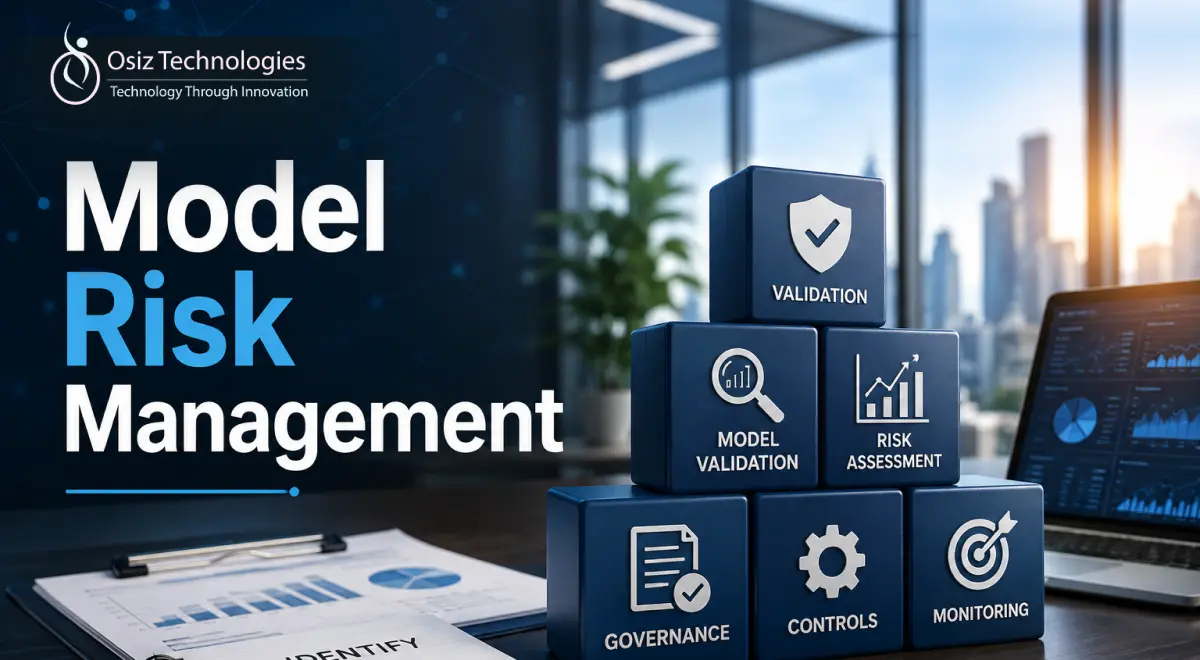
Model risk management is the systematic approach to identifying, assessing, and mitigating potential risks associated with models used in various domains, including finance, technology, and business. Models are often employed to predict outcomes based on data inputs but can sometimes fail due to inaccuracies or biases within their assumptions. This article delves into understanding what model risk management entails, its sources, how it is managed, the role of artificial intelligence (AI) in enhancing this process, and the use of specialized software for effective model risk management.
What is model risk management?
Model risk management is the process of identifying, gauging, and controlling model risk. Model risk emerges when a model is used to measure and predict quantitative information but performs inadequately due to various reasons such as erroneous input data, incomplete or outdated data, or biased assumptions. Poorly performing models can lead to significant financial losses, operational disruptions, and damage to an organization’s reputation.
The sources of model risk are manifold. For instance, if a market model relies on historical data that is not representative of current conditions, the predictions derived from such a model may be unreliable. Additionally, if input data contains errors or biases, it can skew results in unpredictable ways. Inaccurate or incomplete information used by models can result in flawed decision-making and erroneous outcomes.
Effective model risk management requires establishing a comprehensive framework that includes identifying risks, assessing their impact, implementing mitigation strategies, and maintaining strong Cloud Security controls for cloud-based models and data. By understanding the potential vulnerabilities within models, organizations can take proactive steps to safeguard against adverse consequences of poor model performance. This holistic approach ensures that financial and operational stability are maintained despite the inherent uncertainties associated with quantitative modeling.
Sources of Model Risk
Model risk can stem from various causes: A model’s input data might be erroneous, incomplete, outdated or biased. For instance, if outdated data is used for a market model, it could project skewed trends regarding current market conditions, leading to inaccurate predictions and poor decision-making. Additionally, biased data can introduce systematic errors that propagate throughout the model's output, potentially resulting in flawed conclusions.
Another significant source of model risk comes from the quality and reliability of the underlying data. If the input data is unreliable or contains inaccuracies, it can lead to erroneous results even if the model itself is well-designed and validated. This issue underscores the importance of robust data management practices, including regular updates and thorough validation processes to ensure that models are based on up-to-date and accurate information.
Lastly, the complexity and sophistication of modern models also introduce new sources of risk. As models become more intricate, they may incorporate multiple layers of assumptions and variables, each with its own potential for error or bias. Ensuring that these components are correctly implemented and validated is crucial to maintaining model integrity and reducing overall risk exposure.
Managing Model Risk
If left unmanaged, model risk can wreak havoc on an organization’s finances, operations, and reputation. Effective model risk management requires a framework that considers risk at every stage of a model's lifecycle.
Effective model risk management starts with identifying risks this involves conducting a thorough model inventory to define the specific risks associated with each model. Once identified, the next step is to assess these risks quantitatively. Enterprises can develop a rating system that ranks model risks according to their priority and likelihood of occurrence. This assessment helps prioritize which models need immediate attention.
Mitigating risk requires addressing its sources and causes. Strategies such as updating outdated data, ensuring input data quality, and implementing robust validation processes are key components in mitigating model risk. Additionally, regular stress testing can help uncover vulnerabilities that might not be apparent under normal operating conditions. By integrating these strategies into a comprehensive model risk management framework, organizations can better protect themselves against the adverse effects of model errors or biases.
AI for Model Risk Management
Many of today’s models employ AI and machine learning in some form, particularly when generating and testing models. For instance, AI is commonly applied in the financial industry to model credit risk, market risk and other critical areas. As such, integrating AI into model risk management (MRM) has become increasingly important, particularly as organizations expand their AI Development initiatives across critical business functions.
AI can enhance MRM by automating certain processes, improving accuracy through sophisticated algorithms, and enabling real-time monitoring of models. However, this integration also introduces new challenges. For example, AI-generated models might suffer from data bias if the underlying datasets are biased or incomplete. Additionally, the complex nature of AI models makes it harder to identify and correct errors within them.
In financial institutions, where AI is extensively used for predictive modeling, model validation becomes even more critical. This involves rigorous stress testing under various scenarios to ensure that models remain robust and reliable. Model monitoring also plays a crucial role in real-time detection of anomalies or changes in data patterns that could indicate potential issues with the model’s performance.
Effective MRM frameworks should incorporate AI capabilities while maintaining stringent controls over input data, algorithmic biases, and output accuracy. By leveraging these tools, organizations can better manage model risks associated with AI-driven models, thereby safeguarding their financial stability and reputation.
Model Risk Management Software
Model risk management software plays a crucial role in helping organizations effectively manage model risk. These tools offer advanced features such as model inventory and tracking, which allow for the systematic identification of all models used within an organization. This comprehensive approach ensures no model is overlooked, facilitating more accurate assessments.
Moreover, these software solutions provide functionalities like mapping metrics, models, and policies to regulatory requirements, while integrating advanced Cybersecurity Software capabilities to protect sensitive model data and workflows. By aligning internal practices with external standards, organizations can ensure compliance while maintaining flexibility in their risk management strategies. Additionally, they offer robust model monitoring capabilities, including stress testing and continuous evaluation of model outputs over time. This ensures that models remain relevant and accurate as market conditions evolve.
Effective use of model risk management software not only enhances accuracy but also reduces the likelihood of missteps or errors that could lead to significant financial losses, operational disruptions, or reputational damage. By integrating these tools into their risk management frameworks, organizations can better protect themselves against potential risks associated with flawed models.
Listen To The Article

Founder & CEO Osiz Technologies
Mr. Thangapandi, the CEO of Osiz, has a proven track record of conceptualizing and architecting 100+ user-centric and scalable solutions for startups and enterprises. He brings a deep understanding of both technical and user experience aspects. The CEO, being an early adopter of new technology, said, \"I believe in the transformative power of AI to revolutionize industries and improve lives. My goal is to integrate AI in ways that not only enhance operational efficiency but also drive sustainable development and innovation.\" Proving his commitment, Mr. Thangapandi has built a dedicated team of AI experts proficient in coming up with innovative AI solutions and have successfully completed several AI projects across diverse sectors.
Recent Blogs



No 22,Astalakshmi Nagar, Thanakankullam, (Opp Seetha lakshmi Mill gate Bus stop) Thirunagar, Madurai - 625 006.
(Corporate Office)


Canada Office address, 1150, Rue Patrick, Laval, Quebec - H7Y 2C4, Canada.
(Sales Office)


Explore Our
AI Portfolio

 Artificial Intelligence
- AI Development
- AI Predictive Analytics Services
- AI SaaS Development
- RAG Development
- AI Assistant Development
- ChatGPT Development
- Data Analytics Services
- AI Copilot Development
- Adaptive AI Development
- Machine Learning Development
- NLP
- AI Consulting Services
- AI Software Builder
- AI Token Development
- AI Integration Services
- Enterprise AI Solution
- AI As a Service
- AI Marketing Tools
- AI Video Generator
- Computer Vision Services
- Explore AI
- Dataset
- Machine Learning in Healthcare
- Machine Learning in Retail
- Hire AI Engineers
- Hire Prompt Engineers
- Hire ChatGPT Developers
- Hire Stable Diffusion Developers
- Hire Action Transformer Developers
- Blockchain
- Blockchain Development
- Private Blockchain Development
- Smart Contract Development
- Custom Blockchain Development
- Solana Blockchain Development
- Polygon Blockchain Development
- Public Blockchain Development
- DAO Blockchain Development
- Binance Smart Chain (BSC) Blockchain Development
- DApp Development
- Solana DApp Development
- White Label Blockchain Solutions
- Custom Blockchain On Avalanche
- Custom Blockchain On Polygon
- Blockchain Game Development
- Blockchain Consulting Services
- Blockchain Explorer Development
- Ethereum Blockchain Development
- TRON Blockchain Development
- Prediction Market Platform Development Company
Layer 1 & 2 Solutions- Layer-1 Blockchain Development
- Cross Chain Bridge Development
- Data Availability Layer Development
- Ethereum Layer 2 Scaling Solutions
- Cross-L2 DEX Solution
- Layer 2 Token Development
- Layer 2 Token Marketing
- Layer 2 Cryptocurrency Development
- Layer 2 Solutions For Blockchain Games
- Layer 2 Solutions For Web3 Gaming
- Layer 2 Blockchain Solutions
- Rollups As A Service
- Optimistic Rollups Development
- ZK Tech Development
- Bitcoin Layer 2 Solutions
Crypto Exchange- Cryptocurrency Exchange Development
- White Label Crypto Exchange
- Decentralized Exchange Development
- P2P Exchange Development
- Crypto Derivatives Exchange Development
- Centralized Exchange Development
- Crypto Exchange Clone Script
- Cryptocurrency Exchange App Development
- OTC Exchange Development
- Exchange Listing Services
- Binance Like Exchange Development
- Bitstamp Like Exchange Development
- Crypto Exchange Script
CryptoCrypto WalletToken Standards- Token Development
- AI Token Development
- RWA Tokenization Development
- Coinremitter Clone Script
- Asset Tokenization
- Real Estate Tokenization
- Tokenization Platform Development
- Crypto ETF Development
- Solona Token Development
- Semi-Fungible Token Development
- BEP20 Token Development
- Ethereum Token Development
- ERC1400 Token Development
- ERC998 Token Development
- ERC 721 Token Development
- ERC20 Token Development
- Defi Token Development
- ERC1155 Token Development
- BEP721 Token Development
- Utility Token Development
- ERC 777 Token Development
- ERC 827 Token Development
- Social Token Development
- Metaverse Token Development
- Tron Token Development
- ERC404 Token Development
- Governance Token
- Shibarium Token
- polygon Token
- BRC-20
- TRC20 Token Development
- TRC10 Token Development
- Soulbound Token Development
- NFT Token Development
Trading BotsClone- Crypto Exchange Clone Script
- Binance Clone Script
- Metamask Clone Script
- Coinbase Clone Script
- Kucoin Clone Script
- Paxful Clone Script
- Remitano Clone Script
- Wazirx Clone Script
- ByBit Clone Script
- Bitfinex Clone Script
- MEXC Clone Script
- Bitget Clone Script
- Cointool App Clone Script
- Trust Wallet Clone App
- Coinmarketcap Clone Script
- Changelly Clone Script
- BingX Clone Script
CybersecurityApp SecurityDigital Forensics & Incident ResponseAudit & ConsultingEducation & TrainingSolutionsWeb 3DeFi- Decentralized Finance (DeFi) Development
- DeFi Lending/ Borrowing Platform Development
- DeFi Staking Platform Development
- DeFi Token Development
- DeFi Wallet Development
- DeFi Smart Contract Development
- DeFi DApp Development
- Decentralized Exchange Development
- DeFi Insurance Development
- DeFi Crypto Synthetic Assets Development
Game Development- Game Development
- Android Game Development
- IOS Game Development
- Metaverse Game Development
- VR Game Development
- AI Game Development
- Unity 3D Game Development
- Unreal Engine Game Development
- Mobile Game Development
- Blockchain Game Development
- NFT Game Development
- Play to Earn Game Development
- Move to Earn Game Development
- Casino Game Development
- Slot Game Development
- Poker Game Development
- AAA Game Development
- AR Game Development
- Social Network Game Development
- Gamification Services
- Decentralized Sports Betting Platform
- Sports Betting Dapp Development
- Blockchain Casino Game Development
- Game Asset Creation
- Baccarat Game Development
- Rollbit Clone Script
- Fortnite Clone Script
- Slot Game Development
- Tap to Earn Game Development
- Slot Game Development
Metaverse Platforms- Metaverse Game Development
- Metaverse Event Platform Development
- Metaverse Virtual Mall Development
- Metaverse NFT Marketplace Development
- Metaverse Token Development
- Metaverse Virtual Land Development
- Metaverse Avatar Development
- Metaverse 3d Space Development
- Metaverse Real Estate Development
- Metaverse Social Media Platform Development
- Top 10 Metaverse Development Company
- Metaverse Business Ideas
- Metaverse Launchpad Development
- Metaverse App Development
- Metaverse Casino Game Development
NFT SolutionsNFT Platforms- NFT Minting Development
- NFT Token Development
- NFT Exchange Platform Development
- NFT Launchpad Development
- NFT Fashion Marketplace Development
- NFT Art Marketplace Development
- NFT Music Marketplace Development
- Carbon Credits NFT Marketplace Development
- Binance NFT Marketplace Development
- Polygon NFT Marketplace Development
- Solana NFT Marketplace Development
- Influencers NFT Marketplace Development
- NFT Ticketing Marketplace Development
- DeFi NFT Marketplace Development
- NFT Fantasy Sports Platform Development
- NFT Storage Development
- NFT Lending Platform Development
- Top10 NFT Business Ideas
NFT Game ClonesSustainabilityServiceNow - Blog
- Contact Us
- Works