
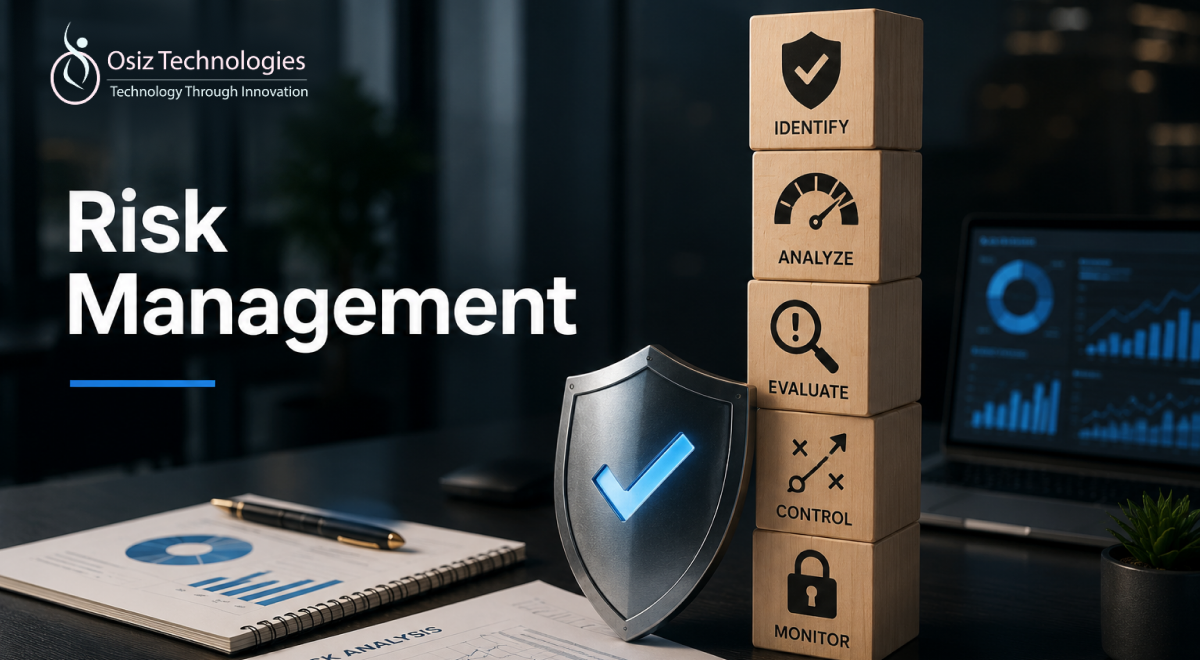
Risk management involves identifying, assessing, and prioritizing potential threats to an organization's objectives, whether they be financial, operational, strategic, or reputational. It encompasses a range of activities designed to anticipate risks, evaluate their likelihood and impact, and implement strategies to mitigate them.
Business risks stem from many sources, including financial uncertainty, legal liabilities, technology use, strategic management errors, accidents, and natural disasters such as floods, earthquakes, and pandemics. Risk management practices aim to anticipate these potential issues proactively. By understanding the types of risks they face, organizations can develop strategies to protect against them.
Effective risk management is crucial for maintaining operational stability and ensuring long-term success. It helps businesses and individuals protect against financial expenses, inefficiencies, reputational damage, legal liabilities, and other adverse outcomes that could disrupt their operations or negatively impact their reputation. Through a systematic approach to identifying, analyzing, and addressing risks, organizations can better position themselves to adapt to changing circumstances and capitalize on opportunities.
By integrating risk management into their core business processes, organizations can foster resilience and agility. This proactive stance enables them to make informed decisions that align with their strategic goals while minimizing potential disruptions caused by unforeseen events or challenges.
Why is risk management important?
Risk management is an integral component of any business strategy. It helps businesses and individuals protect against financial expenses, inefficiencies, reputational damage, and other potential losses. The root causes of risks can be multifaceted financial uncertainty, legal liabilities, technological use, strategic management errors, accidents, and natural disasters all contribute to the risk landscape.
Organizations often face significant challenges that could undermine their operations or cause irreparable harm if not managed effectively. By identifying these threats early on, businesses can take proactive measures to mitigate them. This proactive stance is crucial because it allows organizations to allocate resources more efficiently, avoid unnecessary expenses, and maintain a steady operational flow.
Moreover, risk management plays a pivotal role in avoiding reputational damage. In today's digital age, even minor issues such as product failures or data breaches can quickly spiral into major crises if not addressed promptly. By anticipating potential problems and addressing them swiftly, organizations can prevent these incidents from escalating into full-blown disasters that could harm their reputation.
In essence, risk management is a proactive approach to safeguarding an organization’s interests. It ensures that businesses are well-prepared for the unexpected, thereby fostering resilience and stability in the face of adversity.
Benefits of risk management
Risk management has several benefits, including:
Reduces financial losses: Identifying and managing risks can help organizations avoid financial losses from costly litigation or reputational damage. By mitigating risks, they can support their bottom line and ensure long-term sustainability.
Avoids reputational damage: By anticipating problems and addressing them quickly, organizations can avoid reputation-damaging incidents such as product failures or data breaches. Effective risk management strategies help maintain a positive public image and protect against the costly consequences of negative publicity.
Enhances operational efficiency: Risk management often involves identifying inefficiencies within an organization’s processes. By streamlining these areas, businesses can improve their overall performance and reduce waste.
Improves decision-making: A robust risk management framework provides clear insights into potential outcomes, enabling better-informed decisions that consider both short-term gains and long-term stability. This leads to more strategic and resilient business operations.
Types of Risk
Businesses face a myriad of potential threats that can impact their operations and profitability. These risks are categorized into several types, each requiring specific strategies for mitigation.
Financial risk is one of the most common types, encompassing everything from market fluctuations to changes in interest rates. Organizations must closely monitor financial markets and maintain robust liquidity management practices to protect against these uncertainties.
Cybersecurity risk has become a critical concern as businesses increasingly rely on digital infrastructure, making Cloud Security essential for protecting cloud-based applications and data. This type of risk includes threats such as data breaches, ransomware attacks, and unauthorized access. Investing in cybersecurity measures like encryption, multi-factor authentication, and regular security audits is essential for safeguarding sensitive information.
Artificial intelligence (AI) also introduces unique risks, particularly as organizations accelerate AI Development initiatives across their operations. Particularly concerning the misuse or mishandling of AI systems. These include issues related to bias, privacy violations, and potential job displacement due to automation. Organizations must ensure that their AI applications are transparent, fair, and aligned with ethical standards to mitigate these risks effectively.
Understanding and addressing these different types of risk is crucial for any organization aiming to thrive in today's complex business environment. By proactively managing these threats, businesses can enhance their resilience and maintain long-term stability.
Common responses to risk
Organizations often face a wide array of threats that could impact their operations, from cybersecurity risks to AI-related issues. To mitigate these risks effectively, they employ various strategies. One common approach is risk avoidance, where organizations simply avoid engaging in activities or industries with high-risk profiles. Another method involves risk transfer, which entails transferring the risk to another party through insurance or contracts.
For data-centric threats, such as breaches and unauthorized access, many companies opt for data protection measures like encryption, multi-factor authentication, regular security audits, and advanced Cybersecurity Software to strengthen their security posture. Compliance is also a critical aspect of risk management; organizations must ensure they are in line with all relevant regulations and standards to avoid penalties and maintain trust from stakeholders.
By adopting these strategies, businesses can better protect themselves against potential threats, ensuring smoother operations and stronger resilience in the face of adversity.
Steps of the risk management process
The risk management process is a structured approach to identifying, assessing, and managing risks within an organization. It involves several key steps that help ensure effective risk mitigation strategies are in place. The first step is to identify potential risks, which can come from various sources such as financial uncertainty, legal liabilities, technology use, strategic management errors, accidents, and natural disasters.
The second step is to assess the likelihood and impact of each identified risk. This involves evaluating how likely a risk is to occur and what its consequences might be if it does happen. By understanding these factors, organizations can prioritize their efforts in managing risks based on their potential impact rather than just their frequency.
Following this, the third step is to develop strategies for managing or reducing the identified risks. Strategies may include risk avoidance (eliminating a risk by not engaging with activities that could cause it), risk reduction (mitigating a risk through measures like insurance or process changes), and risk transfer (transferring some of the risk to another party, such as an insurer).
Finally, organizations need to implement their risk management strategies effectively. This involves setting up systems and processes to monitor risks continuously, ensuring that all identified risks are being managed appropriately, and regularly reviewing and updating risk assessments and mitigation plans.
By following these steps, organizations can better prepare themselves for potential threats and ensure they remain resilient in the face of unexpected challenges.
Listen To The Article

Founder & CEO Osiz Technologies
Mr. Thangapandi, the CEO of Osiz, has a proven track record of conceptualizing and architecting 100+ user-centric and scalable solutions for startups and enterprises. He brings a deep understanding of both technical and user experience aspects. The CEO, being an early adopter of new technology, said, \"I believe in the transformative power of AI to revolutionize industries and improve lives. My goal is to integrate AI in ways that not only enhance operational efficiency but also drive sustainable development and innovation.\" Proving his commitment, Mr. Thangapandi has built a dedicated team of AI experts proficient in coming up with innovative AI solutions and have successfully completed several AI projects across diverse sectors.
Recent Blogs



No 22,Astalakshmi Nagar, Thanakankullam, (Opp Seetha lakshmi Mill gate Bus stop) Thirunagar, Madurai - 625 006.
(Corporate Office)


Canada Office address, 1150, Rue Patrick, Laval, Quebec - H7Y 2C4, Canada.
(Sales Office)


Explore Our
AI Portfolio

 Artificial Intelligence
- AI Development
- AI Predictive Analytics Services
- AI SaaS Development
- RAG Development
- AI Assistant Development
- ChatGPT Development
- Data Analytics Services
- AI Copilot Development
- Adaptive AI Development
- Machine Learning Development
- NLP
- AI Consulting Services
- AI Software Builder
- AI Token Development
- AI Integration Services
- Enterprise AI Solution
- AI As a Service
- AI Marketing Tools
- AI Video Generator
- Computer Vision Services
- Explore AI
- Dataset
- Machine Learning in Healthcare
- Machine Learning in Retail
- Hire AI Engineers
- Hire Prompt Engineers
- Hire ChatGPT Developers
- Hire Stable Diffusion Developers
- Hire Action Transformer Developers
- Blockchain
- Blockchain Development
- Private Blockchain Development
- Smart Contract Development
- Custom Blockchain Development
- Solana Blockchain Development
- Polygon Blockchain Development
- Public Blockchain Development
- DAO Blockchain Development
- Binance Smart Chain (BSC) Blockchain Development
- DApp Development
- Solana DApp Development
- White Label Blockchain Solutions
- Custom Blockchain On Avalanche
- Custom Blockchain On Polygon
- Blockchain Game Development
- Blockchain Consulting Services
- Blockchain Explorer Development
- Ethereum Blockchain Development
- TRON Blockchain Development
- Prediction Market Platform Development Company
Layer 1 & 2 Solutions- Layer-1 Blockchain Development
- Cross Chain Bridge Development
- Data Availability Layer Development
- Ethereum Layer 2 Scaling Solutions
- Cross-L2 DEX Solution
- Layer 2 Token Development
- Layer 2 Token Marketing
- Layer 2 Cryptocurrency Development
- Layer 2 Solutions For Blockchain Games
- Layer 2 Solutions For Web3 Gaming
- Layer 2 Blockchain Solutions
- Rollups As A Service
- Optimistic Rollups Development
- ZK Tech Development
- Bitcoin Layer 2 Solutions
Crypto Exchange- Cryptocurrency Exchange Development
- White Label Crypto Exchange
- Decentralized Exchange Development
- P2P Exchange Development
- Crypto Derivatives Exchange Development
- Centralized Exchange Development
- Crypto Exchange Clone Script
- Cryptocurrency Exchange App Development
- OTC Exchange Development
- Exchange Listing Services
- Binance Like Exchange Development
- Bitstamp Like Exchange Development
- Crypto Exchange Script
CryptoCrypto WalletToken Standards- Token Development
- AI Token Development
- RWA Tokenization Development
- Coinremitter Clone Script
- Asset Tokenization
- Real Estate Tokenization
- Tokenization Platform Development
- Crypto ETF Development
- Solona Token Development
- Semi-Fungible Token Development
- BEP20 Token Development
- Ethereum Token Development
- ERC1400 Token Development
- ERC998 Token Development
- ERC 721 Token Development
- ERC20 Token Development
- Defi Token Development
- ERC1155 Token Development
- BEP721 Token Development
- Utility Token Development
- ERC 777 Token Development
- ERC 827 Token Development
- Social Token Development
- Metaverse Token Development
- Tron Token Development
- ERC404 Token Development
- Governance Token
- Shibarium Token
- polygon Token
- BRC-20
- TRC20 Token Development
- TRC10 Token Development
- Soulbound Token Development
- NFT Token Development
Trading BotsClone- Crypto Exchange Clone Script
- Binance Clone Script
- Metamask Clone Script
- Coinbase Clone Script
- Kucoin Clone Script
- Paxful Clone Script
- Remitano Clone Script
- Wazirx Clone Script
- ByBit Clone Script
- Bitfinex Clone Script
- MEXC Clone Script
- Bitget Clone Script
- Cointool App Clone Script
- Trust Wallet Clone App
- Coinmarketcap Clone Script
- Changelly Clone Script
- BingX Clone Script
CybersecurityApp SecurityDigital Forensics & Incident ResponseAudit & ConsultingEducation & TrainingSolutionsWeb 3DeFi- Decentralized Finance (DeFi) Development
- DeFi Lending/ Borrowing Platform Development
- DeFi Staking Platform Development
- DeFi Token Development
- DeFi Wallet Development
- DeFi Smart Contract Development
- DeFi DApp Development
- Decentralized Exchange Development
- DeFi Insurance Development
- DeFi Crypto Synthetic Assets Development
Game Development- Game Development
- Android Game Development
- IOS Game Development
- Metaverse Game Development
- VR Game Development
- AI Game Development
- Unity 3D Game Development
- Unreal Engine Game Development
- Mobile Game Development
- Blockchain Game Development
- NFT Game Development
- Play to Earn Game Development
- Move to Earn Game Development
- Casino Game Development
- Slot Game Development
- Poker Game Development
- AAA Game Development
- AR Game Development
- Social Network Game Development
- Gamification Services
- Decentralized Sports Betting Platform
- Sports Betting Dapp Development
- Blockchain Casino Game Development
- Game Asset Creation
- Baccarat Game Development
- Rollbit Clone Script
- Fortnite Clone Script
- Slot Game Development
- Tap to Earn Game Development
- Slot Game Development
Metaverse Platforms- Metaverse Game Development
- Metaverse Event Platform Development
- Metaverse Virtual Mall Development
- Metaverse NFT Marketplace Development
- Metaverse Token Development
- Metaverse Virtual Land Development
- Metaverse Avatar Development
- Metaverse 3d Space Development
- Metaverse Real Estate Development
- Metaverse Social Media Platform Development
- Top 10 Metaverse Development Company
- Metaverse Business Ideas
- Metaverse Launchpad Development
- Metaverse App Development
- Metaverse Casino Game Development
NFT SolutionsNFT Platforms- NFT Minting Development
- NFT Token Development
- NFT Exchange Platform Development
- NFT Launchpad Development
- NFT Fashion Marketplace Development
- NFT Art Marketplace Development
- NFT Music Marketplace Development
- Carbon Credits NFT Marketplace Development
- Binance NFT Marketplace Development
- Polygon NFT Marketplace Development
- Solana NFT Marketplace Development
- Influencers NFT Marketplace Development
- NFT Ticketing Marketplace Development
- DeFi NFT Marketplace Development
- NFT Fantasy Sports Platform Development
- NFT Storage Development
- NFT Lending Platform Development
- Top10 NFT Business Ideas
NFT Game ClonesSustainabilityServiceNow - Blog
- Contact Us
- Works