
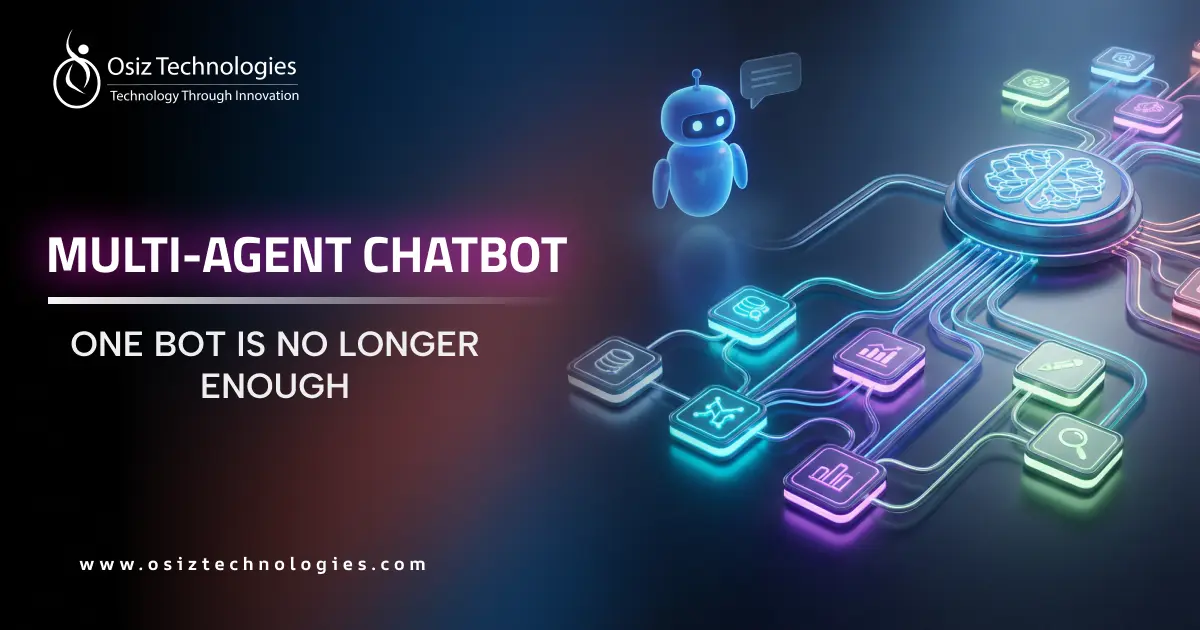
From fixed scripts to fluid talk, early chatbots followed rigid rules yet gradually transformed by learning context, purpose, and how humans string words together using smart Conversation Tech. Speed matters now - people want quick replies, tailored interactions, smooth processes - so companies started chasing better ways to build work-focused bots instead of sticking to one-trick answers. Out of this push came a new shape: teams of focused agents working together, forming layered, adaptable, ready-for-what’s-next dialogue systems.
The Rise of Conversational AI in Modern Businesses
Business operations today depend more on tools built for conversation-driven artificial intelligence, managing rising volumes of user exchanges, team coordination, and online presence through various platforms.
Instead of fixed-rule bots, companies now adopt learning-based models systems that adjust behavior by recognizing trends, forecasting actions, while generating responses close to how people speak.
Demand grows sharply for smart virtual helpers capable of addressing purchase questions, solving tech issues, guiding new users, and handling back-end duties all at once.
With users expecting tailored replies and immediate answers, older chat formats fail when faced with complex, overlapping demands.
Nowhere is change more evident than in how messaging platforms operate alongside automated processes.
Instead of standing apart, artificial intelligence in dialogue now forms core components within operations.
A way to understand this evolution is to look at individual chatbot architectures first, and only later do we shift our focus to networks in which multiple agents collaborate.
What Is a Single-Agent Chatbot?
A single-agent chatbot is an AI-driven system typically based on a Large Language Model that functions as a standalone entity to comprehend, reason, and respond to user queries in order to fulfill specific objectives. Unlike multi-agent setups that rely on teamwork, this single agent manages the entire conversation, including planning and executing tasks, independently.
Limitations of Single-Bot Systems
Limited scalability
When one bot manages too many conversations at once, response times slow while precision drops. With rising demands from users, relying on a single hub limits how far companies can expand. Distributed approaches in chatbot networks address these issues by sharing tasks across multiple agents.
Lack of specialization
A single automated system handling numerous subjects usually results in surface-level understanding, producing broad answers regardless of context. Because deep subject training is missing, interactions tend to lack customization and speed. The need for focused assistance pushes the integration of dedicated units in collaborative artificial intelligence frameworks.
Reduced contextual understanding
A single bot managing multiple goals simultaneously makes it difficult to understand meaning accurately. In fast-paced conversations, maintaining context becomes unreliable. As a result, researchers and developers are turning to collaborative agent systems. These systems allow multiple agents to share responsibilities, improving context retention and overall understanding.
Maintenance complexity
Whenever changes occur within one central system, complete relearning and validation become necessary throughout every dialogue path. Small tweaks might trigger unexpected issues in areas not directly connected. Through separated units, upkeep grows easier because components develop independently.
Limited automation capabilities
When a single agent manages all aspects of sales, support, and data analysis it becomes overwhelmed. In today’s fast-paced environments, where rapid and flexible responses are essential, individual bots frequently fall short. As a result, there’s increasing interest in coordinated networks of synchronized agents.
Understanding Multi-Agent Chatbot Systems
A Multi-Agent Chatbot System (MAS) is an advanced AI framework that employs several independent, intelligent agents, each with specialized capabilities, working together in a common environment to tackle intricate, multi-phase problems. Unlike conventional chatbots that rely on a single, unified model for all functions, a multi-agent system divides tasks among agents, each assigned to a distinct role such as researcher, content creator, or quality checker enabling more efficient and targeted problem-solving.
Multi-Agent Chatbots in 2026
Customer support automation
With automation, customer support tasks like queries, issue escalation, and problem resolution run at once. Where one agent type fixes technical faults, another handles account changes or payment questions. Because of this separation, replies come more quickly leading to better experiences over time
Sales plus lead generation
AI in sales evaluate compatibility by analyzing customer behaviors and expressed requirements, responding to product questions using contextual awareness instead of rigid scripts. Recommendations stem from real user actions rather than guesses, whereas marketing-focused modules take a different strategy.
Employee assistance platforms
Support arrives instantly through dedicated HR, IT, and learning assistants embedded within company platforms. One handles only personnel matters while another manages system access needs. Where manual effort once slowed progress, automated guides now respond without delay.
Healthcare engagement systems
Through the use of multiple coordinated chatbot agents, healthcare providers manage appointments, assess symptoms, followed by monitor patient progress. Each agent operates with a defined role, ensuring regulations are met without disrupting clear information flow during care processes.
Financial service automation
Frequently, banks along with fintech services apply automated helpers to manage queries about payments, spot suspicious activity, or assist in making investment choices. With coordination between risk evaluators and support assistants, clients receive instant help during financial tasks.
Key Components of a Multi-Agent Chatbot Architecture
Coordinator / Orchestrator
Beginning with message routing, the orchestrator directs inquiries to appropriate agents by analyzing purpose and situation. Flow continuity emerges as responsibilities shift among components during interaction chains. Work distribution adjusts dynamically while processes operate separately yet align through central guidance.
Specialized Agents
Within Multi-Agent Chatbot Development frameworks, one finds agents dedicated to distinct domains support, analytics, or onboarding. Because precision matters in intricate exchanges, their narrow scope enhances both correctness and contextual fit. These narrowly skilled agents, while limited in range, become essential structural elements in joint dialogue platforms.
Knowledge Base
Information needed by agents is held within a single organized system, ensuring replies stay uniform and correct. With regular revisions, dialogue stays in step with present company facts and rules. Every exchange benefits from deeper awareness due to the shared context built into the resource
Communication Layer
Communication among agents occurs through a secure channel, allowing smooth interaction throughout dialogue exchanges. With a consistent context maintained, transitions between focused components proceed without disruption. Real-time cooperation emerges naturally when tasks are spread across separate but linked systems.
Analytics and Learning Module
A measure of how users interact appears through monitoring tools built into analytics components. From these observations, patterns form shaping the way future replies develop over time. Progress unfolds not by design alone but through repeated exposure to real exchanges.
Major Benefits of Multi-Agent Chatbots
Enhanced scalability
As demand increases significantly, system performance stays consistent thanks to distributed processing. With organizational growth, capacity expands organically to support evolving operational requirements.
Improved personalization
From past exchanges to present cues, specialized agents shape replies that match what users need. Gradually, these minor connections strengthen the relationships between individuals and systems.
Faster response times
When multiple agents handle different tasks simultaneously, various sections of a conversation progress in parallel. This leads to reduced delays and a more immediate, user-responsive experience.
Operational flexibility
System updates can be applied efficiently without requiring a full rebuild, thanks to its modular design. This allows the system to scale and adapt seamlessly as operational conditions and requirements change over time.
Advanced automation capabilities
This customer support automation fastens decision-making and reduces errors, enhancing overall efficiency. By aligning with digital transformation goals, businesses can scale operations and achieve greater competitiveness.
When Should Businesses Move to Multi-Agent Chatbots?
1. In scenarios involving intricate interactions across multiple goals or teams, single-agent systems typically struggle with accuracy. However, when several agents work together and share duties, handling complex dialogues becomes more manageable, leading to smoother and more efficient progress.
2. When companies see sharp increases in online interactions, they require communication systems that grow easily. Because user volume rises, virtual assistants handle many tasks at once. Performance stays steady even when activity surges. Service quality remains stable under pressure.
3. When companies offer diverse products, they need specialized knowledge to serve different customer needs. Multi-agent AI systems allow chatbots to operate with targeted expertise in specific domains, improving accuracy and user satisfaction. As a result, accuracy in replies rises alongside smoother operations.
4. When companies seek workflow automation, including engagement with customers, collaborative agents offer utility. Integration of multi-agent setups into existing enterprise environments occurs without disruption. Such alignment enables comprehensive approaches to automated operations.
5. Systems that become more intelligent as they gain experience enable businesses to use data to improve their operations, evolving rather than remaining static. Insights emerge from interactions among multiple automated agents. Improvement happens gradually, shaped by ongoing dialogue patterns.
Conclusion: The Future Beyond Single Bots
Moving beyond solo agents into multi-agent chatbots reflects deeper changes in business automation, interaction, and online presence. With rising needs for intelligent processes, spread-out conversation capabilities now support growth, customization, and steady performance under pressure. Firms collaborating with pioneers such as Osiz or established AI development company obtain adaptable frameworks that meet shifting user demands and intricate tasks. Expectations are met before they arise when multiple agents work together, allowing relevant dialogue and swift responses to new conditions. What comes next for talking machines depends less on one powerful robot brain and more on how well smart assistants work together.
Listen To The Article

Founder & CEO Osiz Technologies
Mr. Thangapandi, the CEO of Osiz, has a proven track record of conceptualizing and architecting 100+ user-centric and scalable solutions for startups and enterprises. He brings a deep understanding of both technical and user experience aspects. The CEO, being an early adopter of new technology, said, "I believe in the transformative power of AI to revolutionize industries and improve lives. My goal is to integrate AI in ways that not only enhance operational efficiency but also drive sustainable development and innovation." Proving his commitment, Mr. Thangapandi has built a dedicated team of AI experts proficient in coming up with innovative AI solutions and have successfully completed several AI projects across diverse sectors.
Recent Blogs



No 22,Astalakshmi Nagar, Thanakankullam, (Opp Seetha lakshmi Mill gate Bus stop) Thirunagar, Madurai - 625 006.
(Corporate Office)


Canada Office address, 1150, Rue Patrick, Laval, Quebec - H7Y 2C4, Canada.
(Sales Office)


Explore Our
AI Portfolio

 Artificial Intelligence
- AI Development
- AI Predictive Analytics Services
- AI SaaS Development
- RAG Development
- AI Assistant Development
- ChatGPT Development
- Data Analytics Services
- AI Copilot Development
- Adaptive AI Development
- Machine Learning Development
- NLP
- AI Consulting Services
- AI Software Builder
- AI Token Development
- AI Integration Services
- Enterprise AI Solution
- AI As a Service
- AI Marketing Tools
- AI Video Generator
- Computer Vision Services
- Explore AI
- Dataset
- Machine Learning in Healthcare
- Machine Learning in Retail
- Hire AI Engineers
- Hire Prompt Engineers
- Hire ChatGPT Developers
- Hire Stable Diffusion Developers
- Hire Action Transformer Developers
- Blockchain
- Blockchain Development
- Private Blockchain Development
- Smart Contract Development
- Custom Blockchain Development
- Solana Blockchain Development
- Polygon Blockchain Development
- Public Blockchain Development
- DAO Blockchain Development
- Binance Smart Chain (BSC) Blockchain Development
- DApp Development
- Solana DApp Development
- White Label Blockchain Solutions
- Custom Blockchain On Avalanche
- Custom Blockchain On Polygon
- Blockchain Game Development
- Blockchain Consulting Services
- Blockchain Explorer Development
- Ethereum Blockchain Development
- TRON Blockchain Development
- Prediction Market Platform Development Company
Layer 1 & 2 Solutions- Layer-1 Blockchain Development
- Cross Chain Bridge Development
- Data Availability Layer Development
- Ethereum Layer 2 Scaling Solutions
- Cross-L2 DEX Solution
- Layer 2 Token Development
- Layer 2 Token Marketing
- Layer 2 Cryptocurrency Development
- Layer 2 Solutions For Blockchain Games
- Layer 2 Solutions For Web3 Gaming
- Layer 2 Blockchain Solutions
- Rollups As A Service
- Optimistic Rollups Development
- ZK Tech Development
- Bitcoin Layer 2 Solutions
Crypto Exchange- Cryptocurrency Exchange Development
- White Label Crypto Exchange
- Decentralized Exchange Development
- P2P Exchange Development
- Crypto Derivatives Exchange Development
- Centralized Exchange Development
- Crypto Exchange Clone Script
- Cryptocurrency Exchange App Development
- OTC Exchange Development
- Exchange Listing Services
- Binance Like Exchange Development
- Bitstamp Like Exchange Development
- Crypto Exchange Script
CryptoCrypto WalletToken Standards- Token Development
- AI Token Development
- RWA Tokenization Development
- Coinremitter Clone Script
- Asset Tokenization
- Real Estate Tokenization
- Tokenization Platform Development
- Crypto ETF Development
- Solona Token Development
- Semi-Fungible Token Development
- BEP20 Token Development
- Ethereum Token Development
- ERC1400 Token Development
- ERC998 Token Development
- ERC 721 Token Development
- ERC20 Token Development
- Defi Token Development
- ERC1155 Token Development
- BEP721 Token Development
- Utility Token Development
- ERC 777 Token Development
- ERC 827 Token Development
- Social Token Development
- Metaverse Token Development
- Tron Token Development
- ERC404 Token Development
- Governance Token
- Shibarium Token
- polygon Token
- BRC-20
- TRC20 Token Development
- TRC10 Token Development
- Soulbound Token Development
- NFT Token Development
Trading BotsClone- Crypto Exchange Clone Script
- Binance Clone Script
- Metamask Clone Script
- Coinbase Clone Script
- Kucoin Clone Script
- Paxful Clone Script
- Remitano Clone Script
- Wazirx Clone Script
- ByBit Clone Script
- Bitfinex Clone Script
- MEXC Clone Script
- Bitget Clone Script
- Cointool App Clone Script
- Trust Wallet Clone App
- Coinmarketcap Clone Script
- Changelly Clone Script
- BingX Clone Script
CybersecurityApp SecurityDigital Forensics & Incident ResponseAudit & ConsultingEducation & TrainingSolutionsWeb 3DeFi- Decentralized Finance (DeFi) Development
- DeFi Lending/ Borrowing Platform Development
- DeFi Staking Platform Development
- DeFi Token Development
- DeFi Wallet Development
- DeFi Smart Contract Development
- DeFi DApp Development
- Decentralized Exchange Development
- DeFi Insurance Development
- DeFi Crypto Synthetic Assets Development
Game Development- Game Development
- Android Game Development
- IOS Game Development
- Metaverse Game Development
- VR Game Development
- AI Game Development
- Unity 3D Game Development
- Unreal Engine Game Development
- Mobile Game Development
- Blockchain Game Development
- NFT Game Development
- Play to Earn Game Development
- Move to Earn Game Development
- Casino Game Development
- Slot Game Development
- Poker Game Development
- AAA Game Development
- AR Game Development
- Social Network Game Development
- Gamification Services
- Decentralized Sports Betting Platform
- Sports Betting Dapp Development
- Blockchain Casino Game Development
- Game Asset Creation
- Baccarat Game Development
- Rollbit Clone Script
- Fortnite Clone Script
- Slot Game Development
- Tap to Earn Game Development
- Slot Game Development
Metaverse Platforms- Metaverse Game Development
- Metaverse Event Platform Development
- Metaverse Virtual Mall Development
- Metaverse NFT Marketplace Development
- Metaverse Token Development
- Metaverse Virtual Land Development
- Metaverse Avatar Development
- Metaverse 3d Space Development
- Metaverse Real Estate Development
- Metaverse Social Media Platform Development
- Top 10 Metaverse Development Company
- Metaverse Business Ideas
- Metaverse Launchpad Development
- Metaverse App Development
- Metaverse Casino Game Development
NFT SolutionsNFT Platforms- NFT Minting Development
- NFT Token Development
- NFT Exchange Platform Development
- NFT Launchpad Development
- NFT Fashion Marketplace Development
- NFT Art Marketplace Development
- NFT Music Marketplace Development
- Carbon Credits NFT Marketplace Development
- Binance NFT Marketplace Development
- Polygon NFT Marketplace Development
- Solana NFT Marketplace Development
- Influencers NFT Marketplace Development
- NFT Ticketing Marketplace Development
- DeFi NFT Marketplace Development
- NFT Fantasy Sports Platform Development
- NFT Storage Development
- NFT Lending Platform Development
- Top10 NFT Business Ideas
NFT Game ClonesSustainabilityServiceNow - Blog
- Contact Us
- Works